
Credit & Banking

Opening a Bank Account: What to Have Ready Before You Walk In

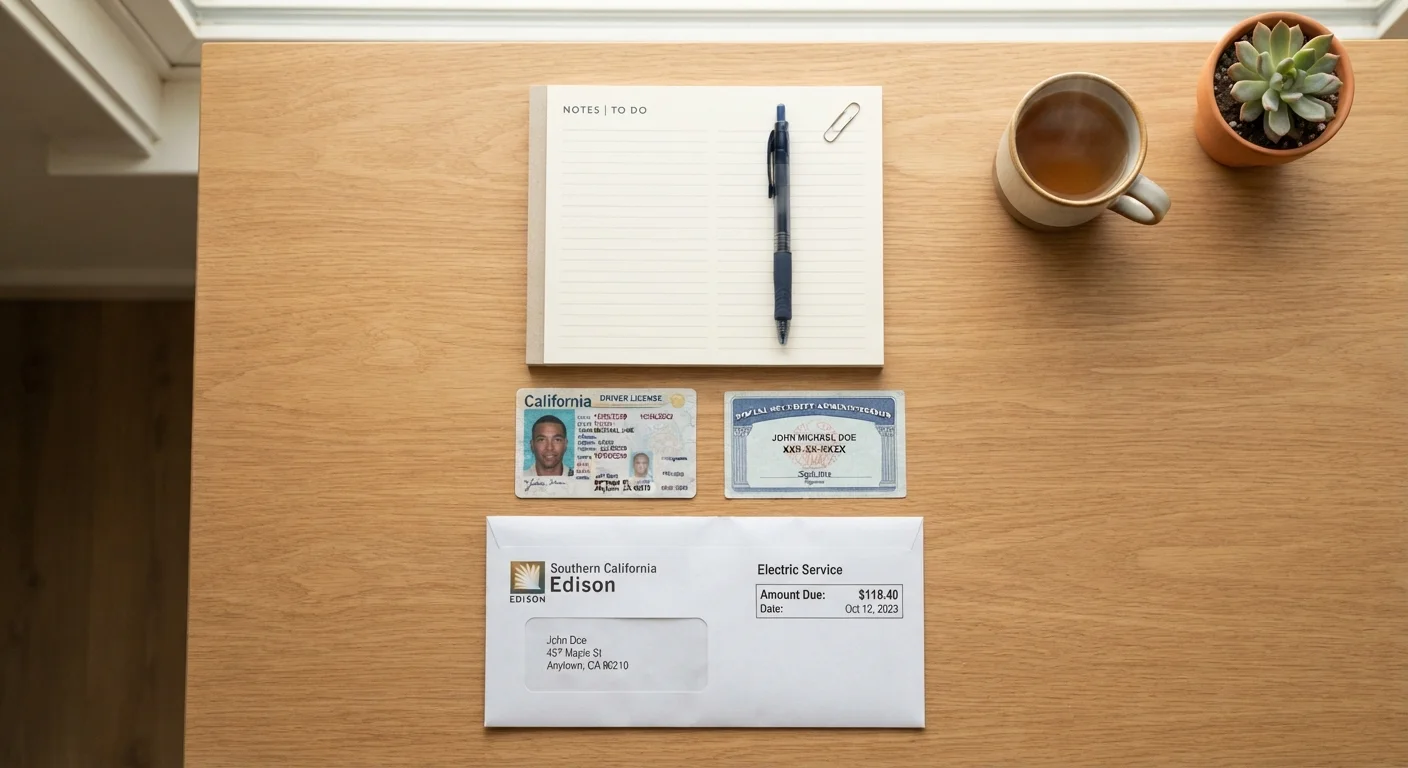
Opening a Bank Account: What to Have Ready Before You Walk In

Photo: ScoutAnswers.com | Blogs That Ignite Curiosity editorial

A practical checklist covering the documents, decisions, and details you'll need to open a checking or savings account without friction.

Key Takeaways

  • Most banks require at least two forms of identification to open an account.
  • Your Social Security Number or Individual Taxpayer Identification Number is nearly always required.
  • An initial deposit amount varies by institution — research minimums before you visit.
  • ChexSystems reports can affect your eligibility; review yours ahead of time.
  • Deciding between a checking or savings account before you arrive speeds up the process.

Why Preparation Matters More Than You Think

Opening a bank account sounds straightforward — and it often is, provided you show up with everything the institution needs. Arriving without the right documents can result in a wasted trip, a delayed account opening, or in some cases, a declined application that triggers additional scrutiny.

Banks are required by federal law — specifically the Bank Secrecy Act's Customer Identification Program rules — to verify the identity of every new account holder. That obligation shapes exactly what you'll need to bring. Understanding the process ahead of time puts you in control.

If you're still deciding what type of account fits your situation, our guide on checking vs. savings accounts can help you sort through the differences before you commit.

Identity Documents

Bring a valid, government-issued photo ID such as a driver's license, state ID card, or passport. Must
Bring a second form of ID — options include a military ID, permanent resident card, or employee ID card. Must
If your name has recently changed, bring supporting documentation such as a marriage certificate or court order. Should

Tax & Social Security Information

Provide your Social Security Number (SSN) or Individual Taxpayer Identification Number (ITIN) — banks are required to collect this for federal tax reporting purposes. Must
If you're opening an account for a minor, have the child's SSN available in addition to your own. Must

Proof of Address

Bring a recent utility bill, lease agreement, or bank statement showing your current residential address. Must
Confirm the address document is dated within the past 60–90 days, as many banks reject older statements. Should
If you recently moved, bring both your new lease and a forwarded-mail notice or change-of-address confirmation as backup. Nice to have

Opening Deposit

Confirm the institution's minimum opening deposit requirement before your visit — amounts vary widely. Must
Bring a personal check, cashier's check, or cash to fund the account at opening. Must
Ask whether an electronic transfer from an existing account is accepted in lieu of a physical deposit. Nice to have

Account Decisions to Make in Advance

Decide whether you need a checking account, a savings account, or both — this affects which application forms you'll complete. Must
Review the institution's fee schedule for monthly maintenance fees, overdraft fees, and minimum balance requirements before committing. Must
Determine whether you want overdraft protection linked to a savings account and be prepared to opt in or out. Should
Choose your preferred statement delivery method — paper or electronic — ahead of time to speed up paperwork. Nice to have

ChexSystems & Banking History

Request your free ChexSystems consumer disclosure report and review it for errors or outstanding negative items before applying. Should
If negative items appear, dispute inaccuracies directly with ChexSystems and allow time for resolution before your application. Should
If you have a troubled banking history, research institutions that offer second-chance checking accounts as an alternative. Nice to have

What Banks Check That You Might Not Expect

Beyond verifying your identity, many banks pull a report from ChexSystems — a consumer reporting agency that tracks past banking history, including unpaid overdrafts, returned checks, and accounts closed for cause. A negative ChexSystems record can result in a declined application at some institutions.

A Negative ChexSystems Record Can Block Your Application

Unlike a credit check, most consumers don't know ChexSystems exists until they're denied. Unpaid overdrafts or accounts closed for misuse can remain on your record for up to five years. Pulling your report before applying — and addressing any errors — gives you a significant advantage and prevents surprises at the bank counter.

You're entitled to one free ChexSystems report per year at ChexSystems.com. Reviewing it before you apply gives you the opportunity to dispute errors or seek out a bank that offers second-chance checking accounts — products designed specifically for people with past banking challenges.

Banks also consider your opening deposit. While some institutions allow accounts with no minimum deposit, others require anywhere from $25 to several hundred dollars to activate the account. Confirm this figure before you arrive.

Don't Assume Any Bank Has No Minimums

Even accounts advertised as 'free' may require a minimum opening deposit or impose monthly fees if a balance threshold isn't met. Failing to fund an account to the required level can result in immediate fees or account closure. Always confirm the exact requirements with the institution before your visit.

Sound banking habits — like maintaining a funded checking account — also support longer-term financial goals. If homeownership is on your horizon, our article on financial habits that strengthen a mortgage application explains how consistent banking behavior factors into lender evaluations.

This article provides general financial information for educational purposes and is not personalized financial or legal advice. Consult a licensed financial professional regarding decisions specific to your situation.

Finance Editorial Team

ScoutAnswers.com | Blogs That Ignite Curiosity

Finance Editorial Team is the collective byline for our editorial team and contributor network. Articles published under this byline or an editorial pen name are researched, written, and reviewed according to our editorial standards for clarity, consistency, and independence before publication.

Budgeting BasicsSaving & DebtCredit & Banking
View author profile

The content on this site is for informational purposes only and is not a substitute for professional advice. Always consult a qualified professional for guidance specific to your situation.