
How Your Credit Score Shapes the Mortgage You Qualify For

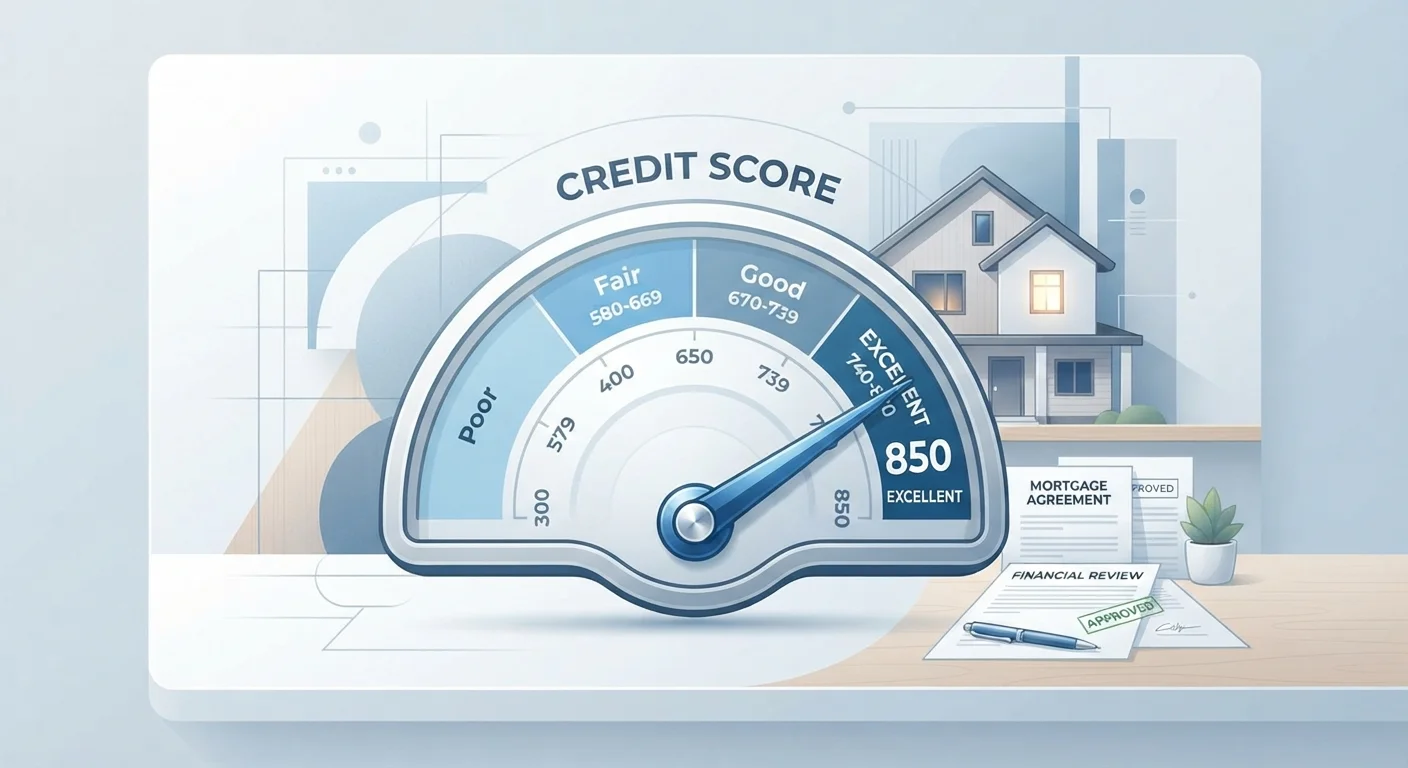
Photo: ScoutAnswers.com | Blogs That Ignite Curiosity editorial
Key Takeaways
- A score of 620 is generally the minimum for conventional loans; FHA loans may accept scores as low as 500 with conditions.
- Higher credit scores unlock lower interest rates, which reduce monthly payments and total loan cost.
- Lenders pull scores from all three bureaus and typically use the middle score for qualification.
- Improving your score before applying - even by 20-40 points - can meaningfully change your loan terms.
- Payment history and credit utilization are the two biggest factors shaping your score.
Why Lenders Care So Much About Your Score
A mortgage is one of the largest financial commitments a lender takes on with any borrower. Credit scores give lenders a standardized, data-driven way to estimate the likelihood that a borrower will repay on time. Rather than relying solely on a conversation or employment letter, underwriters lean heavily on the score as a proxy for financial discipline over time.
FICO scores - the most widely used model in mortgage underwriting - weigh five factors: payment history (35%), amounts owed or credit utilization (30%), length of credit history (15%), new credit inquiries (10%), and credit mix (10%). Because payment history and utilization together account for nearly two-thirds of the score, those are the areas that most directly determine whether you qualify and at what rate.
For a deeper look at the full picture lenders consider, see our step-by-step guide to getting mortgage-ready, which covers debt-to-income ratios and other key levers alongside credit.
620
Minimum score for most conventional loans
According to Fannie Mae and Freddie Mac underwriting guidelines, 620 is the standard minimum FICO score for conventional mortgage eligibility.
~1%+
Rate premium for lower credit score tiers
Borrowers in the 620-639 score range typically pay a full percentage point or more above the rates available to borrowers with scores above 760, according to mortgage pricing data.
35%
Share of FICO score from payment history
FICO's published model weights payment history as the single largest component of a credit score, making on-time payments the most impactful credit habit.
Score Thresholds and Loan Types
Not all mortgage products treat credit scores the same way. Understanding where the key cutoffs fall helps borrowers set realistic targets.
- Conventional loans: Typically require a minimum score of 620. Borrowers above 740-760 generally access the most favorable pricing tiers.
- FHA loans: Insured by the Federal Housing Administration, these allow scores as low as 580 with a 3.5% down payment. Scores between 500 and 579 may still qualify with a 10% down payment, though individual lenders can set stricter internal standards (called "overlays").
- VA loans: Available to eligible veterans and service members. The VA sets no official minimum score, but most participating lenders require at least 580-620.
- USDA loans: Designed for rural and some suburban properties. Most lenders require at least a 640 score for streamlined processing.
- Jumbo loans: Exceeding conforming loan limits, these carry the strictest standards - many lenders require 700 or higher, sometimes 720+.
It is important to understand that qualifying at the minimum score does not mean you will receive attractive loan terms. Lenders price risk into interest rates, and a borrower at 625 will almost always pay a materially higher rate than one at 760 - even on the same loan product.
How Score Differences Affect Your Actual Payment
The real-world financial impact of credit score tiers is significant and concrete. Lenders use risk-based pricing, meaning the interest rate they offer is adjusted based on the borrower's score band. Even a 20-point difference at the margin of a pricing tier can change your rate by a quarter to half a percentage point.
To illustrate: on a 30-year fixed mortgage of $350,000, the difference between a 6.5% rate (reflecting a mid-range score) and a 7.25% rate (reflecting a lower-tier score) amounts to roughly $170 more per month and over $60,000 in additional interest over the loan's life. These are illustrative figures - actual rates vary by lender, market conditions, and loan type - but the directional impact is consistent and well-documented across the mortgage industry.
This is why building strong financial habits before applying pays dividends that extend well beyond approval.
“Your credit score is not just a number - it is the price tag on every dollar you borrow. Even a modest improvement before you apply can save more than any negotiation at the closing table.”
— Real Estate Editorial Team, Editorial analysis, based on published mortgage pricing research
Practical Steps to Strengthen Your Score Before Applying
If your score is below the threshold you need - or simply below where you want it - there are reliable, actionable steps that can move the number. The key is giving yourself enough runway. Most meaningful changes take three to six months to reflect fully in your score.
- Pay down revolving balances. Credit utilization - how much of your available credit you are using - is the fastest-moving factor. Reducing utilization below 30%, and ideally below 10%, can produce noticeable score gains within one to two billing cycles.
- Dispute errors on your credit reports. Incorrect late payments, accounts that aren't yours, or outdated derogatory marks can suppress your score unfairly. You are entitled to a free report from each bureau annually at AnnualCreditReport.com.
- Avoid opening new accounts. Each new credit application triggers a hard inquiry and can temporarily lower your score. In the months before applying for a mortgage, minimize new credit activity.
- Keep existing accounts open. Closing old accounts reduces your available credit and can shorten your average credit history - both of which can hurt your score.
- Catch up on any past-due accounts. Bringing delinquent accounts current stops additional damage and begins the recovery process, though late payment records remain on your report for seven years.
For a full picture of the habits lenders value, see what experienced buyers do right in the months before applying.
This article is for general informational and educational purposes only and does not constitute personalized financial, mortgage, or legal advice. Credit score thresholds, loan products, and interest rates vary by lender and market conditions. Consult a licensed mortgage professional for guidance specific to your financial situation.
Frequently Asked Questions
The content on this site is for informational purposes only and is not a substitute for professional advice. Always consult a qualified professional for guidance specific to your situation.