
Selling Your Home Without an Agent: What FSBO Really Involves

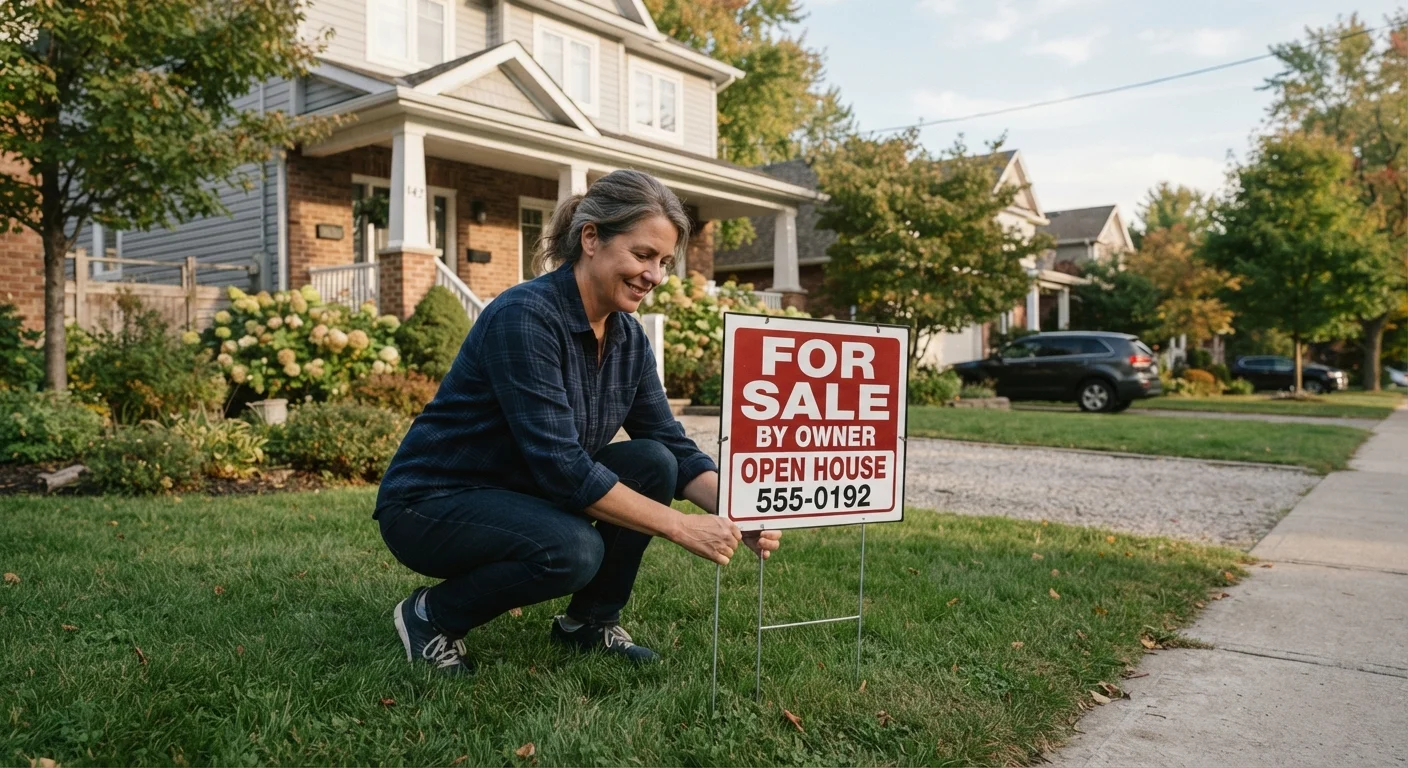
Photo: ScoutAnswers.com | Blogs That Ignite Curiosity editorial
Key Takeaways
- FSBO sellers avoid listing agent commissions but usually still pay buyer's agent fees.
- Accurate pricing is the single most consequential FSBO challenge - overpricing leads to stale listings.
- Legal disclosures and contracts must still be completed correctly, often requiring a real estate attorney.
- FSBO homes receive less market exposure without MLS access, which can limit buyer reach.
- Emotional detachment during negotiations is harder when you're the homeowner, not a professional representative.
What FSBO Actually Requires of Sellers
The appeal of FSBO is straightforward: eliminate the listing agent, keep the commission. But what sellers sometimes underestimate is how many distinct professional functions that commission was paying for. When you go FSBO, all of those responsibilities transfer directly to you.
Before your home hits the market, you'll need to set a competitive asking price, prepare and stage the property, photograph it effectively, write a compelling listing description, and determine where and how to advertise. During the sale, you'll manage inquiry calls, schedule and conduct showings, vet buyer qualifications, receive and evaluate offers, negotiate terms, navigate inspection and appraisal outcomes, coordinate with title companies or attorneys, and manage the closing timeline.
Each of these tasks is manageable individually. Together, on a compressed timeline, while you're also packing and planning your own move, they represent a substantial workload - one that agents handle daily as their primary profession.
Consider Hiring a Real Estate Attorney Early
The Pricing Problem: Where Many FSBO Sales Start to Go Wrong
Accurate pricing is arguably the highest-stakes decision in any home sale. Set the price too high and your listing accumulates days on market - a visible signal to buyers that something is wrong. Set it too low and you leave money on the table. Agents rely on comparative market analysis (CMA) - a structured review of recent comparable sales - to arrive at a defensible price. FSBO sellers don't have automatic access to the same MLS data agents use.
Some sellers rely on automated valuation tools (AVMs) like Zestimate, but these tools are estimates based on public data and can be meaningfully off in areas with limited transaction volume or unique property characteristics. A local real estate attorney or a fee-for-service appraiser can provide more reliable pricing guidance for FSBO sellers willing to pay for professional input.
~7%
Share of US home sales that are FSBO
According to the National Association of Realtors' annual Profile of Home Buyers and Sellers, FSBO transactions have declined from around 19% in the 1980s to approximately 7% in recent years.
~$60K
Median FSBO vs. agent-assisted sale price gap
NAR data has historically shown FSBO homes selling at a significantly lower median price than agent-listed homes, though comparisons are complicated by property type and location differences.
2.5%-3%
Typical listing agent commission rate
Commission structures vary and are negotiable; this range reflects commonly cited listing-side commissions in US residential real estate transactions.
Sellers who've spent years in a home also carry emotional attachment that makes objective pricing harder. The renovated kitchen, the landscaping investment, the neighborhood you love - these are real to you but may not translate dollar-for-dollar into what buyers will pay. Understanding that distinction is something experienced agents practice routinely; for most sellers, it requires deliberate effort.
Legal and Contractual Obligations Don't Disappear
One of the most consequential misunderstandings about FSBO is that skipping an agent means skipping paperwork. It doesn't. Every real estate transaction involves legally binding contracts, required state-specific disclosures, and a closing process that must meet title company or lender standards.
The purchase agreement in a real estate transaction is a complex legal document with contingencies for financing, inspection, and appraisal; earnest money terms; and timelines that must be met to avoid default. If a buyer is represented - which most are - their agent will be experienced with these documents. The FSBO seller may not be.
Understanding the buyer's agent's role matters here: that agent legally represents the buyer's interests, not yours. In an FSBO transaction, no one is contractually obligated to represent yours. A real estate attorney fills this gap and is worth the cost. For sellers managing additional complexity - such as selling a home with tenants still in residence - professional legal counsel becomes even more important.
Market Exposure and the MLS Gap
Most buyers and their agents search for properties through the Multiple Listing Service (MLS), the database that feeds Realtor.com, Zillow, Redfin, and other major platforms. Standard MLS access is restricted to licensed agents. FSBO sellers who rely only on yard signs, Craigslist, and social media reach a fraction of active buyers.
Flat-fee MLS services bridge this gap at relatively low cost - typically $100-$500 depending on the service tier and market - by having a licensed broker submit the listing to the MLS on your behalf. This is one of the more practical tools available to FSBO sellers and meaningfully increases exposure without requiring full agent representation.
Even with MLS access, FSBO listings may receive less buyer agent attention. Some buyer's agents are hesitant to show FSBO properties if there's uncertainty about commission being offered. Clearly stating the buyer's agent commission in your listing helps address this. Anticipating all seller-side closing costs, including buyer's agent fees, transfer taxes, and concessions, helps you build a realistic net-proceeds picture from the outset.
Negotiating Without a Buffer
When an offer comes in, the negotiation begins - and this is where emotional involvement becomes a genuine liability. Agents serve as a professional buffer between seller and buyer, absorbing lowball offers without offense, responding strategically rather than reactively, and keeping the transaction on track when personalities clash.
FSBO sellers negotiate directly. Buyers who know they're dealing with an unrepresented seller may test boundaries more aggressively, knowing there's no experienced counterpart managing the process. Post-inspection negotiations - often the tense second round of back-and-forth - can be particularly difficult for sellers navigating them without professional guidance.
This dynamic is worth considering if you're going FSBO. Negotiation isn't just about the price; it's about repair credits, closing timelines, contingency waivers, and who pays which closing costs. Buyers represented by agents - which buyers should understand in detail before making an offer - are supported through every stage. FSBO sellers are not, unless they've secured their own professional counsel.
This article is for general informational purposes only and does not constitute legal, financial, or real estate advice. Consult a licensed real estate attorney or qualified professional regarding your specific situation and local requirements.
Frequently Asked Questions
The content on this site is for informational purposes only and is not a substitute for professional advice. Always consult a qualified professional for guidance specific to your situation.