
City Break vs. Nature Retreat: How to Match a Destination to What You Actually Need

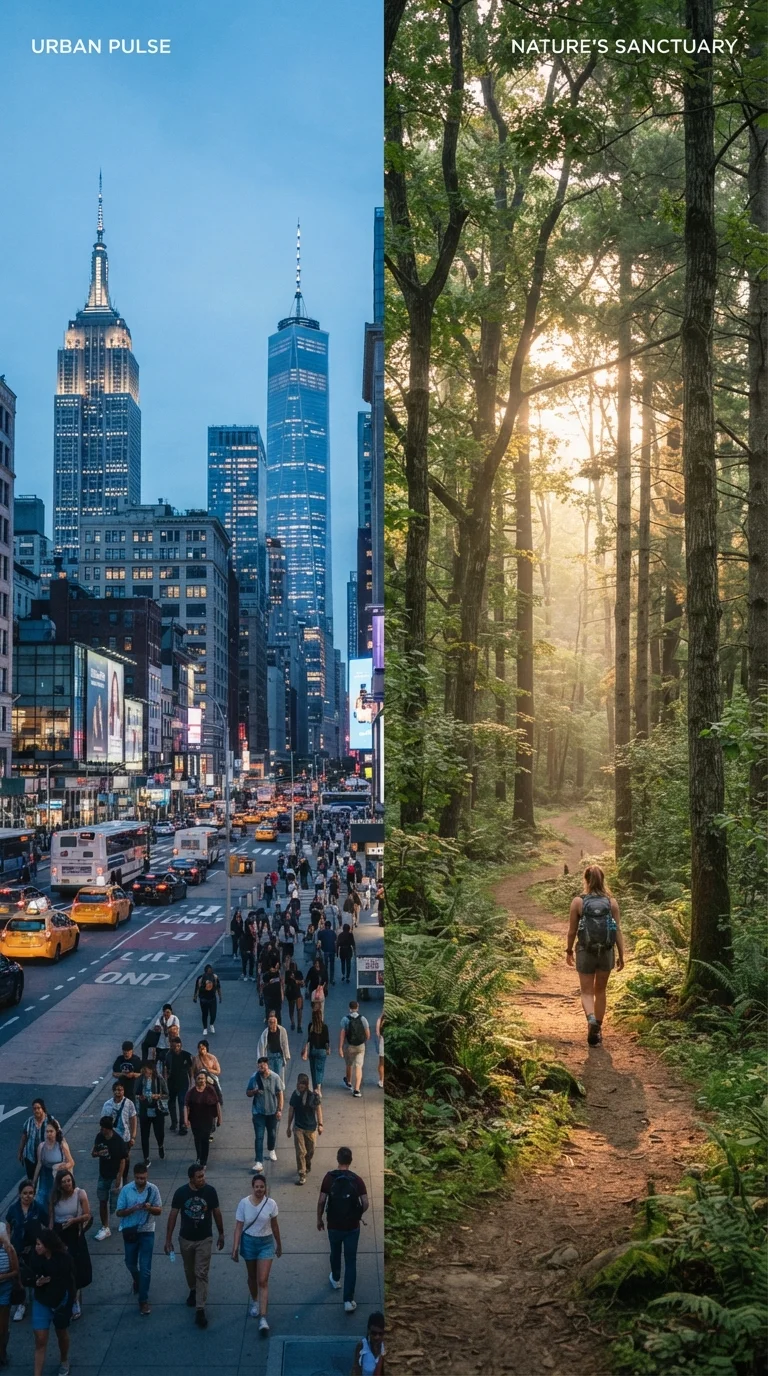
Photo: ScoutAnswers.com | Blogs That Ignite Curiosity editorial
Key Takeaways
- City breaks offer stimulation, culture, and structure - ideal when you want to feel engaged and energized.
- Nature retreats provide slower pacing and physical reset, which suits travelers experiencing burnout or mental fatigue.
- Your current energy level - not just your interests - should drive the destination decision.
- Both trip types can be done on similar budgets depending on destination, season, and how you book.
- Mixing elements of both, such as a walkable mid-size city near a national park, is a practical third option.
Why the City vs. Nature Question Matters More Than You Think
Most people pick a destination based on what looks appealing in a photo or what a friend recommended. That's a reasonable starting point, but it often leads to vacations that feel slightly off - beautiful in theory, exhausting or boring in practice. The real question isn't just where do you want to go, but what do you actually need right now?
A city break and a nature retreat deliver fundamentally different experiences. One layers on stimulation; the other strips it away. Getting that match right is one of the most useful decisions in the early stages of trip planning. Before comparing the two in detail, it helps to take an honest look at where you're starting from.
What a City Break Actually Delivers
A city break is defined by density - of options, people, neighborhoods, and things to do. That density is the point. Cities reward travelers who want to move through the world rather than step back from it.
What works well:
- Cultural saturation: Museums, food markets, architecture, and live events are all within reach, often walkable.
- Social energy: Cities work well for travelers who recharge around other people or who want to feel plugged into something larger.
- Flexible structure: Most cities don't require advance reservations for every activity, giving you room to follow your interest in the moment. See how itinerary style shapes this experience.
- Accessibility: Transit, restaurants, and accommodation are typically easier to arrange than in remote areas.
Where it falls short: If you're already overwhelmed - by work, noise, or decisions - adding more of the same in a new setting rarely helps. Cities ask things of you: navigation, choices, pace-keeping. That's energizing for some travelers and depleting for others.
| City Break | Nature Retreat | |
|---|---|---|
| Primary experience | Stimulation, culture, activity | Calm, space, physical reset |
| Best energy match | Restless, understimulated, curious | Burned out, overwhelmed, fatigued |
| Logistics complexity | Lower - transit and services nearby | Higher - gear, access, weather planning |
| Ideal trip length | 2-5 days works well | 4+ days to fully decompress |
| Social demand | Higher - crowds, navigation, choices | Lower - fewer decisions and interactions |
| Flexibility on arrival | High - options are abundant | Moderate - depends on location and season |
| Accessibility infrastructure | Generally strong | Varies widely by destination |
What a Nature Retreat Actually Delivers
A nature retreat - whether that means a national park, a cabin in the mountains, a desert landscape, or a quiet coastal stretch - operates on a different logic. The primary offering is subtraction: fewer decisions, lower noise, slower time.
What works well:
- Mental decompression: Removing yourself from screens, crowds, and schedules has a measurable effect on stress levels according to broadly cited environmental psychology research.
- Physical reset: Hiking, swimming, or simply spending time outdoors engages the body in low-stakes ways that many desk-bound travelers find restorative.
- Presence by default: Without the pull of restaurants, events, or transit to navigate, attention naturally narrows to the immediate environment.
- Lower social demand: For introverted travelers or those experiencing social fatigue, nature settings reduce the pressure to perform or engage.
Where it falls short: Nature retreats can feel isolating for travelers who aren't accustomed to that kind of quiet. Logistics require more planning - gear, food, access to medical care, and weather variability all need consideration before you go. Budget planning also works differently for remote destinations.
Try a One-Night Test Before Committing
The Decision Framework: Three Questions to Ask Yourself
Rather than choosing based on aesthetics alone, work through these three prompts before booking:
- What is your current energy state? If you feel flat, understimulated, or restless - a city may be the right match. If you feel scattered, overloaded, or emotionally worn - nature is likely the better reset.
- How do you typically feel after a busy day? Some people feel alive after a packed day of exploring; others feel drained. Your habitual response to stimulation is a reliable predictor of which environment will feel like a vacation.
- What do you want to bring home from the trip? New ideas, experiences, and stories point toward cities. Quiet, perspective, and physical recovery point toward nature.
If you're genuinely torn - or traveling with others who have different needs - a hybrid destination is worth considering. Many mid-size American cities sit within two hours of significant natural areas: think Asheville near the Blue Ridge Parkway, or Portland near Mount Hood. Building breathing room into any itinerary makes hybrid trips easier to execute without burning out in either direction.
Also factor in how you'll get there. The travel format affects energy as much as the destination itself - see road trip vs. fly-and-explore trade-offs for a useful side-by-side.
Practical Considerations That Often Get Overlooked
Beyond personal preference, a few logistical factors are worth weighing honestly:
- Trip length: Short trips (2-4 days) often favor cities, where you can pack in experiences quickly. Nature retreats tend to reward longer stays - it takes time to fully decompress.
- Travel companions: Mismatched preferences between travel partners can sink either type of trip. Naming the preference gap early - and finding hybrid solutions - prevents resentment mid-vacation.
- Accessibility needs: Cities generally offer more infrastructure for travelers with mobility or medical needs. Remote nature destinations can present real barriers depending on terrain and available services.
- Seasonality: Both city breaks and nature retreats are significantly affected by timing. High-season crowds change the character of a city; weather and trail conditions define what's possible outdoors. Verify current conditions through official sources before committing.
Finally, neither option is inherently more affordable than the other - cost depends far more on destination, accommodation type, and timing than on the category. For a structured way to think through that variable, all-inclusive packages are one model worth comparing against independent planning.
This article is for general informational and planning purposes only. Travel conditions, costs, and access can change; always verify current details with official tourism, government, and transportation sources before making bookings.
The content on this site is for informational purposes only and is not a substitute for professional advice. Always consult a qualified professional for guidance specific to your situation.