
How Exchange Rates and Foreign Transaction Fees Actually Work

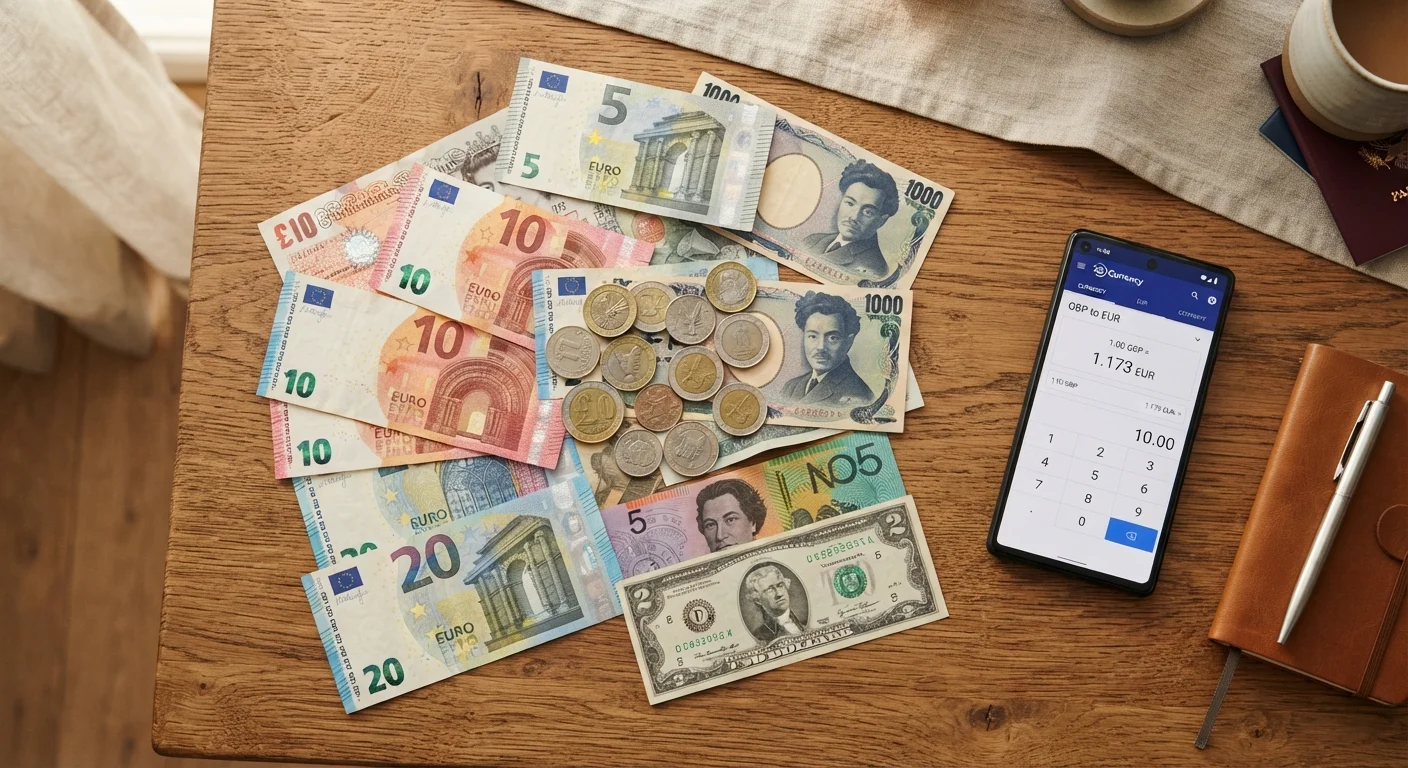
Photo: ScoutAnswers.com | Blogs That Ignite Curiosity editorial
Key Takeaways
- The rate you see at a currency kiosk or airport bureau is almost always worse than the interbank rate.
- Foreign transaction fees typically add 1-3% on top of every card purchase made in a foreign currency.
- Dynamic currency conversion - being charged in USD abroad - usually costs more, not less.
- Notifying your bank before travel does not improve your rate; it only prevents fraud blocks.
- ATMs in the destination country often offer better rates than airport exchange kiosks.
- Some credit and debit cards charge no foreign transaction fees - worth confirming before departure.
What the Interbank Rate Is - and Why You Never Get It
Every morning, major financial institutions trade currencies among themselves at the interbank rate - essentially the wholesale price of money. This rate, tracked publicly on sites like XE.com or Google Finance, is the number most travelers instinctively compare against. The problem: individual consumers never receive it.
Every entity that converts currency for you - a bank, an airport kiosk, a hotel front desk - applies a spread, marking the rate up before selling it to you. A kiosk might show EUR/USD at 1.02 when the interbank rate is 1.08. That six-cent gap on every euro exchanged is pure margin for the exchanger. The spread is legal, ubiquitous, and rarely disclosed in plain terms.
The practical implication: the exchange rate you're quoted is itself a fee. How wide that spread is determines how costly your exchange really is, independent of any separately listed service charge.
“The real cost of converting currency is almost always hidden in the rate itself, not in a disclosed fee. Travelers who focus only on posted commissions often miss the larger charge embedded in the spread.”
— Consumer Financial Protection Bureau, U.S. federal consumer financial watchdog - general guidance on currency conversion transparency
How Foreign Transaction Fees Are Applied to Card Spending
When you swipe or tap a card abroad - or make an online purchase billed in a foreign currency - your card issuer typically converts the charge to U.S. dollars and then applies a foreign transaction fee, usually 1%-3%. This fee is layered on top of whatever exchange rate your card network (Visa, Mastercard) uses for the conversion.
Card network rates are generally close to the interbank rate, which makes card spending abroad often more cost-effective than exchanging cash - unless your card charges a high foreign transaction fee. A 3% foreign transaction fee on a $2,000 hotel bill is $60 you wouldn't pay with a no-fee card at the same rate.
1%-3%
Typical foreign transaction fee range
Most major U.S. bank and credit card issuers charge between 1% and 3% per transaction made in a foreign currency, per publicly available card disclosures.
3%-8%
Typical airport kiosk spread above interbank rate
Consumer finance analyses have found airport and hotel currency exchanges commonly apply spreads of 3%-8% above the interbank mid-market rate, in addition to any flat service fees.
Before any international trip, it's worth confirming with your card issuer exactly what fees apply. This is general financial information; your specific card terms govern what you'll actually be charged.
The Airport Kiosk Problem - and What to Do Instead
Airport currency exchange kiosks are convenient precisely when travelers are most vulnerable: just arrived, tired, and holding no local currency. That convenience is priced in. Kiosks at major U.S. airports routinely apply spreads significantly wider than what an in-country ATM withdrawal would produce, and some add flat commissions on smaller transactions.
A more cost-effective approach for most destinations:
- Arrive with a small amount of local currency obtained from your home bank beforehand - enough for an initial taxi or transit fare.
- Use an ATM in the arrivals area rather than a kiosk; bank-network ATMs generally apply tighter spreads, though they may charge withdrawal fees.
- Decline dynamic currency conversion (DCC) at every ATM and point-of-sale terminal. When a machine asks whether you want to be charged in USD or local currency, always choose local currency.
For more on the hidden costs that accumulate during travel, see our guide to expenses that blow most travel budgets. And if you're also navigating phone charges abroad, understanding how international roaming works is worth reviewing before departure.
Check Your Card's Fee Policy Before Departure
Putting It Together: What to Check Before You Leave
Currency costs abroad come from three overlapping sources: the exchange rate spread, foreign transaction fees on cards, and convenience premiums at kiosks or hotels. Minimizing each requires a bit of pre-trip research, not luck.
- Call or log into your bank to confirm whether your debit card charges foreign transaction or ATM withdrawal fees internationally.
- Know the approximate interbank rate for your destination currency before you go - it gives you a baseline to evaluate any quote you receive.
- Plan to carry a modest amount of local cash for small vendors and destinations where card acceptance is limited, but avoid exchanging more than needed at airport rates.
- Set up transaction alerts on your card so you can monitor charges in real time and catch any DCC errors.
Currency logistics are a solvable part of international trip planning. Addressed in advance, they rarely need to be a source of stress - or unexpected expense.
Frequently Asked Questions
The content on this site is for informational purposes only and is not a substitute for professional advice. Always consult a qualified professional for guidance specific to your situation.