
Financing Through a Dealership vs. Your Own Bank or Credit Union

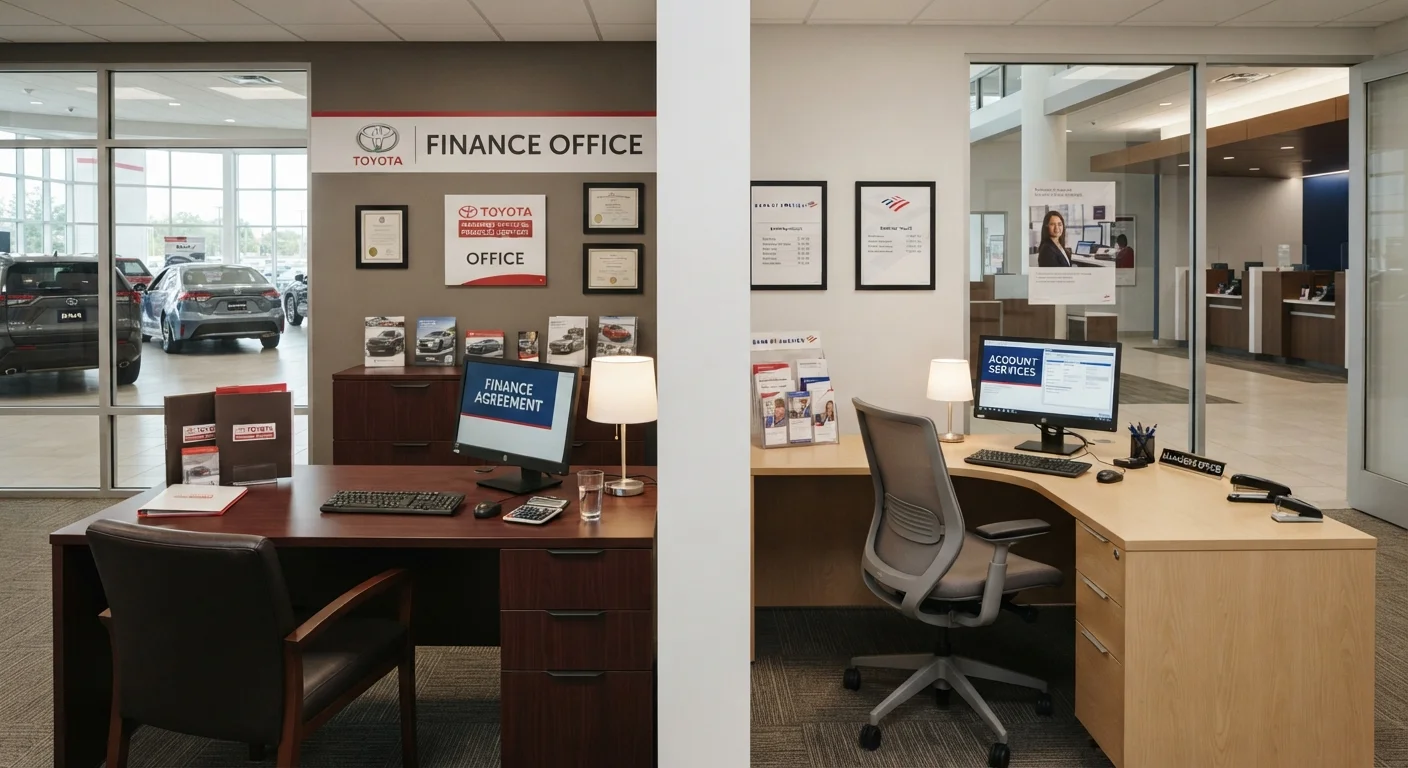
Photo: ScoutAnswers.com | Blogs That Ignite Curiosity editorial
Key Takeaways
- Dealership financing is convenient but dealers often mark up the interest rate above what the lender actually approved.
- Getting pre-approved by your own bank or credit union before visiting a dealer gives you a clear budget and negotiating power.
- Credit unions frequently offer competitive auto loan rates, particularly for members with good credit histories.
- Manufacturer promotional rates (0% or low APR) through dealers can be genuinely valuable, but usually require strong credit and forgo cash-back incentives.
- Comparing at least two financing sources before signing protects you from paying more than necessary over the life of a loan.
How Each Financing Path Works
When you finance through a dealership, the dealer acts as an intermediary. You fill out a credit application on-site, the dealer submits it to one or more lenders in its network, and the dealer then presents you with loan terms - sometimes from multiple lenders, sometimes just one. The dealer earns a fee, often by marking up the interest rate above the rate the lender approved. This markup, sometimes called the "dealer reserve," is legal in most states but is not always disclosed to the buyer. For a plain-language explanation of terms like APR and dealer reserve, see our Car Buying Glossary.
When you finance through your own bank or credit union, you apply directly with the lender before or after choosing a vehicle. If approved, the lender issues a pre-approval letter or a blank check up to a set amount. You bring that to the dealer, negotiate the vehicle price independently, and the lender pays the dealer directly. You then repay the lender on the agreed terms.
| Criterion | Dealership Financing | Bank / Credit Union Financing |
|---|---|---|
| Where you apply | At the dealership, at point of sale | Directly with your lender, before or after choosing a vehicle |
| Rate transparency | Rate may include a dealer markup above lender's approval | Rate is set directly between you and the lender |
| Convenience | High - single visit handles purchase and financing | Moderate - requires a separate application step |
| Negotiating leverage | Lower - financing is bundled with the sale | Higher - pre-approval separates price and rate negotiation |
| Promotional rate access | Yes - manufacturer subsidized rates available here | No - promotional manufacturer rates only through dealers |
| Credit flexibility | Higher - dealers access multiple lenders simultaneously | Lower - single institution's approval criteria apply |
| Typical rate competitiveness | Variable; can be higher due to markup | Often competitive; credit unions frequently lower |
Rate Differences and the Dealer Markup
The interest rate - expressed as the Annual Percentage Rate, or APR - is typically the most consequential variable in a car loan. Over a 60- or 72-month loan, even a one-percentage-point difference can add hundreds of dollars in total interest paid.
Dealers have a financial incentive to present rates at or near the top of what lenders will allow, because the dealer keeps a portion of the rate markup. This doesn't mean dealer rates are always worse - competition among dealers, manufacturer promotional programs, and your own negotiation can close the gap - but it does mean you shouldn't assume the rate you're offered is the best available.
1-2.5%
Typical dealer interest rate markup range
Consumer finance research consistently estimates dealer reserve markups in this range above the lender's buy rate, though actual amounts vary by lender agreements and state regulations.
72 months
Most common new-car loan term in the U.S.
Federal Reserve and Experian automotive finance data show the average new vehicle loan term has extended to around six years, making the APR difference between lenders increasingly impactful on total cost.
~80%
New car buyers who finance at the dealership
Industry data from sources including J.D. Power and Experian suggest a large majority of new vehicle purchases involve dealership-arranged financing, underscoring why understanding the process matters.
Credit unions, which are member-owned nonprofits, often publish their auto loan rates openly and don't build in intermediary markups. Traditional banks vary widely. The practical advice from consumer finance educators is consistent: get at least one pre-approval from an outside lender before entering a dealership, so you have a concrete benchmark. This connects directly to broader debt management principles covered in our Saving & Debt hub.
When Dealer Financing Has a Genuine Advantage
Dealership financing isn't always the costlier path. Two situations stand out where it may be the stronger choice.
Manufacturer promotional rates: Automakers periodically offer subsidized financing through their captive finance companies - sometimes as low as 0% APR for qualified buyers. These rates are funded by the manufacturer, not marked up by the dealer, and can represent real savings. The catch: promotional rates typically require excellent credit, apply only to specific models or trims, and are often structured as an either/or choice against a cash-back rebate. Running the numbers on both options matters. Our Leasing vs. Buying breakdown explores how incentive structures affect the overall cost of different arrangements.
Credit access for non-prime borrowers: Buyers with limited or impaired credit histories may find that dealers, with their broad lender networks, can secure approvals that a single bank would deny. The tradeoff is usually a higher interest rate, which is worth understanding clearly before committing.
Understanding what the total out-of-pocket cost looks like - including fees rolled into financing - is equally important. Our guide on what out-the-door price actually means helps clarify what you're agreeing to sign.
Pre-Approval and Negotiating Position
Arriving at a dealership with a pre-approval from your bank or credit union changes the dynamic of the negotiation. You know exactly how much you can borrow and at what rate. That lets you negotiate the vehicle's purchase price as a separate variable - rather than getting drawn into discussions framed around monthly payment amounts, which can obscure the total cost of the deal.
Dealers sometimes match or beat an outside pre-approval to retain the financing business. If that happens, you've benefited from the competition. If they can't match it, you use your outside loan. Either way, you're in a stronger position than a buyer who has no benchmark.
For context on how dealership pricing and negotiation actually work - separate from financing - see our article on common myths about negotiating a car price. And if you're evaluating whether a credit union might be a good lending partner, our Credit Unions and Banks side-by-side comparison explains how the two institutions differ structurally.
This article is for general informational purposes only and does not constitute personalized financial or legal advice. Loan terms, rates, and eligibility vary by lender and individual circumstances. Consult a qualified financial professional before making borrowing decisions.
The content on this site is for informational purposes only and is not a substitute for professional advice. Always consult a qualified professional for guidance specific to your situation.