
The Anatomy of a Monthly Budget: What Every Line Item Actually Means

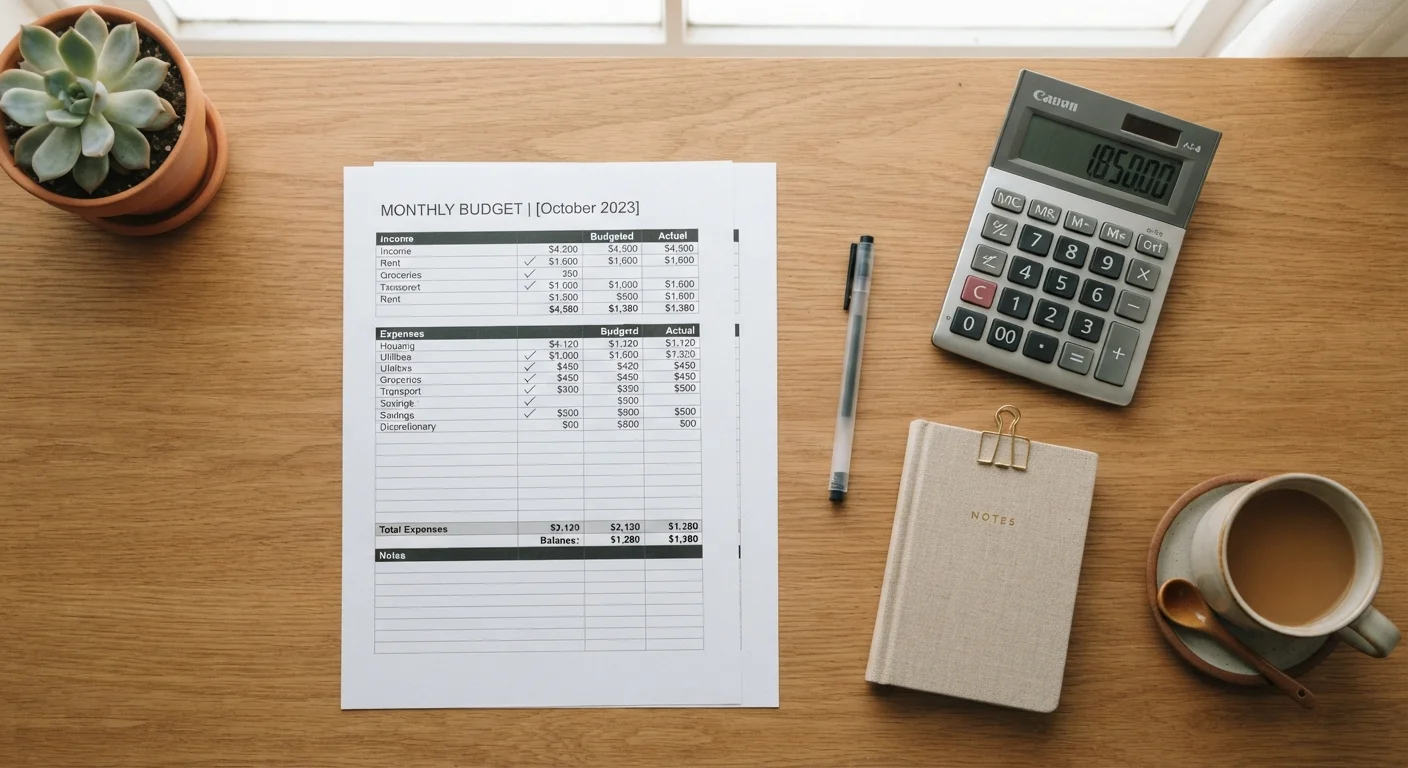
Photo: ScoutAnswers.com | Blogs That Ignite Curiosity editorial
Key Takeaways
- A budget is organized into income, fixed expenses, variable expenses, and discretionary spending.
- Fixed expenses stay the same each month; variable expenses shift based on usage or behavior.
- Discretionary spending covers wants, not needs - and it's usually the most flexible category.
- Savings and debt repayment should appear as their own line items, not afterthoughts.
- Understanding what each line item means makes it easier to find room to adjust your budget.
- Even irregular expenses like car registration or holiday gifts belong in a budget as planned categories.
Why Line Items Matter
A monthly budget is more than a list of numbers - it is a map of your financial life. Every line item carves out a named space for a specific type of money movement, which means you can see, at a glance, whether your spending matches your priorities. Without labeled categories, a budget becomes a single vague total that tells you very little about where adjustments are possible.
Most Americans who struggle with budgeting don't lack discipline - they lack structure. When categories are undefined, overspending in one area quietly offsets savings in another, and the problem stays invisible. Learning the vocabulary of budgeting is the first step toward building a plan that actually works.
~33%
Americans with a detailed monthly budget
Surveys by NFCC and similar organizations consistently find that fewer than one-third of U.S. adults maintain a detailed, written monthly budget.
$1,000+
Average monthly discretionary spending per household
U.S. Bureau of Labor Statistics Consumer Expenditure data shows that entertainment, dining, and personal spending regularly exceed $1,000 per month in average American households.
3-6 months
Recommended emergency fund coverage
Most financial guidance recommends an emergency fund covering three to six months of essential expenses, reinforcing why savings should be a dedicated budget line item.
Income: The Starting Line
Every budget begins with income - what comes in before anything goes out. This should reflect net income (take-home pay after taxes, not gross salary), since that is the amount you actually have to work with. If your income varies month to month, use a conservative estimate based on your lowest recent months to avoid overcommitting.
Income line items may include primary employment wages, freelance or gig income, rental income, government benefits, or regular transfers from other sources. Each source should be listed separately so you know which streams are reliable and which are unpredictable. Your total budgeted income sets the ceiling for everything that follows.
Fixed Expenses: The Non-Negotiables
Fixed expenses are obligations that arrive at the same amount every month regardless of your behavior. Common examples include rent or mortgage payments, car loans, student loan minimums, insurance premiums, and subscription services at a set rate. These line items are predictable, which makes them the easiest to plan for - but also the hardest to reduce quickly.
Because fixed costs are largely locked in, they set the floor of your monthly obligations. If fixed expenses consume too large a share of income, there is limited room to maneuver elsewhere. Understanding the structural difference between fixed and variable costs can shift how you approach budgeting decisions at every level.
Review Fixed Expenses Annually
Variable Necessities: Costs That Shift
Variable necessities are expenses you cannot eliminate but can influence through choices. Groceries, utilities (electricity, gas, water), gasoline, and medical co-pays all fall here. The amounts change month to month based on usage, season, or behavior - which means they respond to intentional effort.
This category rewards attention. Tracking these line items over several months reveals patterns: perhaps utility bills spike in winter, or grocery spending climbs during busy weeks when convenience foods replace meal planning. Granular tracking of variable spending is where many budgets find meaningful savings without cutting anything truly important.
Discretionary Spending: Wants, Not Needs
Discretionary line items cover spending that enriches life but is not strictly required - dining out, entertainment, hobbies, clothing beyond basics, personal care beyond essentials, and travel. This category is not an indulgence to be ashamed of; it is a legitimate part of a sustainable budget. The key is making these choices explicitly rather than by default.
Common discretionary categories include restaurants and takeout, streaming and app subscriptions, gym memberships, gifts, and personal grooming. When a budget feels too tight, this is typically where adjustments begin - but the goal is conscious trade-offs, not elimination. Frameworks for splitting income between needs, wants, and savings can help establish realistic targets for this category.
Savings and Debt Repayment: Line Items, Not Leftovers
Savings and debt repayment belong in a budget as deliberate line items - not whatever remains after everything else is paid. Savings categories might include an emergency fund, a retirement contribution, a vacation fund, or a home purchase goal. Debt repayment beyond minimum payments accelerates payoff and reduces interest costs over time.
Treating these as named line items changes how they are prioritized. When savings appear as a category alongside rent and groceries, they compete for budget space on equal footing rather than getting absorbed by unplanned spending. For strategies on growing savings and managing debt systematically, the Saving & Debt hub covers both in practical depth.
Irregular but predictable expenses - annual insurance premiums, holiday gifts, vehicle registration - also deserve line items. Divide the annual amount by 12, set that portion aside monthly, and the expense arrives without disruption. This approach, often called a sinking fund, prevents large but foreseeable costs from derailing an otherwise solid budget.
This article is for general informational and educational purposes only and does not constitute personalized financial advice. Consult a qualified financial professional for guidance tailored to your specific circumstances.
Frequently Asked Questions
The content on this site is for informational purposes only and is not a substitute for professional advice. Always consult a qualified professional for guidance specific to your situation.