
What Behavioral Economics Tells Us About Why We Overspend

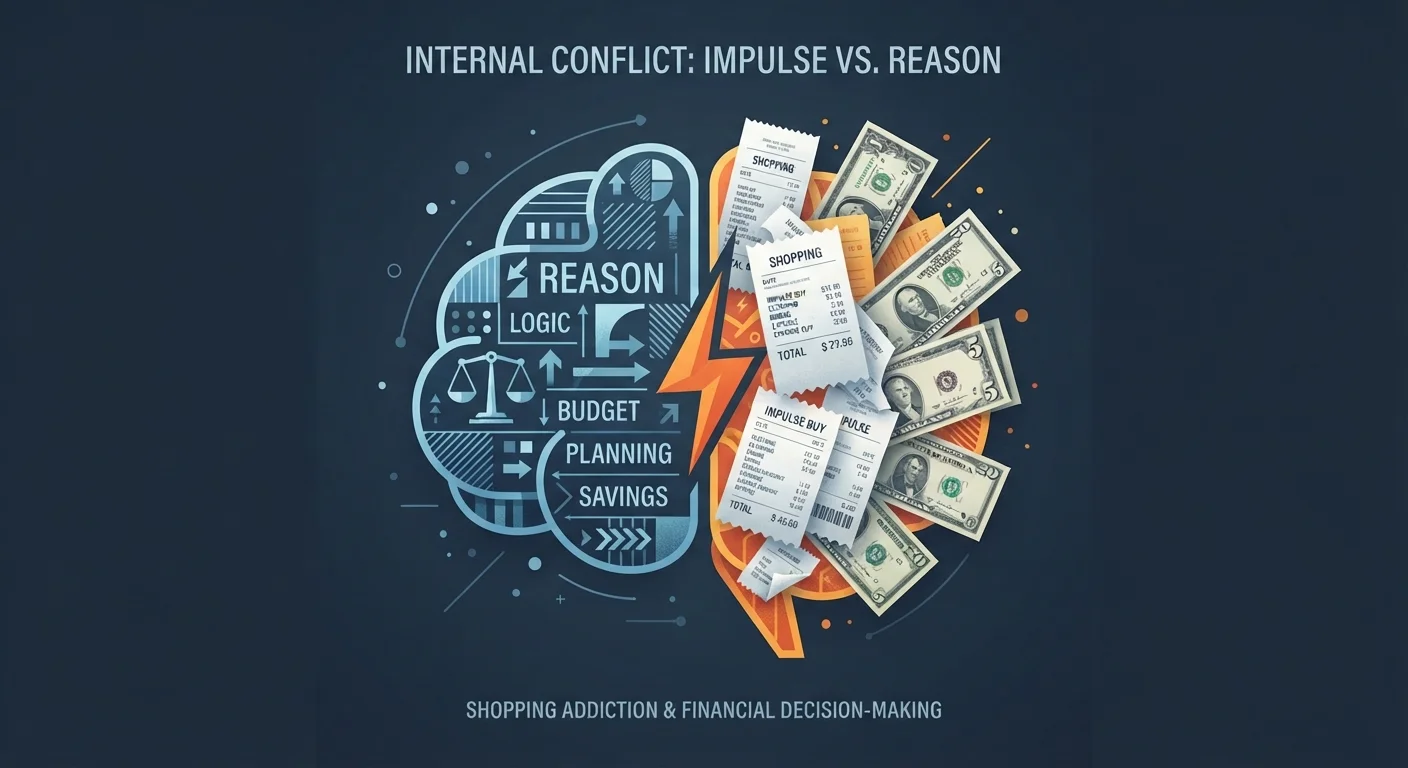
Photo: ScoutAnswers.com | Blogs That Ignite Curiosity editorial
Key Takeaways
- Overspending is often driven by predictable psychological patterns, not a lack of discipline.
- Present bias leads people to overvalue immediate rewards and underestimate future costs.
- Mental accounting causes people to treat money differently depending on its perceived category.
- Anchoring makes the first price you see disproportionately influence what you think is a fair deal.
- Awareness of these biases is the first step toward designing habits that counteract them.
- Structural strategies-like automation-can outperform willpower alone in curbing overspending.
The Myth of the Irrational Spender
Most people who overspend aren't reckless - they're human. The assumption that budgeting failures stem from laziness or poor character ignores decades of research showing that the brain is wired to make spending decisions in predictable, often counterproductive ways. Behavioral economics gives us a precise vocabulary for these patterns and, more importantly, a framework for addressing them.
Understanding why overspending happens isn't about assigning blame. It's about recognizing that your financial environment, your emotions, and a handful of deeply ingrained mental shortcuts are shaping choices you probably think you're making freely. Once you see the patterns, you can start designing around them. For more on challenging assumptions that hold back financial progress, see the truth behind common budgeting myths.
Present Bias: Why Today Always Wins
Present bias describes the tendency to place far greater value on immediate rewards than on future benefits, even when the future benefit is objectively larger. Buy something now versus save for retirement in 30 years? The brain processes these as vastly unequal - not because of math, but because the immediate reward activates emotional response systems more powerfully than abstract future gains.
This is why "I'll save more starting next month" is one of the most common and costly financial statements people make. The future version of you always seems like a better candidate for delayed gratification than the present version. Recognizing this tendency is foundational: the fix isn't to try harder, it's to make saving automatic so the decision doesn't rely on present-you at all. Our article on automating your savings explores exactly how to do this.
Fight Present Bias With Automation
Mental Accounting and the 'Found Money' Problem
Economist Richard Thaler coined the term mental accounting to describe how people sort money into informal mental buckets and apply different spending rules to each. Practically, this means a $500 tax refund and $500 from a paycheck carry equal purchasing power - but most people spend them very differently. The refund feels like "house money" and gets spent freely; the paycheck feels like earned income and gets treated carefully.
This also explains why people carry credit card debt at high interest rates while simultaneously holding savings they could use to pay it off. Cognitively, the savings bucket and the debt bucket are kept separate, even when consolidating them would produce a clear financial benefit. Tracking spending across all categories - not just by account type - can expose these inconsistencies. Tracking every dollar, even small ones makes mental accounting visible and therefore manageable.
74%
Americans report living paycheck to paycheck at some point
According to survey data from the American Payroll Association, a significant share of workers say they would struggle if their paycheck were delayed by even one week.
~$1,500
Average annual impulse spending per U.S. consumer
Research from Slickdeals and financial behavior studies has estimated that unplanned purchases account for a substantial portion of discretionary spending for many households.
3x
More likely to save when enrollment is automatic
Studies cited in Richard Thaler and Shlomo Benartzi's research on automatic 401(k) enrollment show dramatically higher participation rates when employees are opted in by default rather than required to opt in manually.
Anchoring and the Price Reference Problem
When you encounter a price, your brain immediately uses it as a reference point - an anchor - to judge everything that follows. Retailers exploit this constantly: a jacket marked down from $300 to $180 feels like a strong value, even if no reasonable market comparison supports that original price. The $300 anchor has done its job.
Anchoring extends beyond retail. Salary negotiations, car purchases, and real estate transactions are all heavily influenced by the first number introduced. The person who introduces the anchor - whether a salesperson or a listing price - gains a significant psychological advantage. A useful counter-strategy: research prices independently before engaging in any negotiation or purchase decision, so your reference point is market-based rather than seller-determined.
Building Habits That Work With Your Psychology
Knowing these biases exist is useful. Designing your financial life to account for them is transformative. Several practical approaches emerge directly from behavioral research:
- Automate savings and bill payments to remove present-bias decision points from the equation entirely.
- Use written or digital budgets to consolidate mental accounts into a single, accurate picture of your finances.
- Impose a waiting period on non-essential purchases above a set threshold - 24 to 48 hours dissolves many impulse decisions.
- Conduct a monthly spending review to spot anchoring effects and mental accounting in action. A structured review process - like a monthly spending audit - builds this habit systematically.
None of these require exceptional willpower. They work precisely because they replace moment-to-moment decisions with structures that reflect your actual long-term priorities. For a broader view of what makes spending habits durable, see principles that make a budget sustainable.
“The first step is to measure whatever can be easily measured. The second step is to disregard that which can't be measured or give it an arbitrary quantitative value. This is artificial and misleading. The third step is to presume that what can't be easily measured really isn't very important. This is blindness.”
— Daniel Kahneman, Nobel Prize-winning psychologist and behavioral economist, author of 'Thinking, Fast and Slow'
This article is for general informational and educational purposes only and does not constitute personalized financial advice. Consult a qualified financial professional for guidance specific to your circumstances.
Frequently Asked Questions
The content on this site is for informational purposes only and is not a substitute for professional advice. Always consult a qualified professional for guidance specific to your situation.