
The Real Cost of Carrying a Balance on Your Credit Card

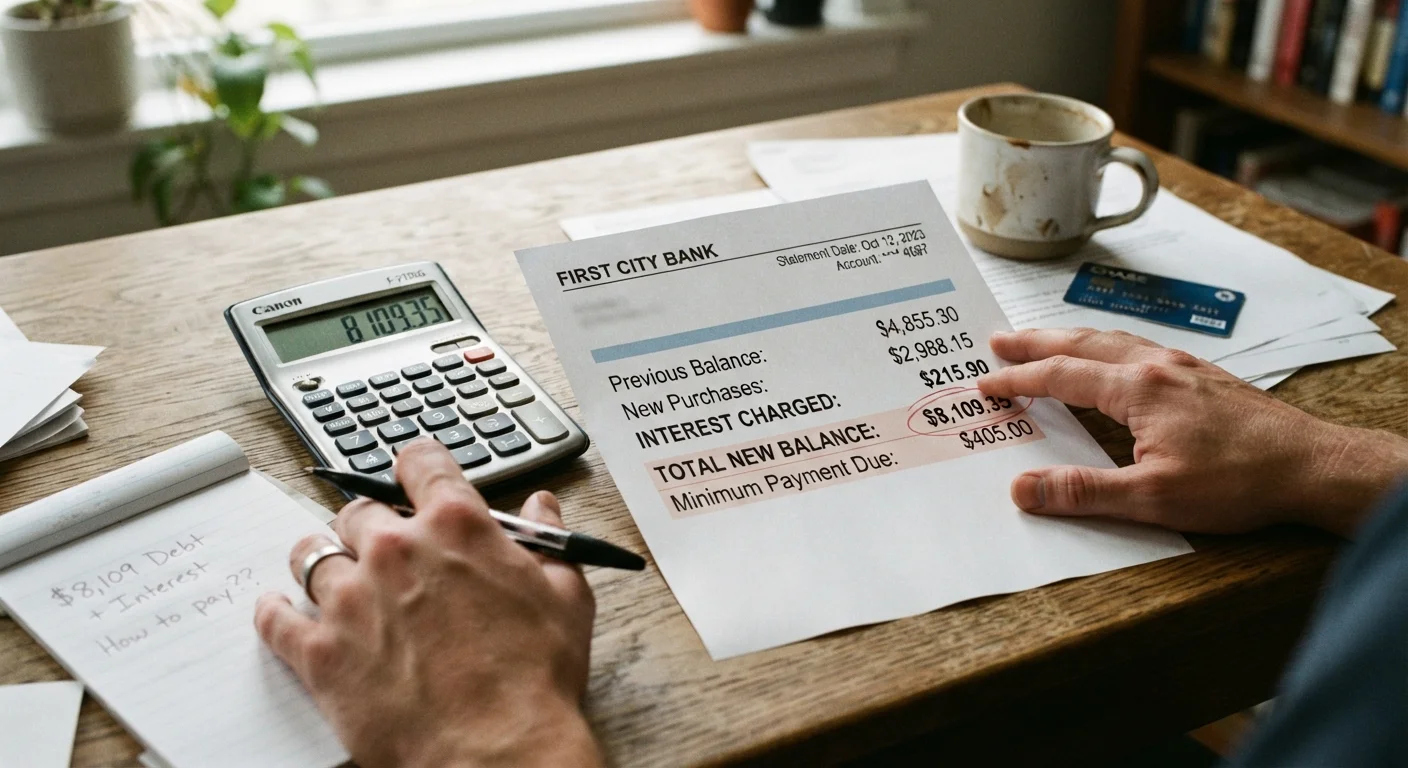
Photo: ScoutAnswers.com | Blogs That Ignite Curiosity editorial
Key Takeaways
- Credit card APRs are among the highest interest rates consumers regularly encounter, often exceeding 20%.
- Interest compounds daily on most credit cards, meaning unpaid balances grow faster than many borrowers expect.
- Paying only the minimum balance can extend debt repayment by years and multiply total interest paid.
- Even a modest unpaid balance can cost hundreds of dollars in interest over time if left unaddressed.
- Building an emergency fund alongside debt repayment helps prevent future reliance on high-interest credit.
Why Credit Card Interest Hits Harder Than You Think
Credit cards are a convenient financial tool - until an unpaid balance starts compounding against you. Unlike a mortgage or car loan with a fixed monthly payment and a clear payoff date, credit card debt is revolving: you borrow, repay (or don't), and the cycle continues. The danger lies in how quickly interest accumulates when balances aren't cleared each month.
The average credit card APR has climbed significantly in recent years, with many cards charging rates above 20%. At that rate, a $2,000 balance left unpaid generates roughly $400 in annual interest - before any new purchases are factored in. And because most cards compound interest daily, the effective cost is even higher than the stated APR suggests.
20%+
Average credit card APR in recent years
Federal Reserve data has shown average credit card interest rates consistently above 20% for general-purpose cards in recent periods.
~$1,000
Annual interest on a $5,000 balance at 20% APR
This rough estimate assumes no additional purchases and interest compounding daily - illustrating how quickly carrying costs accumulate on a mid-size balance.
3-4x
Potential interest multiplier with minimum-only payments
Financial educators note that borrowers making only minimum payments on high-APR balances can end up paying two to four times the original purchase price over time.
For readers juggling debt repayment alongside building savings, understanding this math is foundational. Every dollar in high-interest debt you carry costs you money that could otherwise go toward an emergency fund, a retirement account, or any other financial goal.
How the Daily Compounding Mechanism Works
Here's the core mechanic: your issuer takes your APR and divides it by 365 to arrive at a daily periodic rate. That rate is applied to your balance each day of the billing cycle. If you start the month with a $1,500 balance at a 22% APR, your daily rate is approximately 0.0603%. Applied each day, that accumulates to around $27.50 in interest charges for a 30-day billing period - even if you don't make a single new purchase.
What makes this particularly costly is that once the interest is added to your balance, next month's interest is calculated on the new, higher total. This is the compounding effect. It doesn't accelerate explosively in the short term, but over 12 to 24 months of carrying a balance, the total interest paid can dwarf the original amount borrowed.
Pay More Than the Minimum When Possible
If you're only making minimum payments, the situation compounds further. Minimum payment formulas are typically designed to keep balances alive longer - not to pay them off efficiently. Our related article on why minimum payments cost more than you think walks through the specific numbers.
Balancing Debt Payoff With Building an Emergency Fund
One of the most common financial dilemmas is deciding whether to pay down high-interest credit card debt or build an emergency fund first. The mathematically optimal answer is often to eliminate the high-APR debt first - since the guaranteed "return" of avoiding 20%+ interest is hard to beat. But this approach carries a real risk: without any liquid savings cushion, the next unexpected expense goes straight back onto the credit card.
A practical middle path that many financial educators suggest is to build a small starter emergency fund - enough to cover one or two months of essential expenses - before aggressively paying down debt. This way, a car repair or medical bill doesn't immediately undo your repayment progress.
Once that foundation is in place, redirecting as much surplus income as possible toward the highest-interest balance reduces the compounding damage fastest. For first-time cardholders especially, establishing good habits early can prevent a minor balance from becoming a long-term burden. Our guide for first-time credit card holders covers this in more depth.
Credit card debt behaves differently from other types of borrowing - it lacks the structured repayment timeline of an installment loan and typically carries no tax advantages. Understanding how it compares to student loan debt can help you prioritize which balances to tackle first.
This article is for general informational and educational purposes only and does not constitute personalized financial, tax, or legal advice. Readers should consult a qualified financial professional before making decisions based on their individual circumstances.
Frequently Asked Questions
The content on this site is for informational purposes only and is not a substitute for professional advice. Always consult a qualified professional for guidance specific to your situation.