
Home Workout Routines vs. Gym Training: Weighing the Trade-Offs

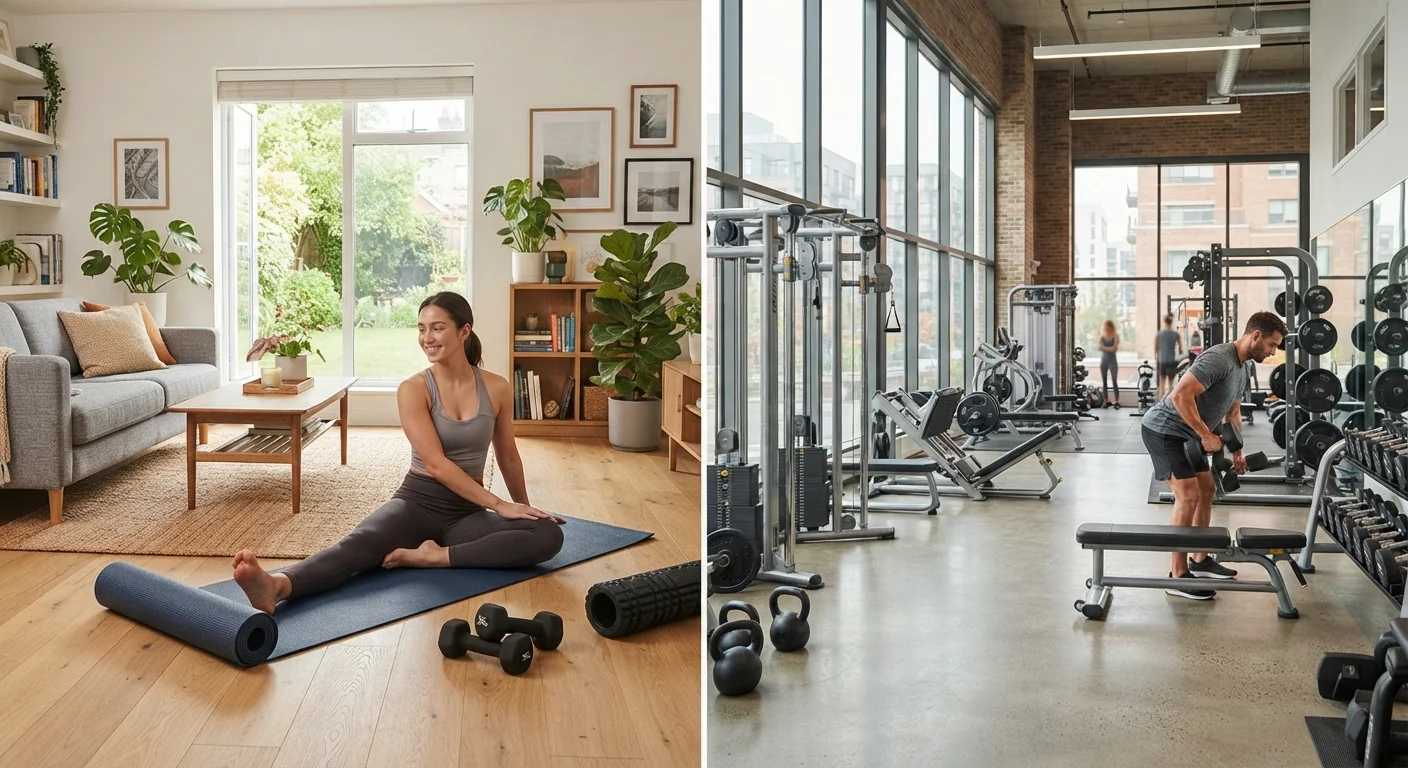
Photo: ScoutAnswers.com | Blogs That Ignite Curiosity editorial
Key Takeaways
- Home workouts eliminate commute time and gym fees, lowering the barrier to consistency.
- Gym training offers access to specialized equipment and a structured social environment.
- Neither setting is universally superior - the best choice is the one you'll actually stick with.
- Cost, motivation style, and available space all play a meaningful role in the decision.
- Many people find a hybrid approach - mixing both environments - works best long-term.
No commute - train whenever fits your schedule
Removing travel time eliminates one of the most commonly cited reasons people skip workouts. A session can start as soon as you step into your living room.
Zero or low ongoing cost
Bodyweight training requires no equipment at all, and a basic resistance band or dumbbell set is a one-time purchase that can last for years.
Full control over your environment
Temperature, music, pace, and privacy are all yours to set - a meaningful advantage for people who find busy gym floors distracting or uncomfortable.
Available 24/7 with no wait times
There's no waiting for a treadmill or squat rack, and no closing time. This makes home training particularly practical for early risers and night owls alike.
Lower psychological barrier to starting
For people with social anxiety or who are new to exercise, the privacy of home can reduce the intimidation factor that prevents them from starting at all.
Limited access to heavy or specialized equipment
Home gyms rarely include barbells, cable systems, or commercial cardio machines, which can cap progress for goals that require heavier progressive overload.
Higher upfront cost for a well-equipped setup
Replicating a gym's range of equipment at home can cost thousands of dollars - and may require dedicated space that many households simply don't have.
Fewer built-in social and accountability cues
The gym's environment - seeing others exercise, working with a trainer, joining a class - provides external motivation that is hard to manufacture alone at home.
Home distractions can interrupt workouts
Children, household chores, phones, and other demands compete for attention in ways that a dedicated gym space usually prevents.
No access to professional guidance on-site
Personal trainers, form checks, and fitness class instructors are predominantly gym-based, making it harder to get real-time feedback on technique at home.
Why This Decision Matters More Than You Might Think
Where you exercise shapes how consistently you exercise - and consistency is the single strongest predictor of long-term fitness outcomes. A perfectly designed program you abandon after three weeks beats nothing by very little. That's why the home-vs.-gym question isn't trivial.
The good news is that research consistently shows both settings can produce meaningful improvements in strength, cardiovascular health, and overall well-being. The American College of Sports Medicine has noted that adherence, not location, is the critical variable. So the real question is: which environment makes adherence easier for you?
If you're just beginning to rebuild physical activity, see our guide for returning to exercise after a long break for a low-pressure starting framework.
The Case for Home Workouts
Training at home removes several common friction points. There's no commute, no wait for equipment, and no membership fee. For people with unpredictable schedules, young children, or social anxiety, these factors can be the difference between working out and not.
No commute - train whenever fits your schedule
Removing travel time eliminates one of the most commonly cited reasons people skip workouts. A session can start as soon as you step into your living room.
Zero or low ongoing cost
Bodyweight training requires no equipment at all, and a basic resistance band or dumbbell set is a one-time purchase that can last for years.
Full control over your environment
Temperature, music, pace, and privacy are all yours to set - a meaningful advantage for people who find busy gym floors distracting or uncomfortable.
Available 24/7 with no wait times
There's no waiting for a treadmill or squat rack, and no closing time. This makes home training particularly practical for early risers and night owls alike.
Lower psychological barrier to starting
For people with social anxiety or who are new to exercise, the privacy of home can reduce the intimidation factor that prevents them from starting at all.
Bodyweight exercises - push-ups, squats, lunges, planks - are well-studied and can build real strength and endurance without any equipment at all. A modest investment in resistance bands or a set of adjustable dumbbells expands your options considerably without requiring much space or money.
Home training also gives you full control over your environment: the temperature, the music, the pace, and who's watching (no one). For many people, this reduces the psychological barrier enough to make workouts happen far more reliably.
The Case for Gym Training
Gym environments offer something home setups rarely can: a wide range of specialized equipment and the social architecture of a place dedicated to exercise. Walking into a gym signals to your brain that it's time to work - a psychological cue that many people find genuinely useful.
Limited access to heavy or specialized equipment
Home gyms rarely include barbells, cable systems, or commercial cardio machines, which can cap progress for goals that require heavier progressive overload.
Higher upfront cost for a well-equipped setup
Replicating a gym's range of equipment at home can cost thousands of dollars - and may require dedicated space that many households simply don't have.
Fewer built-in social and accountability cues
The gym's environment - seeing others exercise, working with a trainer, joining a class - provides external motivation that is hard to manufacture alone at home.
Home distractions can interrupt workouts
Children, household chores, phones, and other demands compete for attention in ways that a dedicated gym space usually prevents.
No access to professional guidance on-site
Personal trainers, form checks, and fitness class instructors are predominantly gym-based, making it harder to get real-time feedback on technique at home.
For goals that depend on progressive overload with heavy loads - such as serious strength or muscle-building programs - a gym's barbell racks, cable machines, and plate-loaded equipment are difficult to replicate at home without significant expense. The same applies to cardio machines like rowing ergometers or commercial-grade treadmills.
Group fitness classes, personal trainers, and the informal motivation of exercising alongside others are also primarily gym-based advantages. If external accountability is what keeps you consistent, a gym may well be worth the cost and commute.
~60%
U.S. adults who don't meet weekly exercise guidelines
CDC physical activity data consistently shows that most American adults fall short of recommended aerobic and muscle-strengthening activity levels, regardless of gym access.
67%
Gym members who rarely or never use their membership
Research cited in behavioral economics literature suggests a substantial majority of gym members use their facilities far less than they intend to when signing up.
Practical Factors to Weigh
When thinking through the decision, consider these dimensions honestly:
- Cost: A gym membership typically runs $30-$60 per month at a standard facility, though costs vary widely. Home equipment can be a one-time investment or negligible if you rely on bodyweight training.
- Space: Even a small cleared area can support a solid home routine, but if you share a small apartment, logistics matter.
- Schedule flexibility: Home training is available at any hour. Gyms have operating hours, and peak times often mean crowded equipment.
- Motivation style: Honest self-assessment here matters most. Do you thrive on variety and social energy, or do you prefer solitude and control?
The Hybrid Approach Is a Real Option
It's also worth revisiting some common assumptions before making a decision. Our article on exercise myths that hold people back addresses several beliefs - including the idea that a gym membership is necessary for real results - that the evidence doesn't support.
Building a Sustainable Plan Either Way
Whichever setting you choose, structure and scheduling matter more than the setting itself. A vague intention to "work out more" underperforms a specific, realistic weekly plan. Think about how each session fits into your actual week - not your ideal week.
Many people find that a hybrid approach works well over time: a home routine for busy days or mornings, gym sessions for heavier lifts or classes on days with more time. This flexibility can protect consistency when life gets unpredictable.
Our guide to building a weekly movement schedule walks through how to design a realistic plan around your life rather than despite it. And if you're ready to start, the personal readiness checklist can help you assess your starting point safely.
This article is for general informational purposes only and is not a substitute for personalized medical or fitness advice. Consult a qualified healthcare provider before beginning any new exercise program, particularly if you have existing health conditions or concerns.
The content on this site is for informational purposes only and is not a substitute for professional advice. Always consult a qualified professional for guidance specific to your situation.