
Plant-Based Proteins vs. Animal Proteins: Weighing the Nutritional Trade-Offs

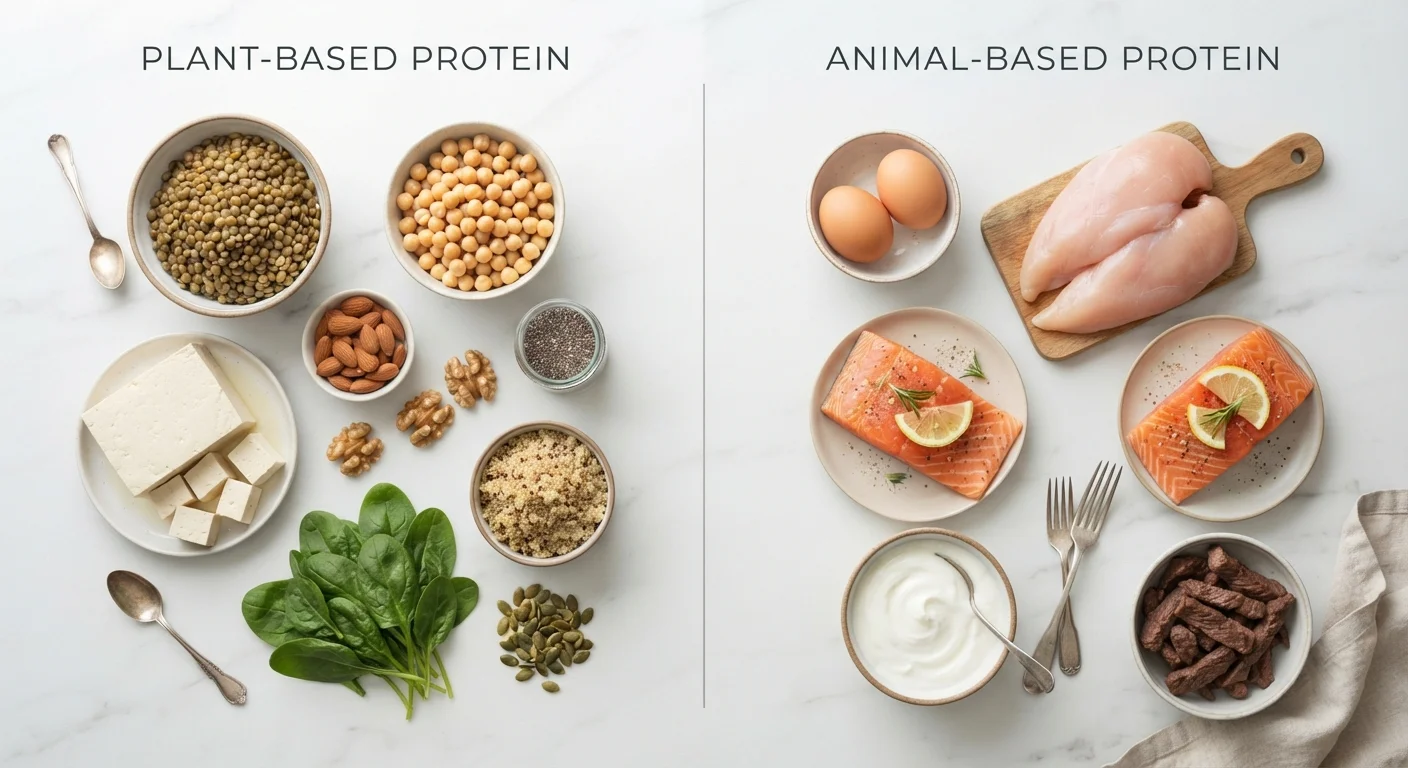
Photo: ScoutAnswers.com | Blogs That Ignite Curiosity editorial
Key Takeaways
- Animal proteins are generally 'complete,' containing all nine essential amino acids in adequate amounts.
- Most plant proteins are lower in one or more essential amino acids, but combining sources across meals can address this.
- Bioavailability - how efficiently protein is absorbed and used - tends to be higher for animal-sourced proteins.
- Plant protein sources often deliver fiber, phytonutrients, and lower saturated fat alongside their protein content.
- No single protein source is universally superior; individual health context, dietary pattern, and food quality all matter.
What Makes a Protein 'Complete'?
Proteins are built from amino acids - small compounds the body uses to repair tissue, support immune function, produce enzymes, and more. Of the 20 amino acids involved in human physiology, nine are classified as essential, meaning the body cannot synthesize them and must obtain them through food.
Animal proteins - found in meat, poultry, fish, eggs, and dairy - contain all nine essential amino acids in proportions that closely match human needs. This is why they're commonly called complete proteins.
Most plant proteins, by contrast, are lower in at least one essential amino acid. Soy and quinoa are notable exceptions, providing a complete amino acid profile on their own. Others - such as legumes (high in lysine, low in methionine) and grains (the reverse) - can complement each other when eaten across the course of a day, a strategy sometimes called protein combining. Importantly, current nutrition science does not require these pairings to happen within a single meal.
Understanding this distinction is a useful starting point, but completeness is only one dimension of protein quality. See our foundational nutrition primer for broader context on how protein fits into an overall eating pattern.
Bioavailability: How Much Protein Your Body Actually Uses
Even if two foods contain the same amount of protein by weight, the body may absorb and utilize those proteins very differently. This concept - bioavailability - is measured in several ways, the most comprehensive being the DIAAS (Digestible Indispensable Amino Acid Score), developed by the Food and Agriculture Organization.
| Criterion | Animal Proteins | Plant Proteins | |
|---|---|---|---|
| Amino acid completeness | Complete (all 9 essential AAs) | Often incomplete; soy/quinoa are exceptions | |
| Bioavailability (DIAAS) | Generally high | Generally moderate; improves with processing | |
| Saturated fat content | Variable; often higher (red meat, dairy) | Typically low | |
| Dietary fiber | None | Present; supports gut health | |
| Vitamin B12 | Naturally present | Absent; supplementation often needed | |
| Iron form | Heme iron (well absorbed) | Non-heme iron (lower absorption) | |
| Phytonutrient content | Minimal | Rich in phytonutrients and antioxidants |
Animal proteins generally score higher on bioavailability metrics. Eggs, for example, are frequently cited as a reference standard for protein digestibility. Dairy proteins such as whey and casein are similarly well-absorbed.
Plant proteins tend to score lower, partly because plant cell walls and compounds like phytates and tannins can reduce digestive efficiency. Processing methods - soaking, sprouting, fermenting, or cooking - can meaningfully improve the bioavailability of plant proteins. Tofu and tempeh, for instance, are more digestible than whole soybeans.
~74%
True ileal digestibility of whole peas
FAO research using DIAAS methodology shows whole pea protein digestibility around 74%, compared to roughly 100% for eggs, illustrating the bioavailability gap between sources.
~1 in 3
U.S. adults not meeting protein RDA
NHANES dietary data suggests a meaningful share of older Americans, particularly women over 70, fall short of recommended protein intakes regardless of source.
It's worth noting that bioavailability differences, while real, are rarely dramatic enough to make plant proteins nutritionally inadequate in a varied diet. Nutrients Americans commonly fall short on include several that interact with protein metabolism, so considering the full dietary picture matters.
Beyond Amino Acids: The Nutritional Package
Protein sources don't exist in nutritional isolation. What comes alongside the protein - fat type, fiber, micronutrients, and bioactive compounds - shapes the overall health value of a food.
Animal protein sources tend to deliver well-absorbed forms of iron (heme iron), zinc, vitamin B12, and omega-3 fatty acids (particularly from fatty fish). Some, however, are also higher in saturated fat, which research continues to associate with cardiovascular risk at elevated intakes - though the relationship is nuanced and depends on the broader dietary context.
Plant protein sources come packaged with dietary fiber, which supports gut health and satiety, as well as phytonutrients - plant compounds with emerging evidence for anti-inflammatory and other health-relevant effects. They are generally lower in saturated fat. However, plant foods are lower in or absent of B12, heme iron, and pre-formed long-chain omega-3s, making these nutrients worth monitoring for those who eat primarily plant-based diets.
This trade-off in nutritional packaging is one reason nutrition researchers increasingly emphasize dietary patterns - the totality of what someone eats - over individual food comparisons. For a deeper look at food quality distinctions, our article on whole foods vs. processed foods explores how processing affects nutritional value across all food categories.
This article is for general informational purposes only and does not constitute medical or dietary advice. Consult a registered dietitian or qualified healthcare provider before making significant changes to your diet, especially if you have an existing health condition.
The content on this site is for informational purposes only and is not a substitute for professional advice. Always consult a qualified professional for guidance specific to your situation.