
Whole Foods vs. Processed Foods: What the Difference Really Means for Your Diet

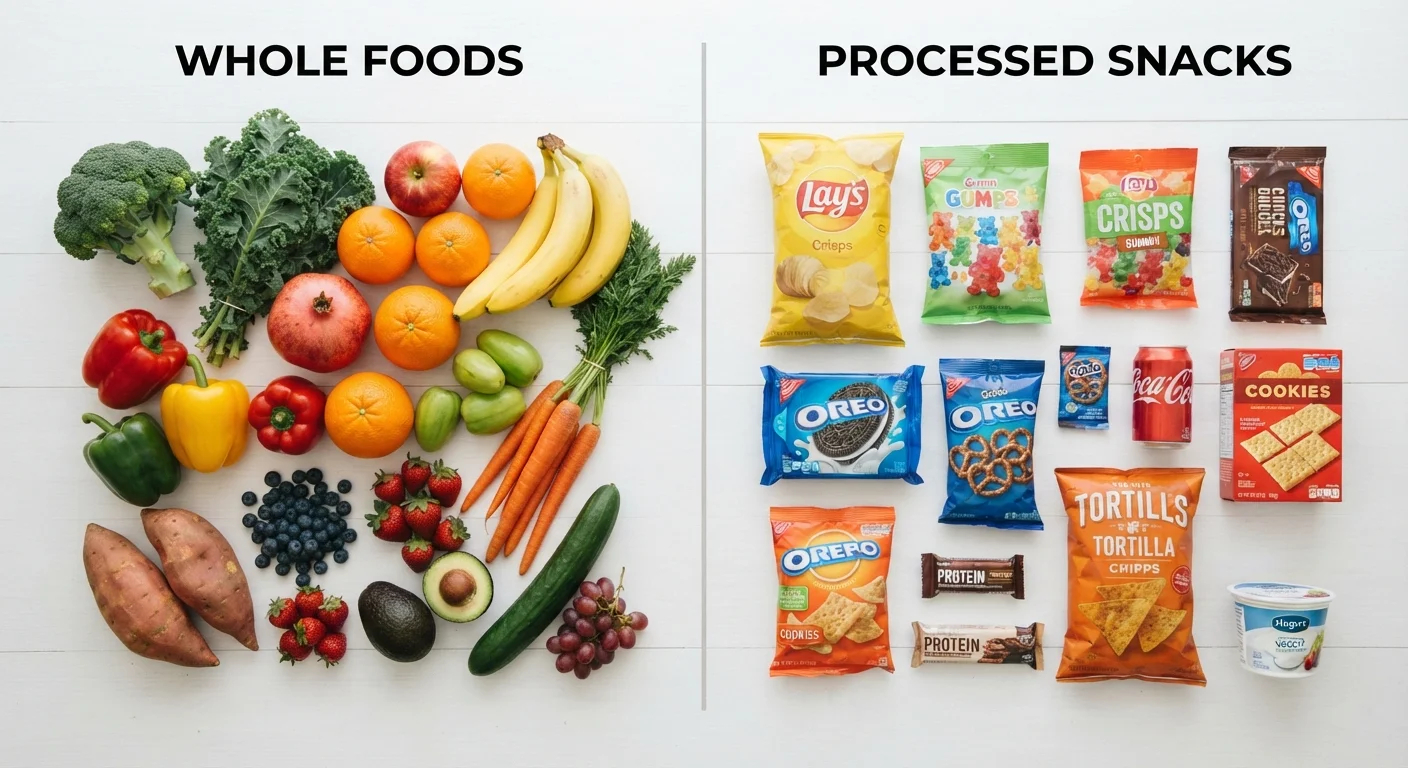
Photo: ScoutAnswers.com | Blogs That Ignite Curiosity editorial
Key Takeaways
- Whole foods retain their natural nutrient profile without added sugars, sodium, or synthetic additives.
- Processing exists on a spectrum - minimal processing can preserve nutrition, while ultra-processing often diminishes it.
- Most people's diets include both whole and processed foods; the ratio and types matter more than strict avoidance.
- Reading ingredient lists and nutrition labels helps distinguish between lightly and heavily processed options.
- Dietary patterns built around predominantly whole foods are consistently associated with positive health outcomes in research.
Defining the Terms: What Do 'Whole' and 'Processed' Actually Mean?
The phrase whole foods refers to foods eaten in, or very close to, their natural state - fresh fruits, vegetables, legumes, whole grains, nuts, seeds, eggs, and unprocessed meats or fish. They haven't had nutrients stripped away or additives introduced.
Processed foods cover an enormous range. The NOVA classification system, developed by nutrition researchers at the University of São Paulo, groups foods into four categories based on the extent of processing - from minimally processed (frozen spinach, plain yogurt) to ultra-processed (packaged snack cakes, flavored chips). This spectrum matters because treating all processed foods as equivalent to the most heavily engineered products obscures a genuinely useful distinction.
A bag of frozen edamame is technically processed. So is a neon-orange cheese puff. Grouping them together tells you very little about nutritional quality. For a solid foundation in understanding these categories, see Healthy Eating From the Ground Up, which walks through core nutrition principles accessibly.
| Criterion | Whole Foods | Processed Foods |
|---|---|---|
| Definition | Unaltered or minimally altered from natural state | Modified from original form; ranges from minimal to extensive |
| Nutrient density | Generally high; fiber, vitamins, minerals intact | Varies widely; can be enriched or depleted |
| Added sugars | None | Often present in ultra-processed products |
| Sodium content | Naturally low | Frequently elevated for preservation or flavor |
| Shelf life | Short; requires refrigeration or timely use | Often extended through preservation methods |
| Convenience | Requires more preparation time | Generally ready-to-eat or quick to prepare |
| Cost accessibility | Variable; some whole foods are affordable staples | Variable; ultra-processed often inexpensive per calorie |
| Additives present | None | Common in heavily processed products |
What Changes When Food Is Processed?
Processing affects foods in multiple ways, some beneficial, some not. Pasteurization eliminates harmful pathogens from milk and juice - a clear safety win. Fermentation produces yogurt and kimchi while enhancing digestibility and introducing beneficial bacteria. These are examples where processing adds value.
At the other end of the spectrum, ultra-processing typically involves combining refined ingredients - white flour, added sugars, industrial fats, salt - with emulsifiers, colorings, and flavor enhancers to produce foods that are highly palatable but relatively low in fiber and micronutrients. Research published in journals such as The BMJ and JAMA Internal Medicine has found associations between high ultra-processed food consumption and various health concerns, though establishing causation in dietary research remains methodologically complex.
One key area worth understanding is sugar. Processing frequently introduces added sugars that aren't present in whole foods. The distinction between naturally occurring and added sugars has real nutritional implications - explore that in depth via Natural Sugars vs. Added Sugars.
Processing Isn't Always the Enemy
Practical Implications: How This Shapes Your Diet
Rather than treating whole foods as morally superior and processed foods as entirely off-limits, a more evidence-grounded approach focuses on proportions and patterns. Dietary research consistently shows that eating patterns - the overall combination of foods eaten regularly - are more predictive of health outcomes than any single food or food category.
Practically, this means orienting meals around whole or minimally processed foods while being selective rather than categorical about processed options. Reading ingredient lists is more informative than relying on front-of-package claims. A short ingredient list with recognizable items generally signals lighter processing. Longer lists dense with unfamiliar compounds typically indicate more extensive industrial manufacturing.
Protein choices illustrate this well. Whether plant- or animal-based, the degree of processing matters alongside the protein source itself. For a deeper look at protein trade-offs, Plant-Based Proteins vs. Animal Proteins offers a useful side-by-side comparison.
If you're considering meaningful changes to how you eat, Evaluating a Dietary Change provides a grounded checklist to work through before overhauling your routine.
This article is for general informational purposes only and does not constitute medical or dietary advice. Consult a qualified healthcare professional or registered dietitian before making significant changes to your eating habits, especially if you have an existing health condition.
The content on this site is for informational purposes only and is not a substitute for professional advice. Always consult a qualified professional for guidance specific to your situation.