
Natural Sugars vs. Added Sugars: Why the Source Actually Matters

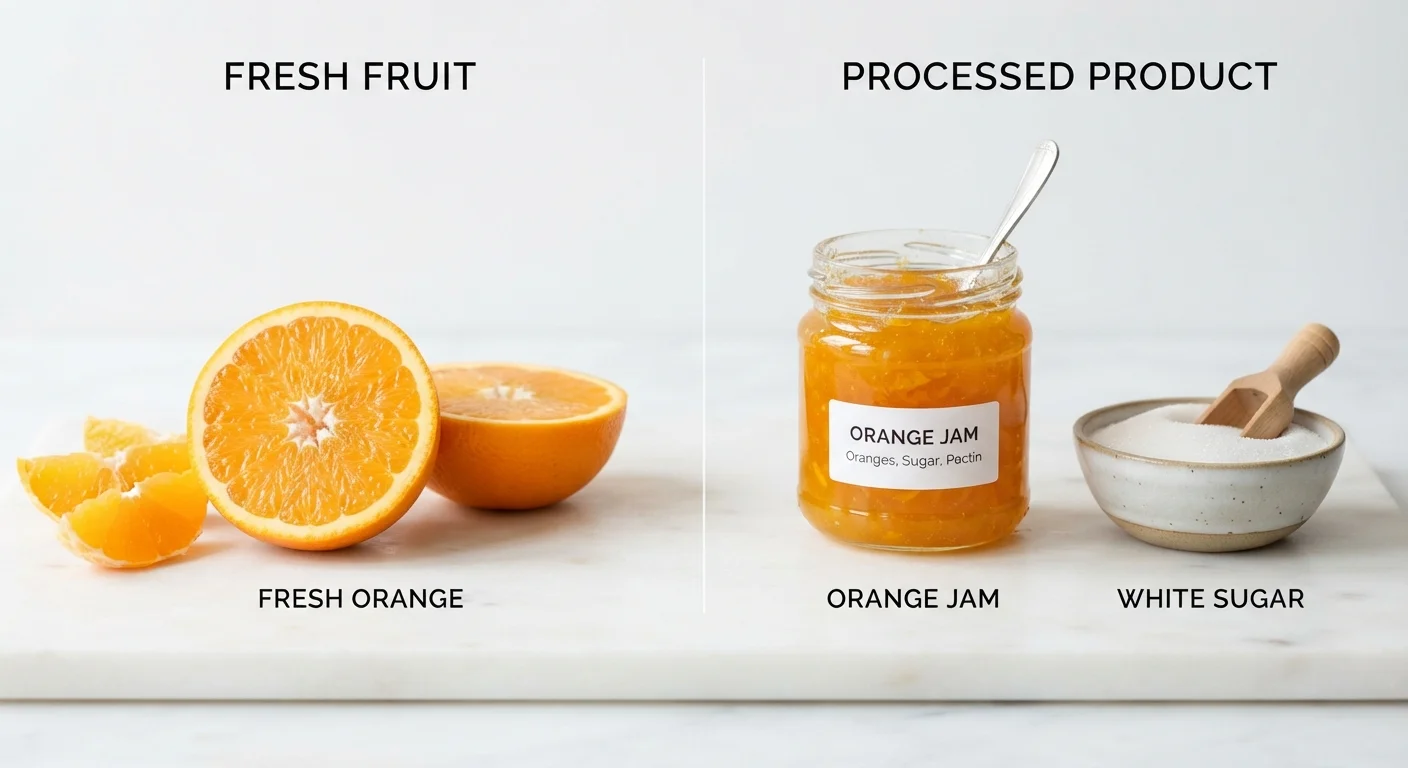
Photo: ScoutAnswers.com | Blogs That Ignite Curiosity editorial
Key Takeaways
- Natural sugars come packaged with fiber, vitamins, and minerals that slow absorption and add nutritional value.
- Added sugars provide calories without accompanying nutrients, often called 'empty calories' by nutrition researchers.
- The U.S. Dietary Guidelines recommend limiting added sugars to less than 10% of total daily calories.
- Both types are chemically similar, but the food matrix surrounding natural sugars changes how the body processes them.
- Nutrition labels now distinguish added sugars from total sugars, making it easier to track your intake.
What Makes a Sugar 'Natural' or 'Added'?
The terms can be confusing because the molecules themselves - primarily glucose, fructose, and sucrose - are often chemically identical whether they originate in a piece of fruit or a bottle of soda. The distinction lies entirely in context: how the sugar arrives in the food and what accompanies it.
Natural sugars are those inherently present in whole or minimally processed foods. The lactose in milk, the fructose in an apple, the glucose in a sweet potato - none of these were added by a manufacturer. They exist within a broader food matrix that includes fiber, water, protein, vitamins, and minerals.
Added sugars, by contrast, are any sugars or caloric sweeteners incorporated into a food or beverage during processing, preparation, or manufacturing. This includes obvious sources like table sugar stirred into coffee, as well as less visible ones like high-fructose corn syrup in bread, honey in salad dressing, or concentrated fruit juice used as a sweetener in packaged snacks.
For a practical guide to spotting added sugars on product packaging, see our guide to reading nutrition labels.
| Criterion | Natural Sugars | Added Sugars |
|---|---|---|
| Origin | Inherent in whole foods | Added during processing or prep |
| Common sources | Fruit, dairy, vegetables | Soda, baked goods, sauces, cereals |
| Accompanying nutrients | Fiber, vitamins, minerals, water | Minimal to none |
| Effect on blood sugar | Generally slower, buffered by fiber | Often faster, more pronounced spike |
| Satiety contribution | Higher - food matrix promotes fullness | Lower - calories without bulk |
| Listed separately on labels | No separate line item | Yes, since 2020 U.S. label rules |
| Dietary guidance | No specific limit for whole foods | Less than 10% of daily calories (U.S. DGA) |
Why the Food Matrix Changes Everything
The most important reason nutritionists distinguish between these two sugar categories isn't the molecule - it's what travels with it. When you eat a whole apple, the fructose it contains is wrapped in dietary fiber, water, and antioxidants. That fiber physically slows digestion and moderates the rate at which sugar enters the bloodstream, leading to a more gradual glucose response compared to drinking apple juice, where most of the fiber has been removed.
Added sugars, by definition, arrive in food stripped of this nutritional scaffolding. Consuming them delivers calories without the fiber, protein, or micronutrients that promote satiety and support metabolic function. Research published in journals such as JAMA Internal Medicine has linked consistently high added-sugar consumption to elevated risks of cardiovascular disease, independent of body weight - suggesting the effect isn't simply about excess calories.
~17 tsp
Average daily added sugar intake for U.S. adults
CDC national dietary data indicates many American adults consume well above recommended added sugar limits.
10%
Maximum recommended share of calories from added sugars
The U.S. Dietary Guidelines for Americans set this threshold as a general population target.
~40%
Share of added sugars from beverages in U.S. diet
Research from the National Cancer Institute identified sugar-sweetened drinks as the leading single source of added sugars for American adults.
This doesn't mean natural sugars are calorie-free or that quantity is irrelevant. Whole fruit juice consumed in large volumes, for example, loses some of the fiber advantage of eating the whole fruit. But as a general pattern, eating sugars within their natural food matrix produces meaningfully different physiological outcomes than consuming equivalent amounts of isolated or added sweeteners.
To understand this difference in the broader context of food quality, our article on whole foods vs. processed foods explains how the degree of processing affects nutritional value across the board.
Putting It Into Perspective for Everyday Eating
The U.S. Dietary Guidelines for Americans recommend that added sugars make up no more than 10% of total daily calorie intake. For a standard 2,000-calorie diet, that works out to about 50 grams - or roughly 12 teaspoons. The American Heart Association's guidance is more conservative, particularly for certain populations. Many Americans currently exceed these thresholds, largely through beverages, desserts, and processed snack foods rather than whole-food sources.
A practical starting point is simply becoming aware of where added sugars appear in your current diet. Since 2020, U.S. nutrition labels are required to list added sugars as a separate line item beneath total sugars, giving consumers a clearer tool for comparison shopping and intake tracking.
It's worth noting that neither sugar type needs to be completely avoided for most healthy adults - the goal is proportion and awareness, not elimination. Whole fruits, dairy, and other naturally sweet foods remain nutritious choices for the overwhelming majority of people. The concern centers on the outsized role added sugars play in the typical American diet and the cumulative effect of regularly consuming calories that deliver little nutritional return.
If you have a specific health condition - including diabetes, heart disease, or metabolic syndrome - the right balance of total sugar intake is something to work out with a qualified healthcare provider or registered dietitian rather than a general guideline.
This article is for general informational and educational purposes only and is not a substitute for professional medical or dietary advice. Consult a qualified healthcare provider or registered dietitian before making significant changes to your diet, especially if you have a medical condition.
The content on this site is for informational purposes only and is not a substitute for professional advice. Always consult a qualified professional for guidance specific to your situation.