
Unlimited Data Plans: What the Fine Print Usually Says

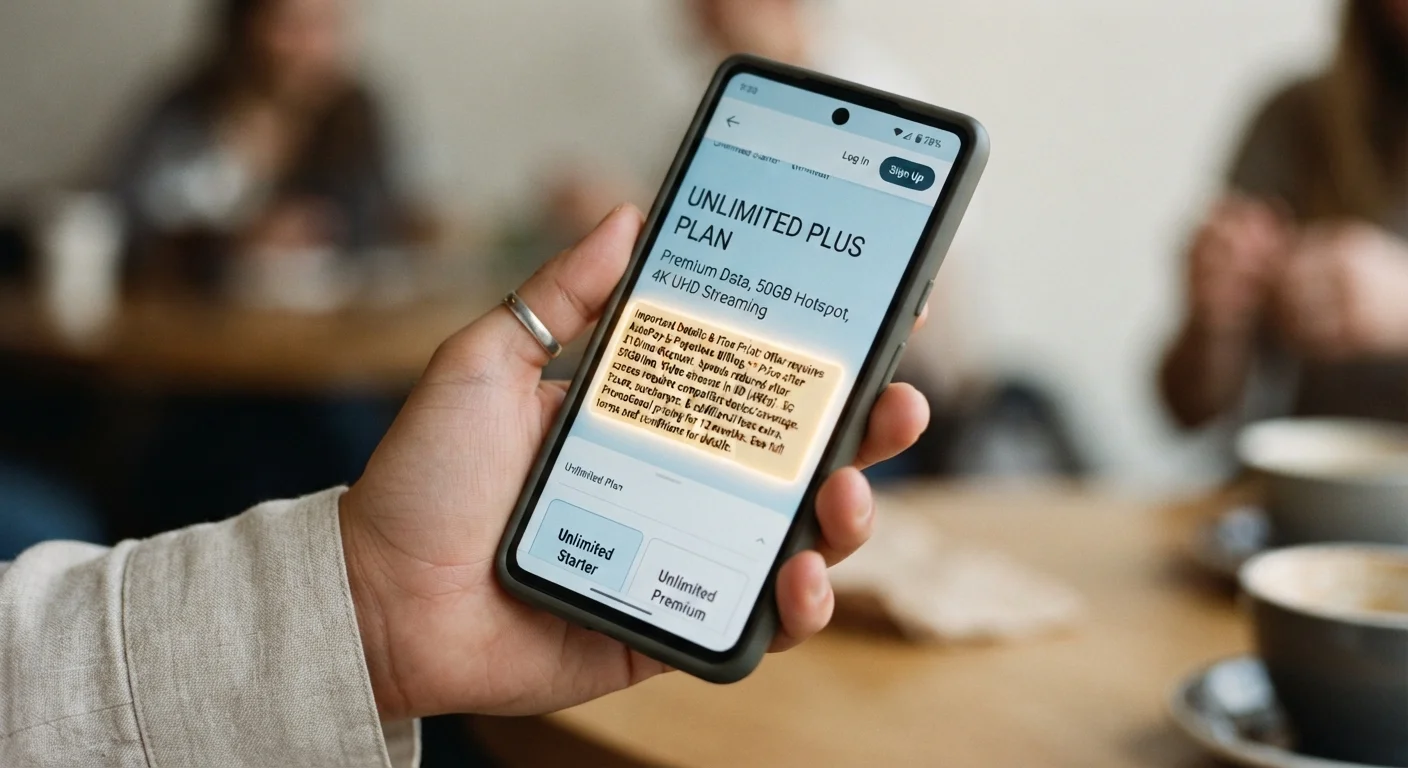
Photo: ScoutAnswers.com | Blogs That Ignite Curiosity editorial
Key Takeaways
- Most unlimited plans include data thresholds after which speeds are reduced significantly.
- Mobile hotspot data on unlimited plans is typically capped at lower speeds or smaller allotments.
- Deprioritization can slow your connection during network congestion, even below full throttle speeds.
- Video streaming quality is often intentionally limited on unlimited plans unless you pay for a higher tier.
- Comparing plan tiers side-by-side on carriers' own terms pages reveals the most accurate picture.
Why "Unlimited" Rarely Means What It Sounds Like
The term "unlimited" has become one of the most heavily used - and most misunderstood - words in wireless marketing. Carriers use it to signal that your service won't be abruptly cut off mid-month, which is technically accurate. What it does not signal is that you'll receive consistent, full-speed data access from the first gigabyte to the last day of your billing cycle.
US carriers are required to disclose their network management practices, but those disclosures typically live in terms-of-service documents rather than plan summaries. The marketing page shows the promise; the fine print shows the conditions. Understanding the gap between those two documents is the most practical step any subscriber can take before choosing a plan.
Myth
Unlimited means I can use as much high-speed data as I want, every month, with no slowdowns.
Fact
Every major US unlimited plan includes a premium data threshold - typically between 25 GB and 100 GB - after which your speeds can be reduced.
Carriers define "unlimited" to mean the data itself won't be cut off entirely, but they reserve the right to manage speeds once you pass a usage threshold. This practice is called throttling - a hard speed cap that kicks in at a set point regardless of network conditions. After hitting the cap, speeds on lower-tier unlimited plans can drop to 1-3 Mbps, which makes video streaming and large downloads noticeably sluggish.
To understand exactly what threshold applies to a specific plan, check the carrier's terms-of-service page under "network management" or "data usage." For a broader breakdown of carrier language, see this field guide to wireless plan terms.
Myth
Deprioritization and throttling are the same thing - both just slow you down.
Fact
Throttling is a hard speed ceiling imposed after a data cap; deprioritization is a temporary slowdown that only occurs when a cell tower is congested.
Deprioritization means your traffic is placed behind premium or lower-usage subscribers during peak periods on a congested tower. Once congestion clears, your speeds return to normal - no usage threshold required. Throttling, by contrast, stays in effect regardless of network conditions until your billing cycle resets.
Many unlimited plans include both mechanisms: deprioritization applies to all subscribers at congested towers, and throttling kicks in specifically after you exhaust your premium data allotment. Understanding which applies to your situation requires reading the plan's network management disclosure, not just the marketing summary.
Myth
My unlimited plan's mobile hotspot lets me share full-speed data with my laptop or tablet.
Fact
Hotspot data on unlimited plans is almost always capped - either in total gigabytes or in speed - and is separate from your phone's own data.
Carriers commonly split a plan's data into two separate buckets: on-device data and mobile hotspot (tethering) data. Entry-level unlimited plans may offer hotspot at 3G-equivalent speeds (roughly 600 Kbps) or limit hotspot to 5-15 GB of full-speed data before dropping to a slower rate. Higher-tier plans offer more hotspot data, but it still runs out independently of your phone's data.
If you rely on hotspot for remote work or travel, confirming the hotspot allotment and speed caps is one of the most important steps before selecting a plan. For a structured approach, use a pre-commitment checklist that includes hotspot as a dedicated question.
Myth
All unlimited plans stream video at full HD quality by default.
Fact
Many unlimited plans cap video streaming at 480p or 720p unless you subscribe to a premium tier.
Carriers frequently apply video optimization - a polite term for resolution throttling - that limits streamed video to DVD-quality (480p) or HD (720p) on standard unlimited tiers. Full HD (1080p) or 4K streaming typically requires an upgraded plan and, in some cases, using the carrier's own video platform rather than a third-party app.
This has a meaningful impact if you stream often on a large-screen device. At 480p, a 6-inch phone screen may look acceptable, but connecting to a TV via hotspot at that resolution will be visibly degraded. Plan comparison pages on carrier websites list video resolution caps in their feature comparison tables - always check that row.
Myth
If I'm on an unlimited plan, there's no reason to monitor my data usage.
Fact
Monitoring usage helps you understand when deprioritization or throttling is affecting your experience and whether your current tier actually matches your habits.
Even on unlimited plans, knowing your typical monthly usage informs whether a lower-cost tier would serve you equally well - or whether a higher tier is worth the price difference for hotspot or video quality. Most carriers provide usage tracking within their apps, and your phone's built-in settings also show a breakdown by app.
Tracking usage over two to three billing cycles gives you a realistic picture. If you rarely exceed 20 GB on your phone and never use hotspot, a mid-tier plan may be redundant. Conversely, if you frequently hit throttle points, the upgrade cost may be justified. For context on how data speed relates to real-world experience, common speed myths explained is a useful reference.
Reading the Fine Print: What to Actually Look For
When reviewing any unlimited plan's terms, focus on four specific items: the premium data threshold (the point at which throttling or deprioritization begins), the hotspot allotment and speed, the video streaming resolution cap, and any autopay or paperless billing conditions tied to the advertised price.
Promotional Pricing Often Changes After 1-3 Billing Cycles
Carriers are required to publish network management disclosures, often linked from the plan's detail page or found under a "legal" or "terms" section of their website. Reading these before purchase - rather than after your first bill - prevents the most common surprises. For a deeper dive into contract language across internet and wireless services, reviewing an ISP contract before signing covers many of the same disclosure patterns.
"Unlimited" Is a Marketing Term, Not a Guarantee
If you're evaluating multiple plans side by side, matching each carrier's terms on these four points - rather than comparing headline prices - gives you a more accurate basis for comparison. The field guide to wireless plan terminology defines the specific language carriers use so you can interpret those disclosures accurately.
The content on this site is for informational purposes only and is not a substitute for professional advice. Always consult a qualified professional for guidance specific to your situation.