
Cruising vs. Independent Travel: What Each Approach Actually Looks Like on the Ground

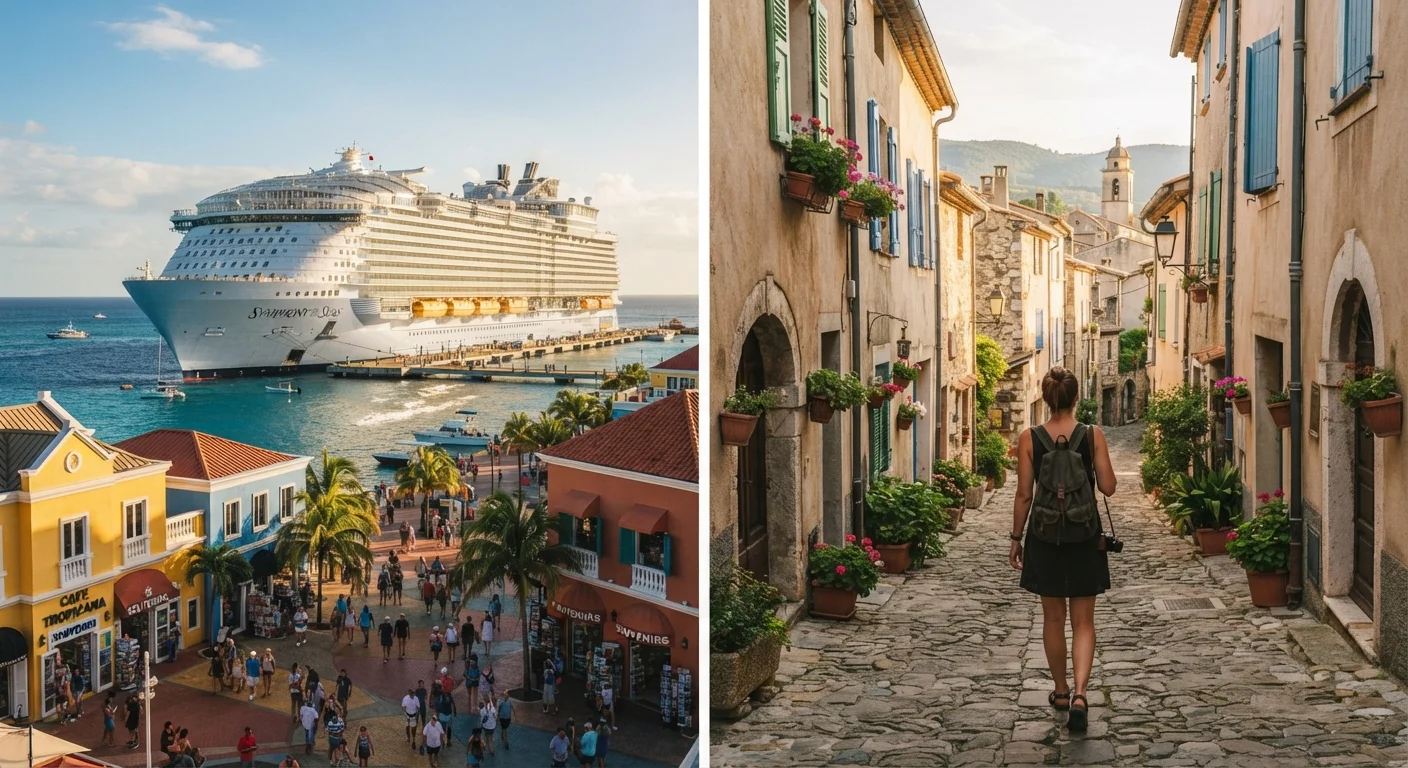
Photo: ScoutAnswers.com | Blogs That Ignite Curiosity editorial
Key Takeaways
- Cruises bundle logistics into one upfront cost, but onshore time is typically limited to a few hours per port.
- Independent travel offers full schedule control but requires significantly more planning and decision-making.
- Neither approach is objectively better - the right fit depends on your travel priorities and comfort with uncertainty.
- Hidden costs exist in both models: excursion add-ons for cruises, booking fees and transport for independent trips.
- First-time international travelers often find cruises lower-stress; experienced travelers may find them too constrained.
Logistics are handled from day one
Accommodation, meals, and inter-destination transport are bundled into a single booking, removing the need to coordinate hotels, trains, or flights for each leg of the trip.
Multi-destination coverage without repacking
Passengers visit several ports from a single cabin, making it practical to see diverse destinations - across a region like the Mediterranean or Caribbean - in one trip.
Predictable structure suits low-stress travelers
A fixed daily schedule, set meal times, and organized shore excursions reduce decision fatigue and work well for travelers who find open-ended itineraries overwhelming.
Built-in community and social opportunities
Shared dining, organized activities, and common spaces make it easier to meet fellow travelers - a genuine advantage for solo travelers or those new to international trips.
Limited time in each destination
Most port days offer only six to eight hours ashore, which is enough for an overview but rarely enough to experience a place beyond its tourist-facing surface.
Add-on costs inflate the base fare significantly
Excursions, specialty dining, beverages, gratuities, and spa services are typically not included, and these extras can substantially increase total trip spend.
Little flexibility once the itinerary is set
The ship operates on a fixed schedule; if a port doesn't interest you or you want more time somewhere, there's no option to adjust.
Ports are often the most crowded, commercial areas
Cruise terminals are typically located in or near heavily commercialized zones, and large ships bring many passengers ashore simultaneously, which can make even quieter destinations feel crowded.
What a Cruise Actually Looks Like Day to Day
On a cruise, your hotel moves with you. You board once, unpack once, and wake up in a different port every day or two. Meals, entertainment, and transportation between destinations are handled by the ship. For many travelers, this eliminates the single biggest source of trip stress: logistics.
The trade-off is time ashore. A typical port day runs roughly six to eight hours before the ship departs. That's enough for a guided excursion or a walk through a town center - but not enough to linger, get lost in a neighborhood, or truly absorb a place. Some ports are also tendered, meaning you take a small boat from ship to shore, which eats into that window further.
Onboard spending adds up quickly. Beverage packages, specialty dining, shore excursions, spa services, and gratuities are almost always charged separately from the base fare. A cruise that looks affordable at booking can look quite different by the final bill. For a fuller picture of how travel costs compound, see how budget planning works in practice.
Logistics are handled from day one
Accommodation, meals, and inter-destination transport are bundled into a single booking, removing the need to coordinate hotels, trains, or flights for each leg of the trip.
Multi-destination coverage without repacking
Passengers visit several ports from a single cabin, making it practical to see diverse destinations - across a region like the Mediterranean or Caribbean - in one trip.
Predictable structure suits low-stress travelers
A fixed daily schedule, set meal times, and organized shore excursions reduce decision fatigue and work well for travelers who find open-ended itineraries overwhelming.
Built-in community and social opportunities
Shared dining, organized activities, and common spaces make it easier to meet fellow travelers - a genuine advantage for solo travelers or those new to international trips.
What Independent Travel Actually Looks Like Day to Day
Independent travel means you control every variable: where you stay, how long you stay, what you eat, and how you get between places. If you fall in love with a coastal town, you can extend by two days. If a city doesn't click, you leave early. That flexibility is real - and it's the main reason experienced travelers tend to prefer this model.
The cost, though, is time and mental load. Before you leave, you're researching accommodation, booking trains or flights between cities, understanding local transit systems, and building contingency plans. On the ground, decisions pile up constantly. Some travelers find this energizing; others find it exhausting, particularly in destinations with significant language barriers or unfamiliar infrastructure.
Budget control is also more nuanced. You can travel very cheaply independently - staying in guesthouses, eating street food, using public transit - or you can spend far more than a cruise would cost by choosing hotels and private transfers. The range is wider in both directions. Flexible versus fixed itinerary planning explores how much structure to build into an independent trip.
Limited time in each destination
Most port days offer only six to eight hours ashore, which is enough for an overview but rarely enough to experience a place beyond its tourist-facing surface.
Add-on costs inflate the base fare significantly
Excursions, specialty dining, beverages, gratuities, and spa services are typically not included, and these extras can substantially increase total trip spend.
Little flexibility once the itinerary is set
The ship operates on a fixed schedule; if a port doesn't interest you or you want more time somewhere, there's no option to adjust.
Ports are often the most crowded, commercial areas
Cruise terminals are typically located in or near heavily commercialized zones, and large ships bring many passengers ashore simultaneously, which can make even quieter destinations feel crowded.
The Hidden Variables Most Comparisons Miss
Most cruise-versus-independent debates focus on cost and flexibility, but several other factors often matter more once you're actually traveling.
Depth of experience
Spending three hours in Dubrovnik from a cruise ship and spending three days there are categorically different experiences. Independent travel allows you to eat where locals eat, use local transit, and notice the rhythms of a place. Cruises offer breadth - many destinations in a single trip - at the expense of that depth.
Social dynamics
Cruises create a built-in social environment. Solo travelers, in particular, often find it easier to meet people onboard than in a hotel. Independent travel can feel isolating at times, especially on longer trips. For a detailed look at solo trip logistics, solo travel planning from scratch covers the key considerations.
Risk and disruption
When a cruise port is skipped due to weather, the line typically substitutes an alternative stop or offers onboard credit. When an independent traveler's flight is cancelled, they're rerouting connections, rebooking hotels, and absorbing the cost themselves. Understanding what travel insurance actually covers becomes especially relevant for independent trips with multiple moving parts.
Entry Requirements Apply to Both Travel Styles
Matching the Format to the Trip
The clearest signal for choosing a cruise is wanting to visit multiple destinations without the logistics of moving between them. Caribbean island-hopping, Alaskan glacier routes, and Mediterranean multi-country itineraries are natural fits. If you've never traveled internationally, a cruise also provides a relatively low-risk introduction: immigration and customs are streamlined, safety is managed, and you're never far from English-speaking staff.
Independent travel tends to reward travelers with a specific destination in mind - somewhere they want to understand rather than sample. It also makes more sense when a destination's best experiences are slow and place-based: a walking tour of a single city's neighborhoods, a week in a rural area, or an extended stay in one country. The core stages of trip planning can help structure the research phase of an independent itinerary.
Some travelers combine both: an independent trip anchored in one city, followed by a short cruise that checks off several nearby islands or ports efficiently. That hybrid approach reflects what both formats actually do well, rather than treating the choice as all-or-nothing.
~3-4
Average ports visited on a 7-night Caribbean cruise
Standard one-week Caribbean itineraries typically include three to four port stops, with most travelers spending six to eight hours ashore at each.
25-40%
Cruise add-ons as share of total spend
Industry analysts have noted that onboard revenue from extras - excursions, beverages, specialty dining - often represents a significant portion of a cruise line's total per-passenger revenue beyond the base fare.
The content on this site is for informational purposes only and is not a substitute for professional advice. Always consult a qualified professional for guidance specific to your situation.