
Private Party Sale vs. Dealership Trade-In: Understanding the Trade-Offs

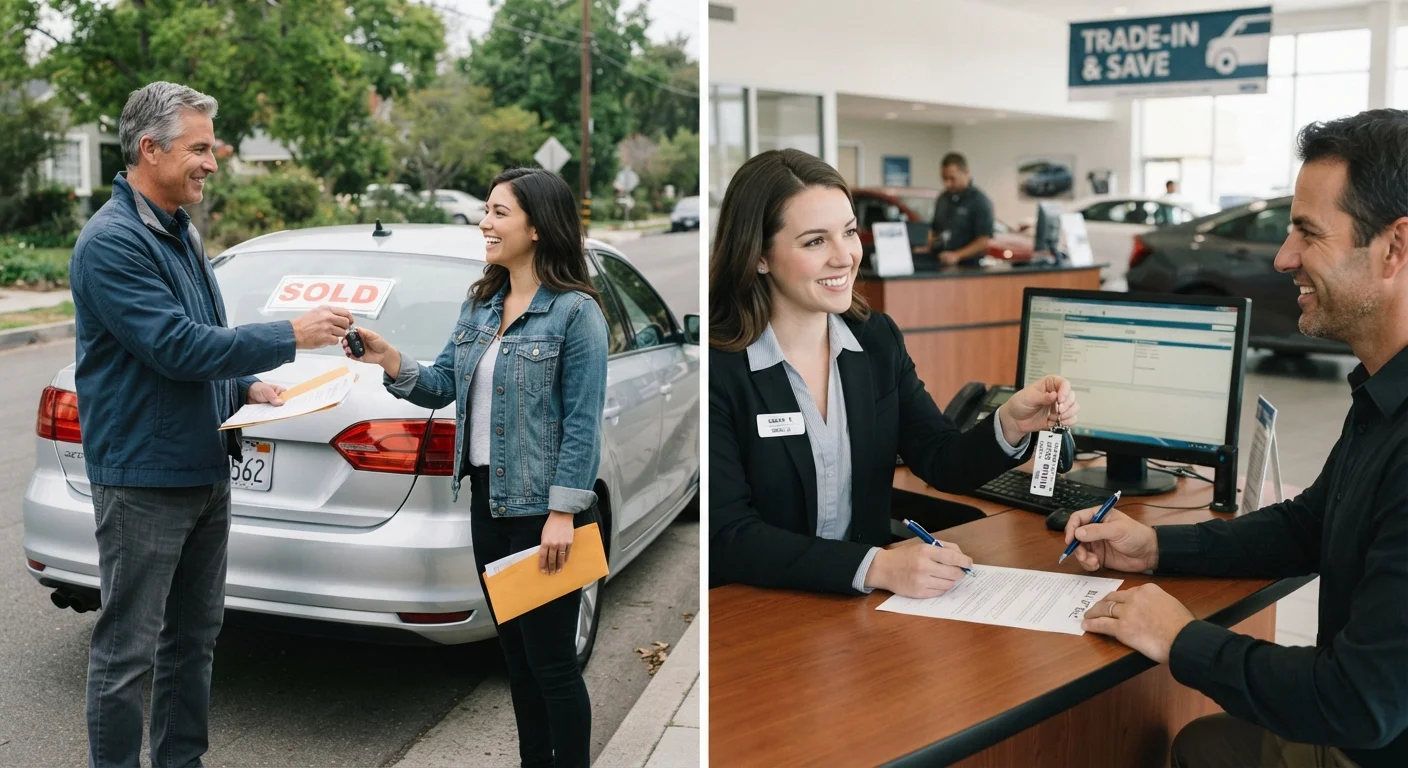
Photo: ScoutAnswers.com | Blogs That Ignite Curiosity editorial
Key Takeaways
- Private party sales typically yield more money but require significant time, effort, and personal risk management.
- Dealership trade-ins are faster and simpler, but dealers build their resale margin into the offer they give you.
- A trade-in may reduce your sales tax burden when applied toward a new vehicle purchase in many U.S. states.
- Private sales involve vetting strangers, coordinating test drives, and handling title transfer paperwork independently.
- Getting multiple trade-in quotes from different dealers can meaningfully improve the offer you receive.
- Your vehicle's condition, age, and local demand affect which route is likely to produce the better financial outcome.
How Each Method Actually Works
When selling a car through a private party sale, you take on the role of seller directly - creating listings on platforms like Craigslist, Facebook Marketplace, or AutoTrader, responding to buyer inquiries, arranging test drives, negotiating price, and ultimately completing the title transfer. Every step is your responsibility.
A dealership trade-in works differently. You bring your vehicle to a dealer, who assesses its condition and makes an offer. If you accept, the dealer credits that amount toward the purchase of another vehicle (or cuts you a check in some cases). The dealer then takes on all the risk of reselling the car. That convenience is precisely why they offer less - their margin depends on it.
Understanding this structural difference is the starting point. To go deeper on what dealerships consider when making offers, see why trade-in offers vary between dealers.
| Criterion | Private Party Sale | Dealership Trade-In |
|---|---|---|
| Typical Sale Price | Higher (closer to retail value) | Lower (dealer resale margin deducted) |
| Time to Complete | Days to weeks | Same day to a few days |
| Effort Required | High - listing, screening, negotiating | Low - dealer handles logistics |
| Sales Tax Benefit | None | Reduces taxable purchase price (most states) |
| Buyer Risk | Fraud, no-shows, unsafe meetings | Minimal - institutional transaction |
| Paperwork Responsibility | Seller manages title transfer | Dealer manages all paperwork |
| Best Vehicle Condition | Clean, well-maintained vehicles | Any condition accepted |
The Money Question: How Much Can You Expect?
The price gap between private sales and trade-ins varies by vehicle, market conditions, and timing - but it's rarely trivial. Consumer valuation tools such as Kelley Blue Book consistently show a spread between private party value and trade-in value for the same vehicle. On a $20,000 car, that spread might range from $1,500 to $4,000 or more.
$1,000-$4,000+
Typical private vs. trade-in price gap
Kelley Blue Book and similar valuation tools consistently show a spread between private party and trade-in values for the same vehicle and condition.
~30-45 days
Average time to sell privately
Market conditions, pricing accuracy, and vehicle desirability all influence how long a private listing stays active before closing.
3-8%
State sales tax rates affecting trade-in offset
Most U.S. states calculate sales tax on the net vehicle purchase price after trade-in credit, making the tax savings meaningful in higher-tax states.
One factor that narrows the financial gap: sales tax offset. In most U.S. states, when you trade in a vehicle at a dealership, the trade-in value is subtracted from the purchase price of your next car before sales tax is calculated. Depending on your state's tax rate and the value of your trade-in, this can save hundreds or even thousands of dollars - partially closing the gap with the private sale premium.
If you're also financing your next vehicle, how you structure that loan can affect your overall cost as well.
Risk, Effort, and Practical Realities
Private sales introduce a category of effort and risk that trade-ins do not. You'll need to:
- Research and set a competitive asking price
- Create a detailed, honest listing with quality photos
- Screen inquiries and identify serious buyers
- Coordinate safe test drive arrangements
- Negotiate with buyers who may low-ball or walk away
- Handle payment securely (cashier's checks carry fraud risk; cash and verified wire transfers are more reliable)
- Complete the title transfer and any required bill of sale for your state
For a full walkthrough of this process, see selling your car yourself step by step.
Trade-ins eliminate nearly all of this. The dealer manages every downstream step. The tradeoff is straightforward: you exchange money for convenience. Neither choice is objectively wrong - it depends on your priorities, schedule, and comfort level with the selling process.
Getting Multiple Trade-In Quotes Pays Off
One practical tip: get quotes from multiple dealers before accepting any trade-in offer. Offers can vary considerably for the same vehicle, and competing quotes give you negotiating leverage. Common negotiation myths are worth reviewing before you sit down at any dealer's desk.
The content on this site is for informational purposes only and is not a substitute for professional advice. Always consult a qualified professional for guidance specific to your situation.