
Synthetic vs. Conventional Oil: What Everyday Drivers Should Know

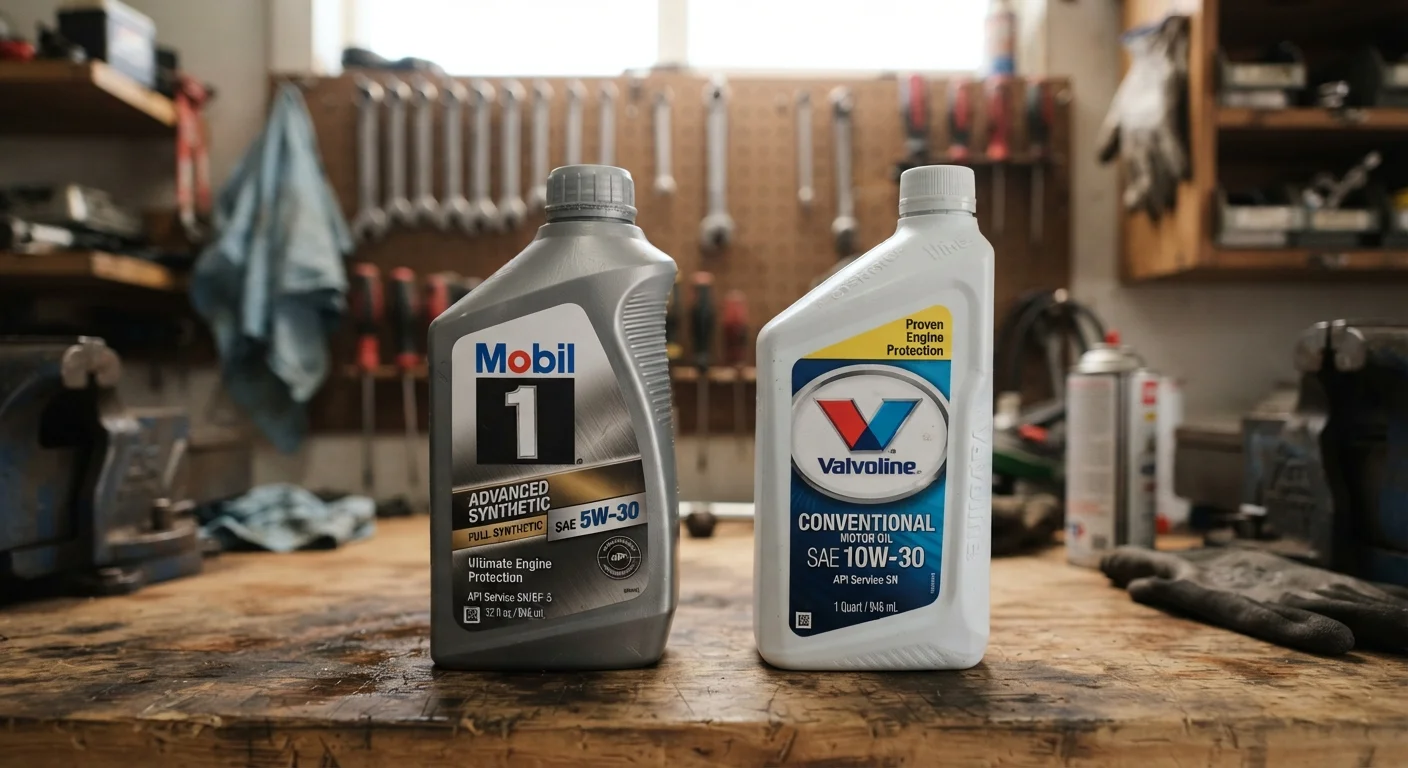
Photo: ScoutAnswers.com | Blogs That Ignite Curiosity editorial
Key Takeaways
- Synthetic oil is chemically engineered for greater consistency and performance than conventional oil.
- Conventional oil is refined from crude petroleum and generally costs less per quart.
- Your owner's manual - not marketing - is the authoritative source for which oil your engine requires.
- Switching from conventional to synthetic in an older high-mileage engine warrants a mechanic's input first.
- Oil change intervals vary significantly between oil types and should not follow the outdated 3,000-mile rule universally.
What Makes These Two Oils Different
Both synthetic and conventional motor oil serve the same core purpose - lubricating your engine's moving parts, managing heat, and carrying away contaminants. To understand how they differ, it helps to know where each comes from. For a deeper look at what oil actually does inside an engine, see our engine oil explainer.
Conventional oil is refined directly from crude petroleum. During refining, impurities are reduced, but the molecular structure remains irregular - meaning the oil contains a natural mix of molecule sizes and shapes.
Synthetic oil is chemically engineered, either built from scratch or heavily processed from a base stock. This produces a uniform molecular structure with far fewer impurities. That consistency translates into more predictable performance across a wider range of temperatures and operating conditions.
A third category - synthetic blend - mixes both types and sits between them in terms of performance and price, making it a common middle-ground choice at service centers.
| Criterion | Synthetic Oil | Conventional Oil |
|---|---|---|
| Origin | Chemically engineered base stock | Refined from crude petroleum |
| Molecular consistency | Highly uniform | Naturally variable |
| Cold-weather flow | Flows readily at low temperatures | Thickens more in cold conditions |
| Heat resistance | Strong resistance to thermal breakdown | Degrades faster under sustained heat |
| Typical cost per quart | Higher (roughly 2-4x more) | Lower upfront cost |
| Change interval (general) | Often longer; follow manufacturer spec | Typically shorter; follow manufacturer spec |
| Best engine fit | Modern, turbocharged, high-output engines | Older, simpler engine designs |
Real-World Performance Differences
The molecular consistency of synthetic oil produces measurable practical advantages. It flows more freely during cold starts - the moments when metal-on-metal wear is highest - and it resists viscosity breakdown (thinning from heat) better than conventional oil during sustained high-temperature operation.
Conventional oil isn't without merit, however. It has a long track record in engines designed before synthetic was widely available, and it remains an appropriate choice for many older vehicles operating under normal conditions.
5W-20 / 0W-20
Most common synthetic viscosity grades in newer US vehicles
Lower-viscosity synthetics have become increasingly common as automakers prioritize fuel efficiency in modern engine designs.
7,500-10,000 mi
Typical synthetic oil change interval range
Many manufacturers specify intervals in this range for full synthetic oil, though some turbocharged or high-performance engines may call for shorter intervals - always verify in your owner's manual.
3,000 mi
Outdated conventional oil change rule of thumb
The 3,000-mile standard originated decades ago and no longer applies to most modern vehicles or oil formulations, according to automotive industry guidance.
One area where the gap narrows: oil change intervals. Many modern vehicles running synthetic oil can go significantly longer between changes than the old 3,000-mile standard - but the right interval is always the one your manufacturer specifies, not a generic rule. The oil change myths article unpacks why that outdated benchmark persists and what the actual guidance looks like.
How to Choose the Right Oil for Your Vehicle
The single most reliable guide is your vehicle's owner's manual. It will specify the viscosity grade (such as 5W-30 or 0W-20) and often whether synthetic is required or recommended. Many turbocharged and direct-injection engines produced in roughly the last decade require full synthetic - using conventional oil in those engines can accelerate wear. For more on what your manual is actually communicating, our owner's manual guide is worth reading.
If you're considering switching a high-mileage engine from conventional to synthetic, consult a qualified mechanic first. In some older engines, synthetic oil's superior cleaning properties can loosen accumulated deposits, which may affect seals or cause temporary leaks. A professional can assess whether the switch makes sense for your specific vehicle.
High-Mileage Oil: A Third Option Worth Knowing
Cost is a real consideration. Synthetic oil typically costs two to four times more per quart than conventional. Over time, longer change intervals can partially offset that difference, but the math varies by vehicle and driving habits. If you're evaluating whether to handle oil changes yourself or use a shop, the DIY vs. shop guide lays out what's practical for most drivers.
The content on this site is for informational purposes only and is not a substitute for professional advice. Always consult a qualified professional for guidance specific to your situation.