
What the Owner's Manual Is Actually Trying to Tell You

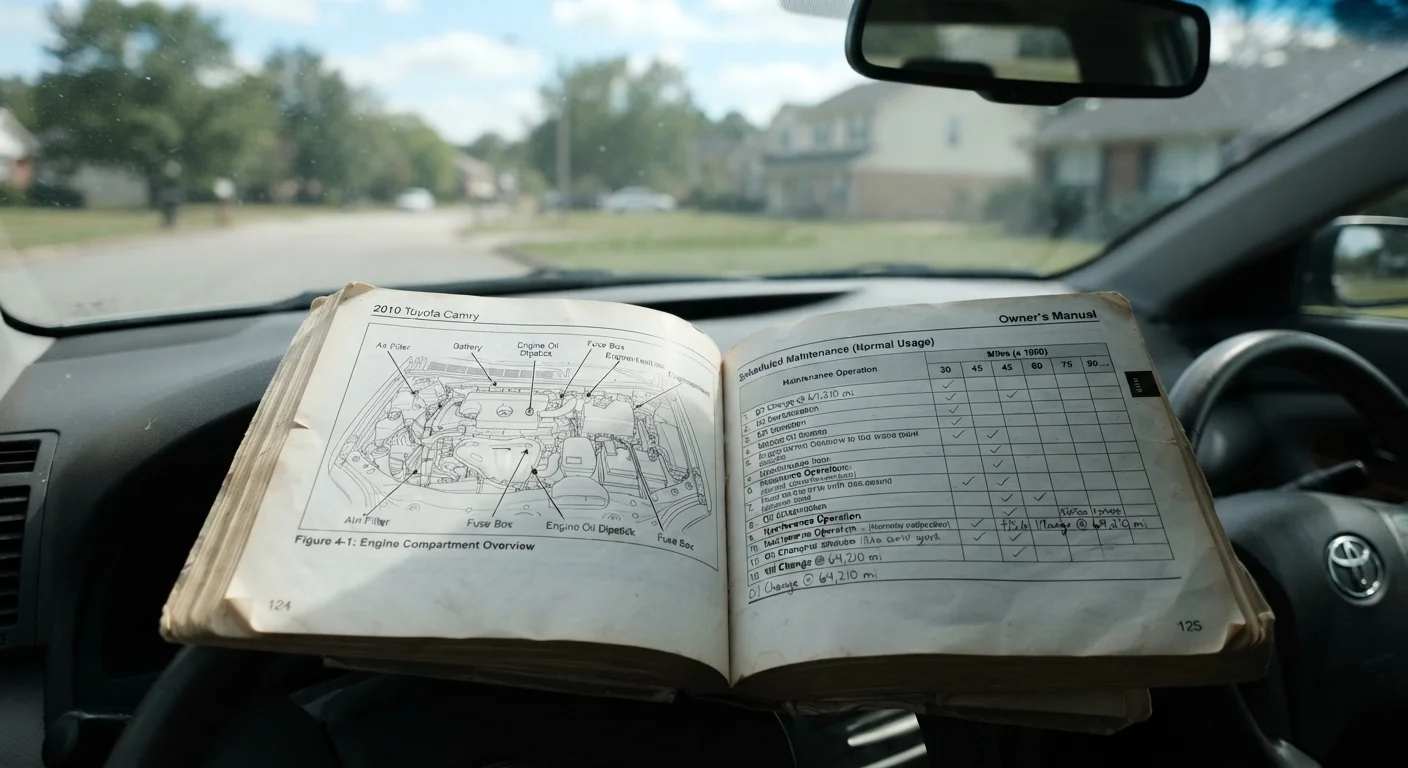
Photo: ScoutAnswers.com | Blogs That Ignite Curiosity editorial
Key Takeaways
- Your owner's manual contains maintenance intervals specific to your exact vehicle - not generic industry averages.
- The maintenance schedule section alone can save you from unnecessary or missed service appointments.
- Fluid specifications in the manual tell you exactly which oil, coolant, and transmission fluid your car requires.
- Warning light explanations in the manual help you judge urgency before calling a mechanic.
- Most manuals are also available as free PDF downloads from the manufacturer's website.
Why Most Drivers Never Open It
The owner's manual ships in a plastic sleeve, goes into the glove compartment, and stays there. For most drivers, it only emerges during a roadside emergency or a dashboard light they don't recognize. That's a missed opportunity - the manual is one of the few genuinely vehicle-specific resources you have access to, and it costs nothing to use.
The barrier is usually the format. A typical manual runs 300 to 500 pages and reads like a legal document. But you don't need to read it cover to cover. Knowing which sections to go to - and why they matter - is the real skill.
Viscosity grade
A number code (like 5W-30) that describes how thick or thin an oil is at different temperatures. Using the correct grade ensures your engine is protected whether it's cold or fully warmed up.
Severe service
A driving category defined by manufacturers for conditions that put extra strain on a vehicle - such as frequent short trips, extreme heat or cold, or heavy towing. Vehicles in this category typically need more frequent service than the standard schedule.
Fluid specification
The exact standard a fluid must meet to work properly in a specific vehicle system. Using a fluid that doesn't meet the specification can reduce protection or cause component damage.
Maintenance interval
The mileage or time limit at which a specific service task - like an oil change or spark plug replacement - is due. Intervals are set by the manufacturer based on engineering and testing.
Indicator light
A dashboard symbol that lights up to communicate vehicle status. Colors generally signal urgency: red means act immediately, amber means schedule service, and blue or green is informational.
The Sections That Actually Matter
Skip the introductory pages about seating positions and door locks you've already figured out. Instead, locate these sections in the index:
- Maintenance schedule - the most important section for vehicle longevity
- Fluid specifications and capacities - what your car actually needs, not what's on the shelf
- Warning and indicator lights - definitions and recommended responses
- Tire information - correct inflation pressure and load rating for your specific trim
- Towing and payload limits - critical if you ever haul a trailer or heavy cargo
These five areas cover the vast majority of day-to-day ownership decisions. Everything else in the manual is useful situationally, but these are the pages worth bookmarking.
Maintenance Schedules: Your Manual's Most Valuable Page
Generic maintenance advice - change your oil every 3,000 miles, flush your coolant every two years - is designed to apply broadly. Your manual's schedule is designed specifically for your engine, transmission, and operating environment. Those are very different things.
Most manuals include two tracks: a normal service schedule and a severe service schedule. Severe duty covers frequent short trips under five miles, stop-and-go city driving, extreme temperatures, trailer towing, and dusty or off-road conditions. Many drivers qualify for severe service without realizing it, which means the longer normal-schedule intervals may not apply to them.
The schedule lists service items by mileage and time intervals - whichever comes first. Spark plugs, air filters, transmission fluid, coolant, and drive belts all appear here with specific replacement points. This is exactly the information you need when building a realistic maintenance routine for your vehicle.
Photograph Your Maintenance Schedule
Fluids, Specs, and Capacities
Every fluid compartment in your car has a specification - a defined standard the fluid must meet to protect the components it serves. Using the wrong grade or type can degrade performance and, in some cases, cause damage that voids warranty coverage.
Your manual lists the required oil viscosity (for example, 5W-30 or 0W-20), coolant type, brake fluid standard, and transmission fluid specification. It also lists capacity - how many quarts of oil your engine holds, for instance - which matters when checking for leaks or adding fluid between changes. For a deeper look at why these specifications exist, engine oil explained covers what each property actually does inside your engine.
If you're ever unsure whether synthetic or conventional oil is right for your vehicle, the manual will tell you directly. Some modern engines require full synthetic - the manual will say so explicitly. Synthetic vs. conventional oil is worth understanding before your next service.
Warning Lights and What to Do First
Dashboard warning lights are designed to communicate - but only if you know what they're saying. Your manual includes a dedicated section that explains each symbol, its color coding, and what action is recommended. A red light generally signals stop and address immediately; amber or yellow signals service soon; green or blue is informational.
The manual won't diagnose what triggered the light - that often requires a scan tool - but it tells you whether you can safely drive to a shop or whether stopping immediately is warranted. Your car's warning lights, decoded goes further into what the most common symbols mean and how urgent each one typically is.
Color Coding Is Not Universal
Making the Manual Work for You
You don't need to memorize the manual. You need to know it exists, know how it's organized, and return to it when decisions come up. A few practical habits help:
- Photograph the maintenance schedule pages and keep them in your phone's photo library for quick reference.
- Note your vehicle's fluid specifications in a notes app so you have them at the auto parts store.
- If you've lost your physical copy, search the manufacturer's website by model year and trim - PDFs are almost always available for free.
Understanding your manual is also foundational to knowing which maintenance tasks you can reasonably handle yourself and which ones genuinely call for a qualified mechanic. DIY car maintenance vs. taking it to a shop walks through how to make that call confidently. The manual doesn't replace professional judgment - but it equips you to have a more informed conversation when you need one.
Frequently Asked Questions
The content on this site is for informational purposes only and is not a substitute for professional advice. Always consult a qualified professional for guidance specific to your situation.