
Tire Pressure and Why Getting It Wrong Costs You

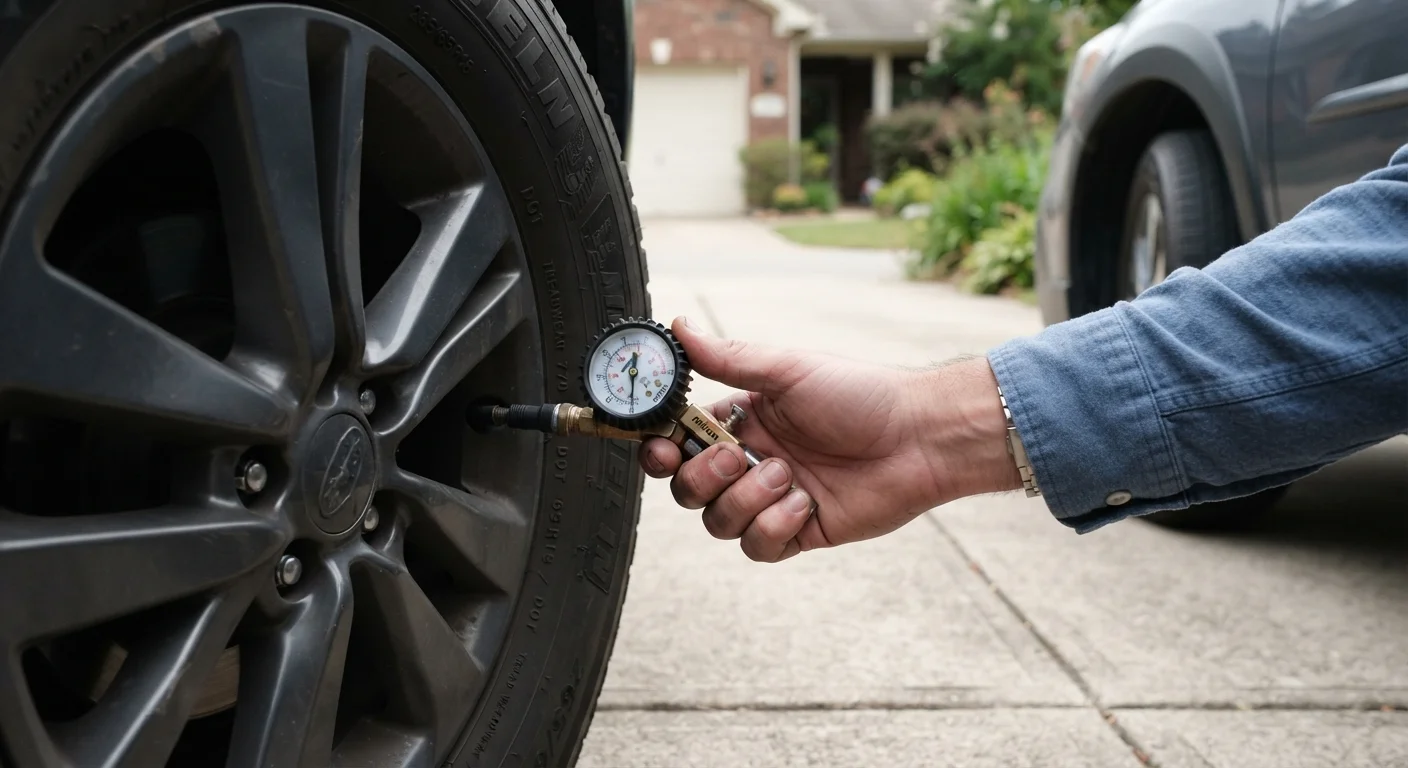
Photo: ScoutAnswers.com | Blogs That Ignite Curiosity editorial
Key Takeaways
- Your vehicle's recommended tire pressure is on the driver's door jamb sticker, not the tire itself.
- Underinflated tires increase fuel consumption and accelerate uneven tread wear.
- Overinflated tires reduce the contact patch with the road, hurting grip and ride comfort.
- Tire pressure drops roughly 1 PSI for every 10°F decrease in ambient temperature.
- Checking pressure monthly and before long trips is a low-effort habit with real safety benefits.
The Real Cost of Ignoring Tire Pressure
Most drivers don't think about tire pressure until a warning light appears on the dashboard - and by then, some damage may already be underway. Incorrect tire pressure is one of the most common, and most preventable, contributors to premature tire replacement, reduced fuel economy, and compromised handling. It's a maintenance task that takes under two minutes yet consistently ranks among the most neglected.
The U.S. Department of Energy has noted that underinflated tires can lower gas mileage measurably, since a softer tire creates more rolling resistance - meaning the engine works harder to move the car forward. Multiply that inefficiency across thousands of miles and the fuel cost adds up. Pair that with accelerated tire wear and the financial case for staying on top of pressure becomes straightforward. As part of a broader set of good ownership habits, tire pressure fits alongside the everyday habits that quietly shorten a car's life.
~1 PSI
Pressure lost per 10°F temperature drop
A well-established physical relationship between air density and temperature, relevant especially during seasonal transitions.
Up to 0.2%
Fuel economy loss per 1 PSI underinflation
The U.S. Department of Energy estimates fuel economy can drop roughly 0.2% for every 1 PSI the tires fall below recommended pressure.
25%
Drivers with at least one significantly underinflated tire
The National Highway Traffic Safety Administration has estimated that roughly one in four vehicles on U.S. roads has at least one tire underinflated by 8 PSI or more.
What Happens When Tires Are Underinflated
A tire running below its recommended PSI flexes more than it should with every rotation. That excess flexing generates heat, which is one of a tire's primary enemies. Over time, heat buildup accelerates rubber breakdown and increases the risk of tread separation or a blowout - especially during highway driving or warm weather.
Underinflation also changes the contact patch - the portion of the tire actually touching the road. Too little pressure causes the outer edges of the tread to bear a disproportionate load, leading to faster wear on the shoulders of the tire while the center remains relatively intact. This uneven pattern often signals underinflation when you inspect tread depth. For a deeper look at how pressure connects to blowout risk and tread health, see the guide on tire pressure, tread depth, and blowout risk.
Check Pressure When Tires Are Cold
What Happens When Tires Are Overinflated
Overinflation is less common but equally problematic. A tire inflated beyond its recommended PSI becomes rigid and reduces the size of the contact patch - this time from the outside edges inward, leaving only the center strip of tread doing most of the work. The result is faster center-tread wear and a harsher ride, since the tire has less ability to absorb road imperfections.
Handling also suffers. A stiff tire is more prone to bouncing over surface irregularities rather than maintaining consistent road contact, which can affect braking distance and cornering stability. Overinflated tires are also more susceptible to damage from potholes or road debris, since there's less air cushion to absorb impact.
How to Check and Maintain Correct Tire Pressure
The process is simple. Use a quality tire pressure gauge - digital or dial-style gauges tend to be more accurate than the pencil-style sticks - and check pressure when the tires are cold. Driving heats the air inside tires and temporarily raises the reading, which can give a misleading result. Remove the valve cap, press the gauge firmly onto the valve stem, read the PSI, and compare it to the specification on your door jamb sticker.
Add or release air as needed and recheck. Nitrogen fill is available at some tire shops and is sometimes marketed as more stable than regular air; while nitrogen does permeate rubber slightly more slowly, standard compressed air works well for most drivers when pressure is monitored regularly. First-time car owners often underestimate how much routine maintenance - including tire care - contributes to total ownership costs. The things first-time car buyers often underestimate extend well beyond the sticker price.
“Tires are the single most safety-critical component on your vehicle. They're the only thing connecting a two-ton machine to the road, and pressure is the foundation of how well they do that job.”
— Tire Industry Association, U.S. trade association representing tire manufacturers, retailers, and service professionals
Frequently Asked Questions
The content on this site is for informational purposes only and is not a substitute for professional advice. Always consult a qualified professional for guidance specific to your situation.