
Zero-Based Budgeting vs. the 50/30/20 Rule: Two Frameworks, One Decision

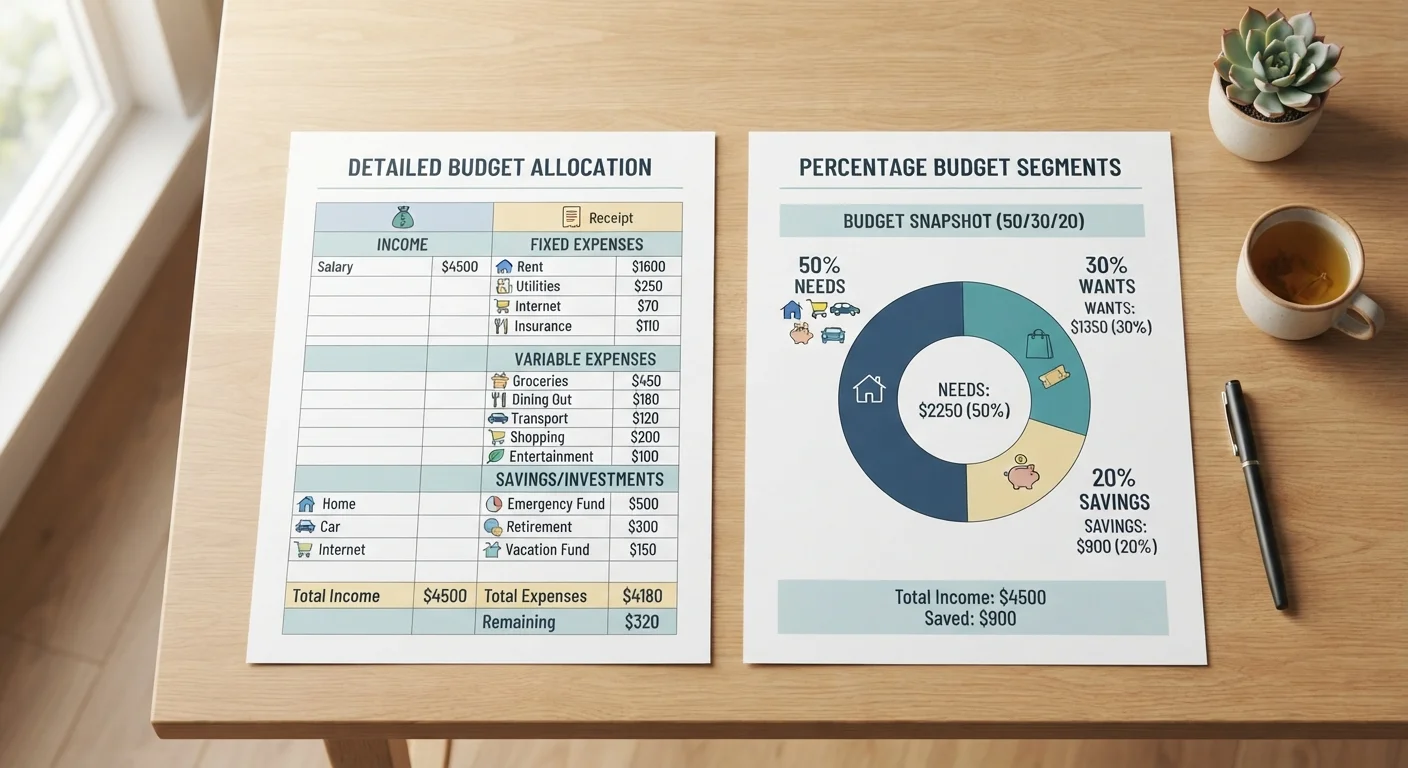
Photo: ScoutAnswers.com | Blogs That Ignite Curiosity editorial
Key Takeaways
- Zero-based budgeting assigns every dollar a specific job, leaving no income unaccounted for each month.
- The 50/30/20 rule splits after-tax income into needs, wants, and savings or debt repayment by percentage.
- Zero-based budgeting demands more time but offers tighter control over irregular or complex spending.
- The 50/30/20 rule works best for stable incomes where broad category targets are sufficient.
- Neither method is universally superior - the best budget is the one you will consistently use.
- Both frameworks can be adapted over time as your income and financial goals evolve.
How Each Framework Is Structured
Understanding the mechanics of each method is the foundation for choosing between them. If you are building your first monthly budget, knowing what you are signing up for practically matters as much as the theory.
Zero-Based Budgeting
Zero-based budgeting (ZBB) starts with a simple principle: income minus all allocated expenses equals zero. That does not mean spending everything - it means every dollar is intentionally assigned to a category before the month begins. Those categories can include savings, investments, or a debt payment fund. Nothing is left as a vague surplus.
Each month, you rebuild the budget from scratch, reviewing every category and adjusting based on upcoming expenses. This monthly reset is what gives zero-based budgeting its precision - it catches creeping costs and forces conscious decisions about every spending category.
The 50/30/20 Rule
Popularized as a personal finance guideline, the 50/30/20 rule divides your after-tax income into three broad buckets: 50% toward needs (housing, utilities, groceries, insurance, minimum debt payments), 30% toward wants (dining out, entertainment, subscriptions), and 20% toward savings and additional debt repayment.
There is no itemized list of sub-categories required. As long as your total spending within each bucket stays within its percentage limit, the budget is working. This simplicity is both its greatest strength and its most significant limitation.
| Criterion | Zero-Based Budgeting | 50/30/20 Rule |
|---|---|---|
| Setup time | 30-60 min per month | Under 15 min to start |
| Category detail | Every dollar itemized | Three broad buckets |
| Best income type | Variable or irregular | Steady, salaried |
| Irregular expense handling | Sinking fund categories built in | Absorbed into buckets, less explicit |
| Learning curve | Steeper, more active management | Gentle, beginner-friendly |
| Flexibility | Fully customizable monthly | Fixed percentages, broad flexibility |
| Savings visibility | Explicit, named savings categories | 20% target, less granular |
Real-World Trade-Offs You Should Know
Both methods work - but they come with different demands on your time, discipline, and financial circumstances. Most budgets fail because of structural mismatches, not laziness. Choosing the wrong framework for your lifestyle is one of the most common structural mistakes.
~74%
Americans living paycheck to paycheck
A 2023 LendingClub report found that roughly three in four Americans had little to no money left after covering monthly expenses, underscoring the need for a deliberate budgeting framework.
1 in 3
Adults with no monthly budget
According to a Gallup survey, approximately one-third of American adults do not prepare a detailed monthly household budget, leaving spending largely untracked.
Time Investment
Zero-based budgeting typically requires 30 to 60 minutes of active planning at the start of each month, plus regular check-ins throughout. The 50/30/20 rule can be set up in under 15 minutes with a basic spreadsheet or app and requires only occasional review for most people.
Handling Irregular Expenses
Annual expenses - car registration, holiday gifts, medical deductibles - are easier to plan for in a zero-based budget because you can create dedicated sinking fund categories and contribute to them monthly. Under the 50/30/20 rule, these tend to fall into the needs or wants bucket without a clear accumulation strategy, which can catch people off-guard.
Income Variability
Freelancers, gig workers, and anyone with variable monthly income generally find zero-based budgeting more adaptable, since the budget is rebuilt around actual income rather than assumed percentages. For stable, salaried earners, both methods are practical. For a third structural alternative, see how the envelope system compares in the digital age.
Which One Should You Start With?
Neither framework is inherently superior - both represent legitimate approaches to managing cash flow. The decision comes down to your income stability, available time, and how much detail you find motivating rather than exhausting.
If you have never tracked spending consistently, the 50/30/20 rule provides enough structure to change behavior without overwhelming you. Once you understand your baseline spending patterns, you can layer in more detail. If you already have a handle on your categories but feel money is slipping through the cracks, zero-based budgeting closes those gaps by design.
It is also worth challenging any assumptions you may have about budgeting as a concept before committing to a method. Common budgeting myths - like the idea that budgeting means deprivation - often prevent people from engaging with either framework seriously.
Whatever method you choose, treat it as an experiment for at least 90 days before drawing conclusions. Most people need two to three budget cycles to stop making rookie errors and start gaining meaningful insight into their finances. For ongoing guidance on managing saving and debt together, both frameworks provide a workable starting point.
This article is for general informational purposes only and does not constitute personalized financial advice. Consult a qualified financial professional for guidance specific to your situation.
The content on this site is for informational purposes only and is not a substitute for professional advice. Always consult a qualified professional for guidance specific to your situation.