
Your First Monthly Budget, Built from Scratch

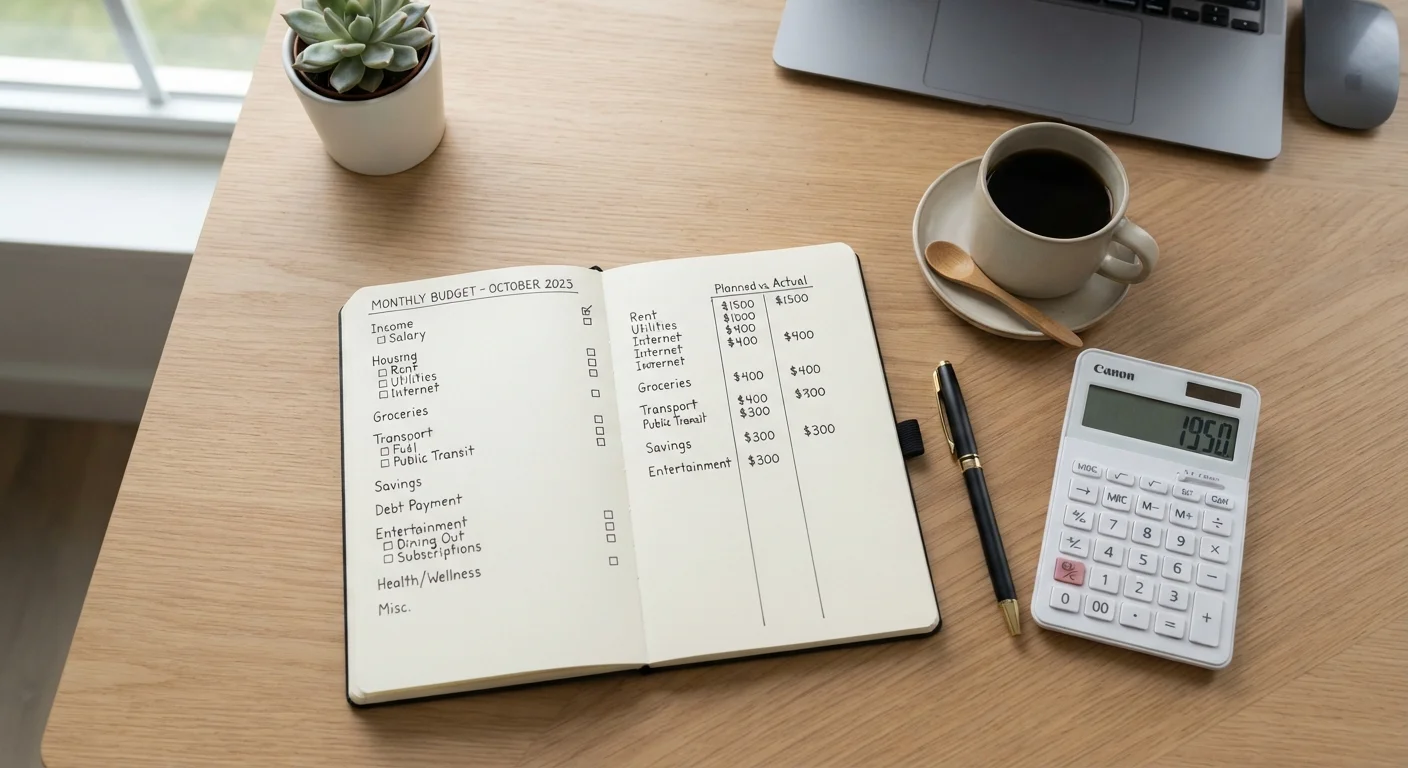
Photo: ScoutAnswers.com | Blogs That Ignite Curiosity editorial
Key Takeaways
- A budget works by matching your spending decisions to your actual income before the month starts.
- Start with take-home pay - not gross salary - to get numbers you can actually spend.
- Dividing expenses into fixed, variable, and irregular categories prevents missed bills.
- The 50/30/20 rule is a useful starting point, but your real life may call for different ratios.
- Reviewing your budget monthly - not daily - keeps it a tool rather than a source of stress.
Why Your First Budget Feels Hard (And Why It Isn't)
Most people avoid building a budget not because it is complicated, but because it feels like a confrontation with their spending habits. That discomfort is real, but the mechanics of budgeting are genuinely simple: you are matching planned spending to available income before the month begins.
A budget is not a punishment. It is a spending plan - one that tells your money where to go rather than leaving you to wonder where it went. Many of the fears around budgeting - that it means deprivation, or that it only matters when you are struggling financially - are misconceptions worth setting aside. See the truth behind common budgeting myths if those doubts are holding you back.
Your first budget does not need to be perfect. It needs to exist.
Step 1: Know Your Real Monthly Income
Before you plan a single dollar of spending, you need one firm number: your monthly take-home pay - what actually reaches your bank account after taxes and deductions.
Do Not Budget From Gross Pay
If you are paid biweekly, multiply one paycheck by 26 and divide by 12 to get your true monthly average. If you have multiple income sources, add them together. Be conservative - use amounts you can count on, not your best-case month.
Irregular Income Requires a Different Approach
This single number is the ceiling for everything that follows. Every spending decision you make in the next three steps must fit underneath it.
Step 2: List Every Expense You Can Predict
With your income number in hand, work through your expenses in three groups:
- Fixed expenses: Rent or mortgage, car payment, insurance premiums, loan minimums, subscriptions with set prices. These do not change - list the exact amount.
- Variable expenses: Groceries, gas, utilities, dining out, personal care. Estimate based on recent months. Round up slightly to give yourself a buffer.
- Irregular expenses: Annual fees, registration, medical co-pays, gifts, car maintenance. Divide each annual cost by 12 and add a monthly line for it. This technique - a sinking fund - prevents large one-time costs from wrecking your plan.
Use Last Month as Your Starting Data
For a plain-English breakdown of what each expense category actually includes, see the anatomy of a monthly budget.
Step 3: Apply a Simple Spending Framework
Once you have your income and expense list, you need a rule to evaluate whether the plan is balanced. A widely used starting point is the 50/30/20 rule:
- 50% of take-home pay for needs - housing, utilities, groceries, transportation, insurance
- 30% for wants - dining out, entertainment, hobbies, non-essential subscriptions
- 20% for savings and debt repayment beyond minimums
These percentages are guidelines, not commandments. High housing costs in expensive cities, student loan obligations, or a tight income may mean your ratios look very different. The goal is a plan where total expenses do not exceed income - not adherence to a specific split.
If your numbers come out in deficit, work through your discretionary spending first before cutting fixed costs, which are harder to change month to month. And if you are using a credit card as part of your spending plan, be aware of how carrying a balance interacts with your budget - using credit wisely from the start matters here.
Take-home pay
The amount of money that actually lands in your bank account after taxes and other payroll deductions. This is the number to budget from, not your gross salary.
Fixed expense
A cost that is the same amount every month, such as rent, a car loan payment, or a fixed-rate utility bill. These are easy to plan for because they do not change.
Variable expense
A cost that fluctuates month to month, such as groceries, gas, or dining out. You can estimate these, but the actual amount will differ slightly each month.
50/30/20 rule
A popular budgeting guideline suggesting you direct 50% of take-home pay to needs, 30% to wants, and 20% to savings and debt repayment. It is a starting point, not a rigid rule.
Sinking fund
A small amount set aside each month specifically for an irregular or future expense - like car registration or holiday gifts - so the cost does not come as a shock.
Discretionary spending
Money spent on non-essential items you choose rather than must pay - dining out, entertainment, subscriptions, and hobbies all fall in this category.
Step 4: Track, Review, and Adjust
A budget written once and forgotten is just a document. The habit that makes it work is a monthly review - comparing what you planned to what you actually spent.
Choose a tracking method you will stick with. A simple spreadsheet, a notes app, or a dedicated budgeting tool all work. What matters is that it is frictionless enough to use consistently. Comparing tracking methods can help you decide which approach suits how you actually manage information day to day.
At the end of each month, run a spending audit - a structured review of where money went versus where you planned. Spot any categories that consistently run over, and adjust your estimate for next month rather than ignoring the pattern.
Your first budget will not be accurate. Your third or fourth will be much closer. That progression is normal and expected. For strategies that help a budget hold up beyond the first few weeks, evidence-backed principles for long-term budgeting offer a useful next read.
This article provides general financial education and is not personalized financial advice. Consider speaking with a qualified financial professional about decisions specific to your circumstances.
Frequently Asked Questions
The content on this site is for informational purposes only and is not a substitute for professional advice. Always consult a qualified professional for guidance specific to your situation.