
Spreadsheet vs. Budgeting App: Which Tracking Method Fits Your Habits?

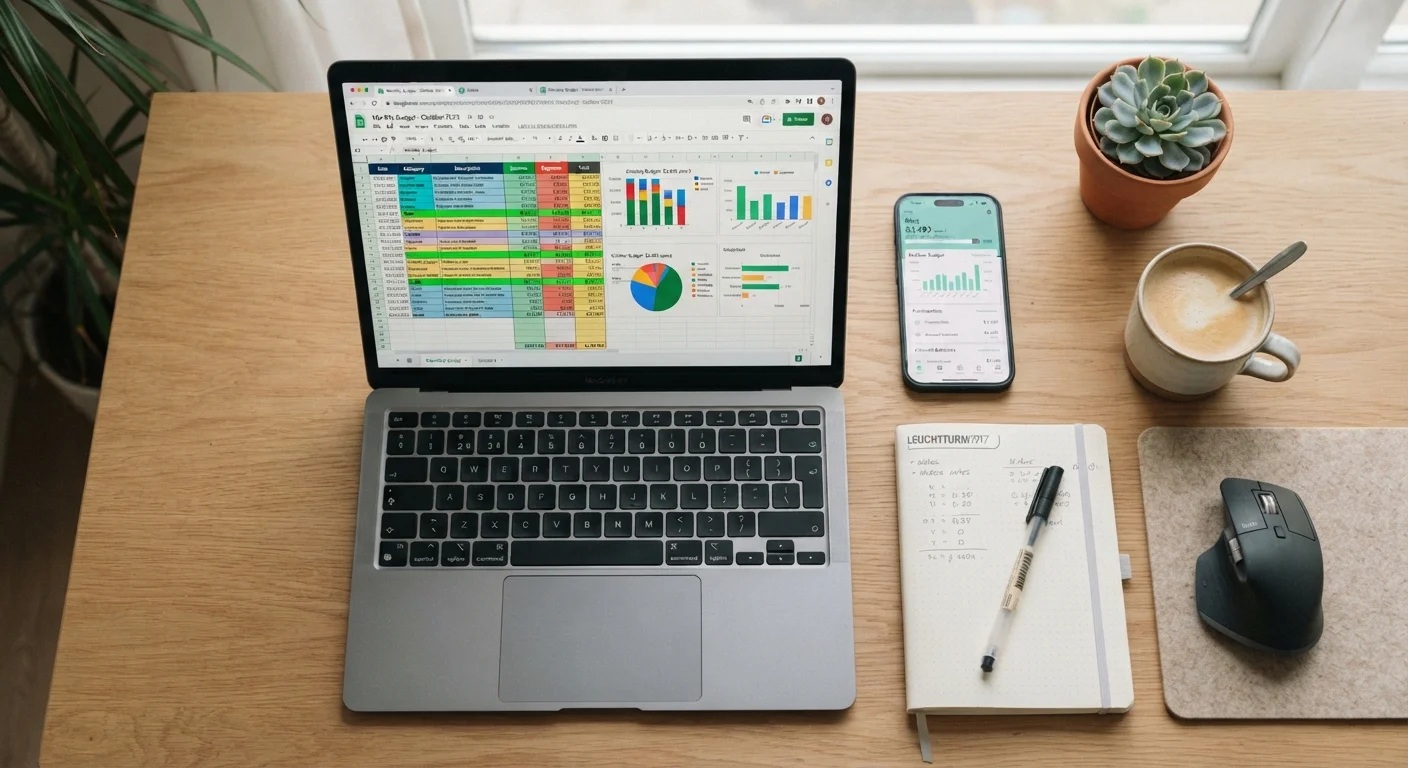
Photo: ScoutAnswers.com | Blogs That Ignite Curiosity editorial
Key Takeaways
- Spreadsheets offer maximum flexibility and control but require consistent manual effort to maintain.
- Budgeting apps automate data entry and provide instant visibility, but may involve subscription costs or privacy trade-offs.
- The best tracking method is the one you will actually use consistently over time.
- Your income structure, tech comfort level, and privacy preferences all influence which approach suits you.
- Hybrid approaches-using both tools for different purposes-are a legitimate option for some people.
What You're Actually Choosing Between
When it comes to tracking your spending, the debate usually narrows to two options: a spreadsheet you build and manage yourself, or a dedicated budgeting app that connects to your accounts and does much of the heavy lifting automatically.
Both can absolutely work. The real question is which one fits how you actually behave-not how you intend to behave. If you're just getting started, see our step-by-step guide to building your first monthly budget before choosing a tool.
Think of this as a practical framework, not a product recommendation. Your income pattern, comfort with technology, and tolerance for manual tasks all play a role in determining the right fit.
| Spreadsheet | Budgeting App | |
|---|---|---|
| Data entry | Mostly manual | Largely automated |
| Customization | Unlimited flexibility | Limited to app's framework |
| Cost | Often free or low-cost | Varies; some charge subscription fees |
| Privacy | Data stays with you | Requires sharing account access |
| Learning curve | Moderate to high | Low to moderate |
| Visual reporting | Build your own charts | Built-in dashboards |
| Best for irregular income | Strong fit | Varies by app |
The Case for Spreadsheets
A spreadsheet-whether in Google Sheets, Microsoft Excel, or a similar program-gives you a blank canvas. You define every category, formula, and layout. That flexibility is genuinely powerful for people with irregular income, freelance earnings, or spending patterns that don't fit neatly into preset categories.
Spreadsheets also keep your data entirely under your control. Nothing is shared with a third-party service, and there are no recurring subscription fees. For privacy-conscious users, that's a meaningful advantage.
The trade-off is effort. Every transaction typically needs to be entered manually, and the system only stays accurate if you maintain it regularly. If a few weeks go by without updates, catching up becomes a chore-and most people don't. A monthly spending audit checklist can help you stay on top of gaps before they accumulate.
Consistency Beats Complexity Every Time
The Case for Budgeting Apps
Budgeting apps typically connect directly to your bank and credit card accounts, pulling in transactions automatically and sorting them into categories. This automation removes the biggest friction point for most people: remembering to log purchases.
Many apps also offer visual dashboards, spending trend charts, and alerts when you approach a category limit-features that make it easier to spot patterns without crunching numbers yourself. For anyone who wants to understand why tracking even small purchases matters, apps lower the barrier significantly.
The downsides are worth noting. Some apps charge monthly or annual fees. Linking financial accounts to a third-party platform involves sharing sensitive credentials or read-only access tokens-a trade-off that's reasonable for many users but not for everyone. App-generated categories can also be imprecise, requiring regular review to catch miscategorized transactions.
How to Decide: Questions Worth Asking Yourself
Before defaulting to whatever seems most popular, consider these factors honestly:
- How consistent are you with manual tasks? If you reliably log expenses when they happen, a spreadsheet can work well. If you tend to procrastinate on data entry, automation matters more.
- How complex is your financial picture? Multiple income streams, variable expenses, or shared household finances may benefit from a custom spreadsheet structure that apps can't easily replicate.
- How do you feel about data privacy? Linking bank credentials to a third-party app is a legitimate concern. Read any platform's privacy and data policies before connecting accounts.
- What's your budget for budgeting? Spreadsheet tools are often free or low-cost. Apps vary widely in pricing-verify current costs directly with any service you consider.
It's also worth exploring alternatives entirely. The envelope budgeting method is another framework some people find more intuitive than either digital option.
~33%
Americans with a detailed household budget
Gallup polling has consistently found that fewer than one in three Americans maintain a detailed monthly budget, highlighting how many people have room to start tracking at all.
1 in 4
Adults who use a budgeting or finance app
According to data cited by the Financial Health Network, roughly a quarter of U.S. adults use some form of digital budgeting or personal finance tool.
Making Your Choice Work Long-Term
The most sophisticated budgeting system in the world fails if you stop using it after three weeks. Sustainability matters more than features.
Start simple regardless of which method you choose. A spreadsheet with five spending categories beats an elaborate one you abandon in a month. An app with basic bank syncing is more useful than a premium subscription with dashboards you never open.
Some people use both: a spreadsheet for longer-term planning or net worth tracking, and an app for day-to-day transaction visibility. That's a valid hybrid approach if it serves your needs without creating redundant work.
Revisit your choice after 60 to 90 days. If you're consistently maintaining it and your awareness of spending has improved, the method is working. If you're avoiding it or finding workarounds, that's a signal to adjust-either the tool or the habits around it.
This article is for general informational and educational purposes only and does not constitute personalized financial advice. Consult a qualified financial professional for guidance specific to your situation.
The content on this site is for informational purposes only and is not a substitute for professional advice. Always consult a qualified professional for guidance specific to your situation.