
Tile vs. Luxury Vinyl Plank: Choosing a Floor That Fits Your Space

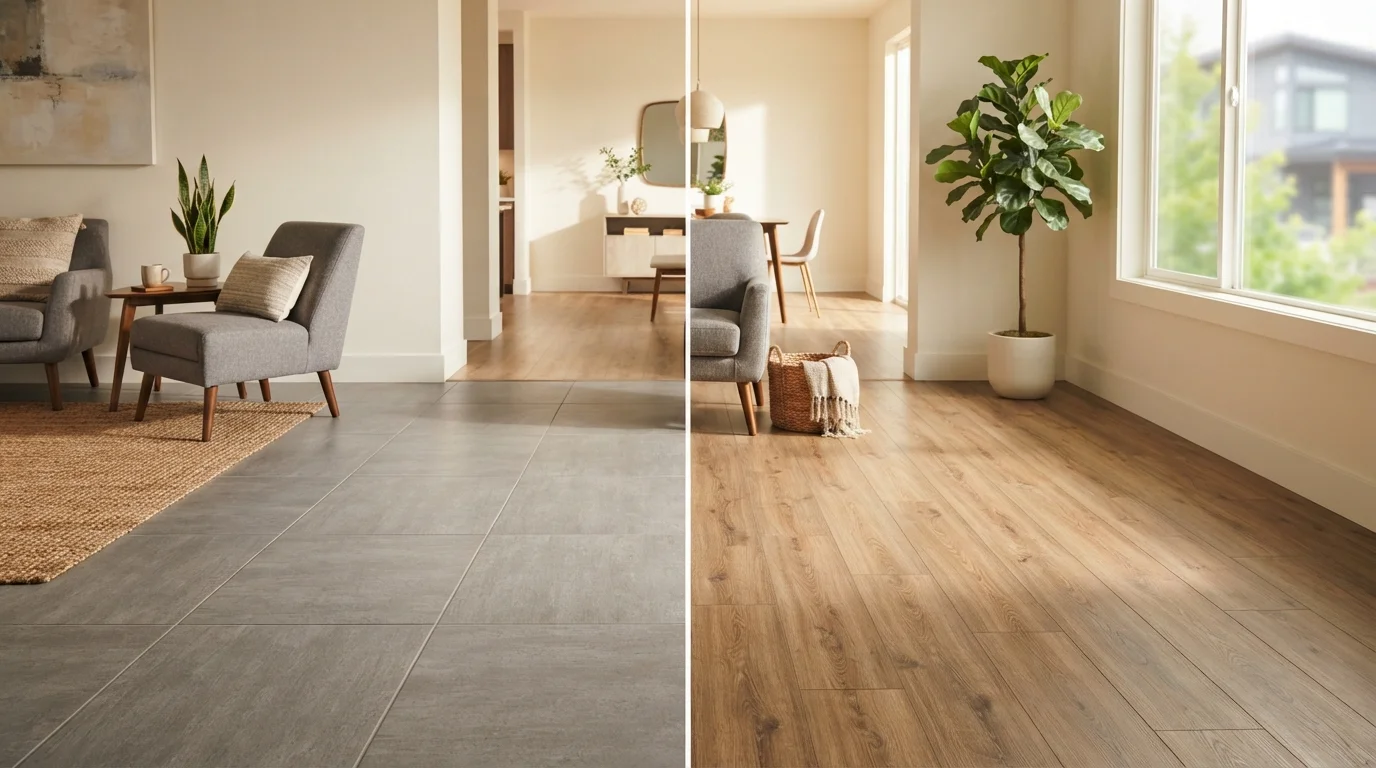
Photo: ScoutAnswers.com | Blogs That Ignite Curiosity editorial
Key Takeaways
- Tile is virtually waterproof but hard underfoot and cold in winter; LVP is resilient and warmer but can be damaged by extreme heat.
- LVP typically costs less per square foot installed and is more forgiving for confident DIYers to lay themselves.
- Tile can last 50 years or more with proper grout maintenance; quality LVP typically carries 15-25 year residential warranties.
- Subfloor condition matters for both materials - always inspect and level before installation.
- Tile adds more resale appeal in bathrooms; LVP is increasingly accepted in living areas and bedrooms.
What Sets These Two Flooring Types Apart
Ceramic and porcelain tile are fired clay products - dense, rigid, and essentially impervious to water when properly installed and sealed. Luxury vinyl plank, often called LVP, is a multi-layer synthetic product engineered to mimic the look of hardwood or stone while offering properties that natural materials can't match, like inherent flexibility and built-in cushioning.
The biggest functional gap between them is how they feel and respond to everyday life. Tile is unforgiving - it's cold in winter, hard on joints during long periods of standing, and unforgiving if a glass drops. LVP has some give, stays closer to room temperature, and is significantly quieter underfoot. That difference matters enormously depending on where the floor is going and who's using it.
Before committing to either, it's worth checking your subfloor condition. Both materials need a flat, solid base - any flex or unevenness will cause tile to crack and LVP seams to buckle over time. See our commonly overlooked renovation details for guidance on what to inspect before flooring goes in.
| Criterion | Ceramic & Porcelain Tile | Luxury Vinyl Plank (LVP) |
|---|---|---|
| Water resistance | Excellent (grout needs sealing) | Very good (seams need attention) |
| Comfort underfoot | Hard, cold without heating | Cushioned, warmer feel |
| DIY installation | Difficult; usually needs a pro | Accessible with basic tools |
| Typical lifespan | 50+ years (tile surface) | 15-25 years (residential use) |
| Heat resistance | Excellent | Can warp above ~140°F |
| Maintenance | Grout sealing and cleaning required | Low; no sealing needed |
| Sound underfoot | Loud, hollow without underlayment | Quieter with built-in underlayment |
| Refinishable | No (replace individual tiles) | No (replace planks or full floor) |
Cost, Installation, and DIY Feasibility
Tile installation typically costs more than LVP - not just because of the material itself, but because the labor is more specialized. Setting tile requires mixing and spreading mortar or tile adhesive, spacing tiles with precision, and then grouting - a multi-day process. Porcelain, particularly large-format tiles, adds cutting complexity and often requires a wet saw. Most homeowners with limited experience hire a professional for tile work.
LVP, by contrast, is designed with the DIYer in mind. Most modern LVP uses a click-lock floating system: planks snap together and rest on the subfloor without glue or nails. With basic tools - a utility knife or a miter saw, a tapping block, and a rubber mallet - many homeowners can complete a room over a weekend. That said, doorways, transitions, and irregular room shapes still require patience and planning.
2-3×
Typical tile installation cost vs. LVP
Professional tile installation - including labor, mortar, and grout - commonly runs two to three times the total installed cost of a comparable LVP project, though local labor rates vary significantly.
12 mil+
Wear layer thickness for high-traffic LVP
Flooring industry guidelines generally recommend a wear layer of at least 12 mil for residential areas with heavy foot traffic; commercial-grade products often start at 20 mil.
50+ years
Expected lifespan of properly installed tile
Ceramic and porcelain tile surfaces are among the most durable residential flooring materials available, with lifespans that can outlast multiple other renovation cycles in the same home.
Material costs vary widely by region, product quality, and tile size, so treat any figure as a general reference rather than a firm estimate. Always get multiple quotes and factor in underlayment, transition strips, grout, and adhesive when budgeting either option.
Durability, Maintenance, and Longevity
Well-installed tile can last the lifetime of a home. The tile surface itself resists scratches, stains, and heat - you can set a hot pan near a tiled backsplash without concern. The vulnerability is grout: grout lines can stain, crack, and harbor mildew if not sealed and maintained. Re-grouting is a manageable DIY task but adds a maintenance obligation that LVP doesn't carry.
LVP wears well under normal residential use - its wear layer (measured in mils) protects the printed design underneath. Thicker wear layers (12 mil and above) hold up better in high-traffic areas. However, LVP can be gouged by dragging heavy furniture, dulled by harsh cleaning chemicals, and damaged by prolonged exposure to direct sunlight or temperatures above roughly 140°F. It also cannot be refinished the way hardwood can; when it's worn, it's replaced.
For landlords weighing flooring as part of a broader property decision, the trade-offs between rental strategies can also influence which material makes economic sense over time.
Room-by-Room Recommendations
Bathrooms and laundry rooms: Tile is the traditional choice here for good reason. Its impermeability handles standing water, humidity, and cleaning chemicals without concern. LVP marketed as 100% waterproof can perform well in bathrooms, but any seam or edge left unsealed is a potential entry point for water to reach the subfloor below.
Kitchens: Both materials work. Tile handles heat and spills easily; LVP is more comfortable during long cooking sessions and easier to replace if a section is damaged. The decision often comes down to your design preference and whether you're doing the work yourself.
Living rooms and bedrooms: LVP is well-suited here. The warmth and cushion underfoot are genuinely appreciated in spaces where people relax and spend time barefoot. Tile in these rooms can feel institutional and cold without radiant heating beneath it.
Basements: LVP handles minor moisture vapor from concrete slabs better than tile in many cases, though both require a properly prepared, level concrete surface. Check manufacturer guidance carefully, as some LVP products have specific subfloor requirements.
Check Manufacturer Specs Before Installing
Flooring is just one piece of a cohesive interior plan. If you're rethinking storage solutions alongside your renovation, our overview of built-in versus freestanding storage trade-offs may help you think through the full picture room by room.
The content on this site is for informational purposes only and is not a substitute for professional advice. Always consult a qualified professional for guidance specific to your situation.