
Built-In Storage vs. Freestanding Furniture: A Room-by-Room Look at the Trade-Offs

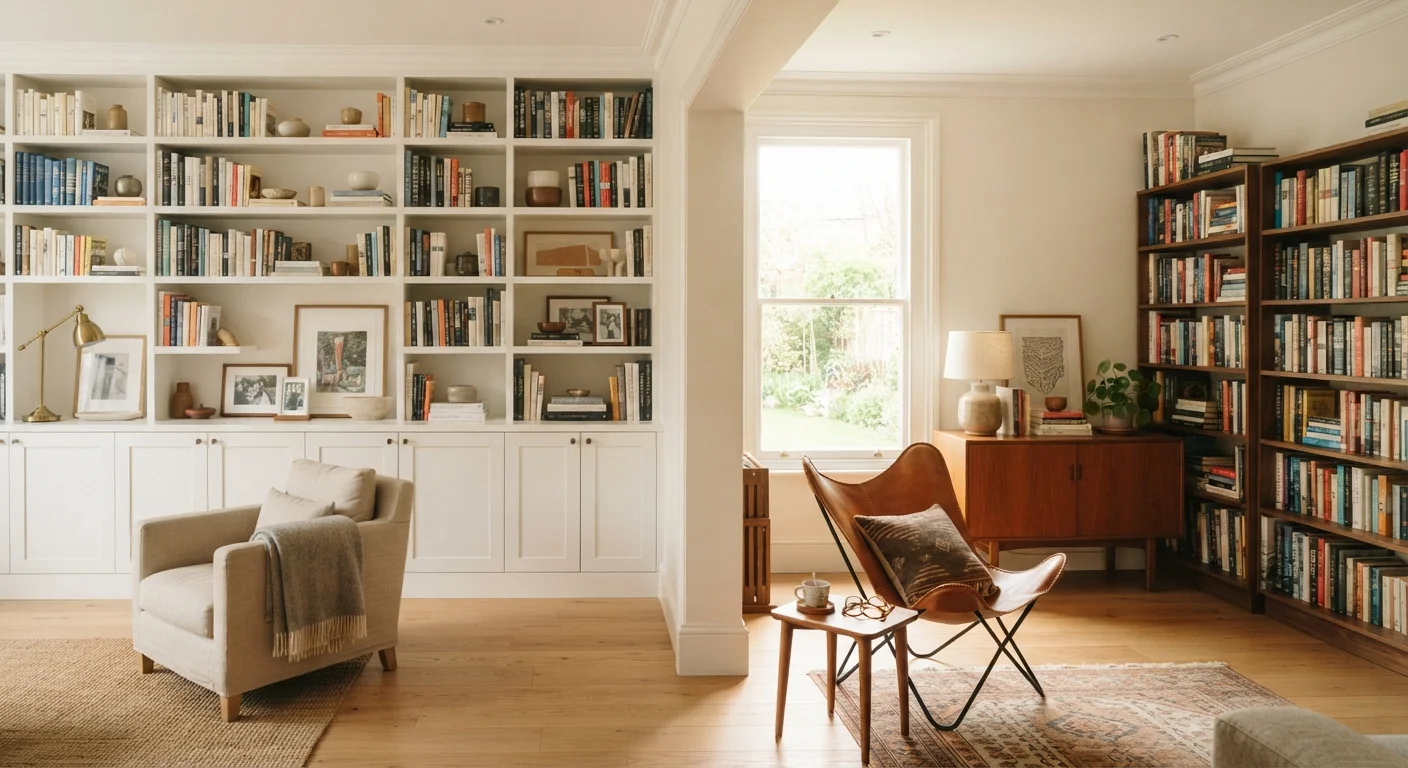
Photo: ScoutAnswers.com | Blogs That Ignite Curiosity editorial
Key Takeaways
- Built-in storage adds home value but costs significantly more upfront and cannot move with you.
- Freestanding furniture is flexible and renter-friendly, but may leave awkward gaps in irregular spaces.
- The right choice often depends on how long you plan to stay in your home.
- Certain rooms - like kitchens and bathrooms - almost always favor built-in solutions.
- Mixing both approaches strategically can give you the benefits of each.
Uses every inch of available wall and floor space
Built-ins are custom-fitted to your room's exact dimensions, eliminating the dead space that standard freestanding pieces inevitably leave around edges and corners.
Creates a cohesive, tailored visual appearance
When shelving and cabinetry are integrated with the architecture, rooms feel more intentional and less cluttered than they do with standalone furniture.
Generally considered a home value improvement
Quality built-in cabinetry and storage are typically viewed as permanent improvements that can appeal to future buyers, though actual return depends on market and execution.
Ideal for awkward spaces and irregular layouts
Alcoves, sloped ceilings, and odd nooks that stump standard furniture can be fitted precisely with custom-built solutions.
Cannot move with you when you relocate
Built-ins are fixed assets - they belong to the home, not to you. Any investment stays behind when you sell or move, making them a poor choice for renters or frequent movers.
Significantly higher upfront cost and lead time
Custom carpentry involves materials, skilled labor, and finish work that can cost several times more than comparable freestanding furniture, plus planning and installation time.
Difficult and costly to alter if needs change
If your lifestyle, family size, or room function shifts, removing or modifying built-ins is a significant undertaking - far more disruptive than simply rearranging freestanding pieces.
Locks in a layout before you know how you'll use the space
Committing to built-ins before you've lived in a home for a while risks designing around assumptions that turn out to be wrong about how the room actually gets used.
What Sets Built-Ins and Freestanding Furniture Apart
Built-in storage is constructed or installed as part of a room - think custom cabinetry, recessed bookshelves flanking a fireplace, or a window seat with drawers underneath. It's fixed, finishes flush with walls, and is typically considered a permanent improvement to the home. Freestanding furniture, by contrast, sits independently: a bookcase you assemble, a sideboard you reposition, a wardrobe you take when you leave.
Both approaches solve the same core problem - organizing and storing your belongings - but they do so with very different assumptions about permanence, budget, and how a home will be used. Understanding those differences is the first step toward making the right call for each room. For a broader look at how your life stage shapes these decisions, see how household needs shift over time.
The Case for Built-In Storage
Uses every inch of available wall and floor space
Built-ins are custom-fitted to your room's exact dimensions, eliminating the dead space that standard freestanding pieces inevitably leave around edges and corners.
Creates a cohesive, tailored visual appearance
When shelving and cabinetry are integrated with the architecture, rooms feel more intentional and less cluttered than they do with standalone furniture.
Generally considered a home value improvement
Quality built-in cabinetry and storage are typically viewed as permanent improvements that can appeal to future buyers, though actual return depends on market and execution.
Ideal for awkward spaces and irregular layouts
Alcoves, sloped ceilings, and odd nooks that stump standard furniture can be fitted precisely with custom-built solutions.
Built-ins earn their premium price in a few specific ways. Because they're constructed to fit exact dimensions, they eliminate the dead space that freestanding furniture invariably leaves - the awkward gap behind a bookcase, the visible baseboard a wardrobe can't hide. That precision is especially valuable in rooms with sloped ceilings, alcoves, or irregular walls.
From a financial standpoint, well-executed built-in cabinetry and shelving are generally considered a value-adding improvement, though the return varies widely based on quality, location, and market. They also reduce clutter visually: when everything is recessed and cohesive, rooms tend to read as larger and more intentional.
The Case for Freestanding Furniture
Cannot move with you when you relocate
Built-ins are fixed assets - they belong to the home, not to you. Any investment stays behind when you sell or move, making them a poor choice for renters or frequent movers.
Significantly higher upfront cost and lead time
Custom carpentry involves materials, skilled labor, and finish work that can cost several times more than comparable freestanding furniture, plus planning and installation time.
Difficult and costly to alter if needs change
If your lifestyle, family size, or room function shifts, removing or modifying built-ins is a significant undertaking - far more disruptive than simply rearranging freestanding pieces.
Locks in a layout before you know how you'll use the space
Committing to built-ins before you've lived in a home for a while risks designing around assumptions that turn out to be wrong about how the room actually gets used.
Freestanding pieces aren't a compromise - they're often the smarter choice. If you rent, any investment in built-ins stays with the landlord. If you move frequently, freestanding furniture travels with you and can adapt to entirely different floor plans. That flexibility has real financial value that's easy to underestimate.
There's also a much lower barrier to entry. A quality freestanding bookcase or media cabinet can be purchased, assembled, and repositioned in an afternoon. Built-ins typically involve contractor quotes, lead times, permits in some cases, and finish work after installation. For first-time buyers still figuring out how they actually use a space, starting with freestanding furniture while planning eventual built-ins is a reasonable approach. First-time furniture buyers will find that living with a layout before committing to permanent changes saves both money and regret.
Renting? Built-Ins Are Almost Never Worth It
A Room-by-Room Breakdown
Living Room
Built-ins around a fireplace or media wall deliver a cohesive focal point and make the most of vertical space. However, if your layout or taste changes, they're expensive to alter. Freestanding entertainment units and bookshelves offer more freedom to reconfigure - helpful in open-plan spaces where furniture placement defines zones. See defining zones without building walls for arrangement strategies.
Bedroom
Built-in wardrobes and under-bed drawer units make exceptional use of space, particularly in smaller rooms. For small bedrooms especially, a fitted wardrobe that reaches the ceiling can recover significant storage without eating floor space. That said, freestanding wardrobes and dressers work well in standard-sized rooms and move with you. See furniture arrangements for small bedrooms for more on maximizing tight spaces.
Kitchen and Bathroom
These rooms almost always favor built-ins. Cabinetry in kitchens and bathrooms is typically expected, moisture-resistant when properly specified, and adds clear resale value. Freestanding options exist - open shelving, rolling islands, pedestal storage - but they're generally supplementary rather than primary solutions in these rooms.
Home Office
A built-in desk-and-shelving wall can transform a spare room into a highly functional workspace. But if the room may need to serve another purpose later, freestanding desks and modular shelving units preserve that optionality.
5-15%
Estimated home value increase from quality built-in storage
Real estate professionals commonly cite custom cabinetry and built-in shelving as improvements that can contribute to resale value, though results vary by market and quality.
3-5×
Typical cost premium of built-ins over comparable freestanding units
Custom built-in cabinetry generally costs substantially more than freestanding furniture of similar capacity due to labor, materials, and site-specific fitting.
Cost and Commitment: What to Weigh Before Deciding
Built-ins involve real upfront cost - materials, skilled labor, and often finish work such as painting or trim matching. The investment range varies considerably based on complexity, materials, and your region. For context on which furniture expenditures tend to deliver lasting value, this look at investment pieces offers a grounded framework.
Freestanding furniture carries its own costs - quality matters here. A poorly constructed bookcase won't hold heavy loads safely and won't last. Understanding material trade-offs, covered in our guide to solid wood vs. engineered wood vs. MDF, helps you spend wisely on pieces that will hold up. The key question for any room: how long do you expect to stay, and how certain are you that your needs won't change? The longer your horizon and the more settled your layout, the stronger the case for built-ins becomes.
It's also worth noting that some built-in work - particularly anything involving electrical, plumbing, or structural modifications - requires permits and licensed professionals. Always verify local requirements before starting any renovation project.
The content on this site is for informational purposes only and is not a substitute for professional advice. Always consult a qualified professional for guidance specific to your situation.