
Solid Wood vs. Engineered Wood vs. MDF: Choosing the Right Material for Your Furniture

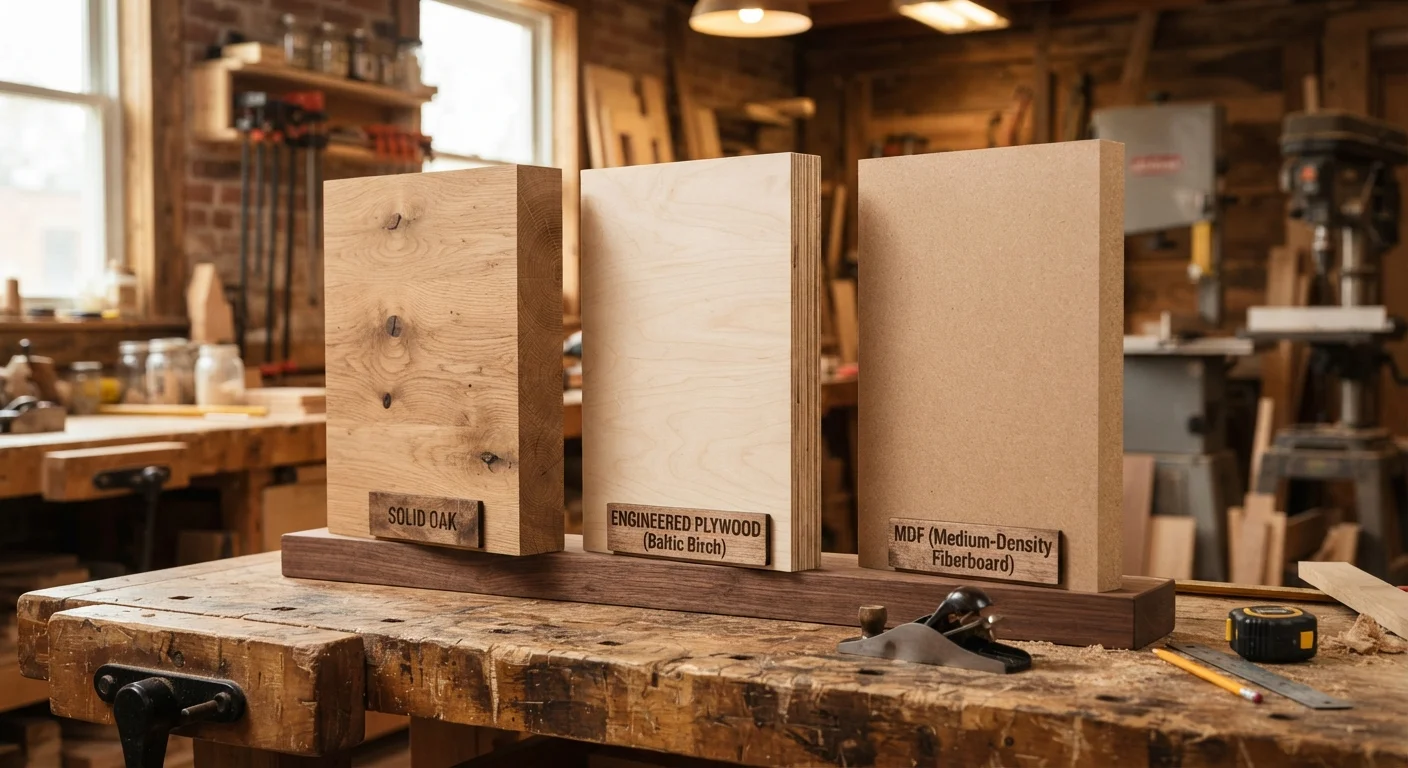
Photo: ScoutAnswers.com | Blogs That Ignite Curiosity editorial
Key Takeaways
- Solid wood offers the greatest longevity and can be refinished multiple times, but costs more.
- Engineered wood resists warping better than solid wood and works well in humid environments.
- MDF has a perfectly smooth surface ideal for painted finishes but is heavy and not moisture-friendly.
- The right material depends on the room, expected use, and your budget.
- Mixing materials strategically - solid wood frames with engineered shelves - is a common and sensible approach.
What Each Material Actually Is
Before comparing performance, it helps to understand what these materials are made of - because the construction determines everything else.
Solid wood is milled directly from a single timber. The plank you see is the same material all the way through. Species range from softer woods like pine to dense hardwoods like oak, maple, and walnut, each with different hardness, grain patterns, and price points.
Engineered wood is an umbrella term covering several products - most commonly plywood and furniture-grade particleboard with wood veneer. Plywood is built from thin wood layers glued with alternating grain directions, which gives it exceptional dimensional stability. Veneered particleboard (often labeled as "furniture board") adds a real wood or printed surface over a pressed-wood core.
MDF - medium-density fiberboard - is made by breaking wood down into fine fibers, mixing them with resin and wax, then pressing the mixture under high heat. The result is a completely uniform, grain-free panel with no knots or voids. It machines cleanly and paints beautifully, but it behaves very differently from the other two under stress and moisture.
If you're furnishing a space for the first time, our first-time furniture buyer's guide walks through how to assess construction quality before you buy.
Durability, Moisture Resistance, and Repairability
These three factors vary significantly across the materials and should drive your decision more than aesthetics alone.
| Solid Wood | Engineered Wood | MDF | |
|---|---|---|---|
| Durability | Very high - lasts decades | Moderate to high | Moderate - edges chip easily |
| Moisture Resistance | Low - expands and contracts | Good - especially plywood | Poor - swells when wet |
| Repairability | Excellent - can be refinished | Limited - veneer layer thin | Poor - hard to restore |
| Surface Finish Options | Stain, oil, paint, lacquer | Veneer or paint | Paint - smoothest finish |
| Relative Cost | Highest | Mid-range | Lowest |
| Weight | Heavy (varies by species) | Moderate | Very heavy for its size |
| Best Room Use | Living, dining, bedroom | Kitchen, bath, shelving | Built-ins, cabinet doors |
Durability: Solid hardwood can withstand decades of use and still be sanded down and refinished. Engineered wood holds up well under normal loads but the veneer layer limits how many times it can be refinished. MDF is notably dense but brittle at edges - it chips and sags under heavy loads, especially on long unsupported spans like wide shelves.
Moisture: Solid wood expands and contracts with humidity, which can cause warping or joint separation if not properly sealed and maintained. Engineered plywood's cross-grain construction resists this movement considerably. MDF is the most vulnerable - it swells and crumbles when wet and should not be used in bathrooms or near sinks without extensive sealing, even then with caution.
Repairability: Solid wood is uniquely repairable. Scratches can be sanded out, surfaces can be refinished, and structural repairs are straightforward for a skilled woodworker. Engineered wood can often be touched up cosmetically. MDF is difficult to repair once damaged - swollen or chipped edges rarely return to their original condition.
Don't Use MDF in High-Moisture Areas
Cost Considerations and Value Over Time
Price differences between these materials are real but should be weighed against lifespan, not just upfront cost.
Solid wood furniture typically carries the highest price tag, reflecting both raw material costs and the skilled labor involved in working with natural timber. However, a well-maintained solid wood piece can last generations - making the cost-per-year calculation more favorable than it first appears.
Engineered wood products span a wide range. Quality plywood is more expensive than basic particleboard but considerably cheaper than solid hardwood. The value proposition is strong: good engineered wood furniture offers real stability and a reasonable lifespan at a lower entry cost.
MDF sits at the lower end of the price range and is widely used in flat-pack and ready-to-assemble furniture. It performs well for its price in low-stress applications but has a shorter practical lifespan, particularly if moved frequently - the compressed-fiber core does not hold fasteners as reliably after repeated assembly and disassembly.
Our editorial piece on which furniture pieces are worth spending more on can help you decide where solid wood is genuinely worth the premium.
Mix Materials Strategically
Best Applications by Room and Use Case
Knowing where each material performs best helps you allocate budget wisely and avoid mismatches that lead to early replacement.
- Dining tables and desks: Solid wood or high-quality engineered plywood tops. These surfaces take daily impact and benefit from the ability to refinish.
- Bedroom furniture (dressers, nightstands, bed frames): Solid wood or wood-veneer engineered board works well. Humidity in bedrooms is generally stable, so moisture resistance is less critical.
- Shelving and bookcases: Plywood is often the better call over MDF for long spans - it resists sagging under the weight of books. Solid wood works too but adds cost without proportional benefit here.
- Kitchen and bathroom cabinetry boxes: Engineered plywood is the industry standard for cabinet carcasses in moisture-prone rooms. MDF cabinet doors with a painted finish are common and practical - the face is sealed, and doors don't bear structural load.
- Built-ins and decorative panels: MDF is frequently chosen by finish carpenters for its smooth, consistent surface, which takes primer and paint without grain telegraphing through.
If you're weighing built-in cabinetry against freestanding furniture, see our room-by-room look at built-ins vs. freestanding furniture for a fuller picture of the trade-offs.
The content on this site is for informational purposes only and is not a substitute for professional advice. Always consult a qualified professional for guidance specific to your situation.