
Understanding R-Value, U-Factor, and Other Window Performance Terms

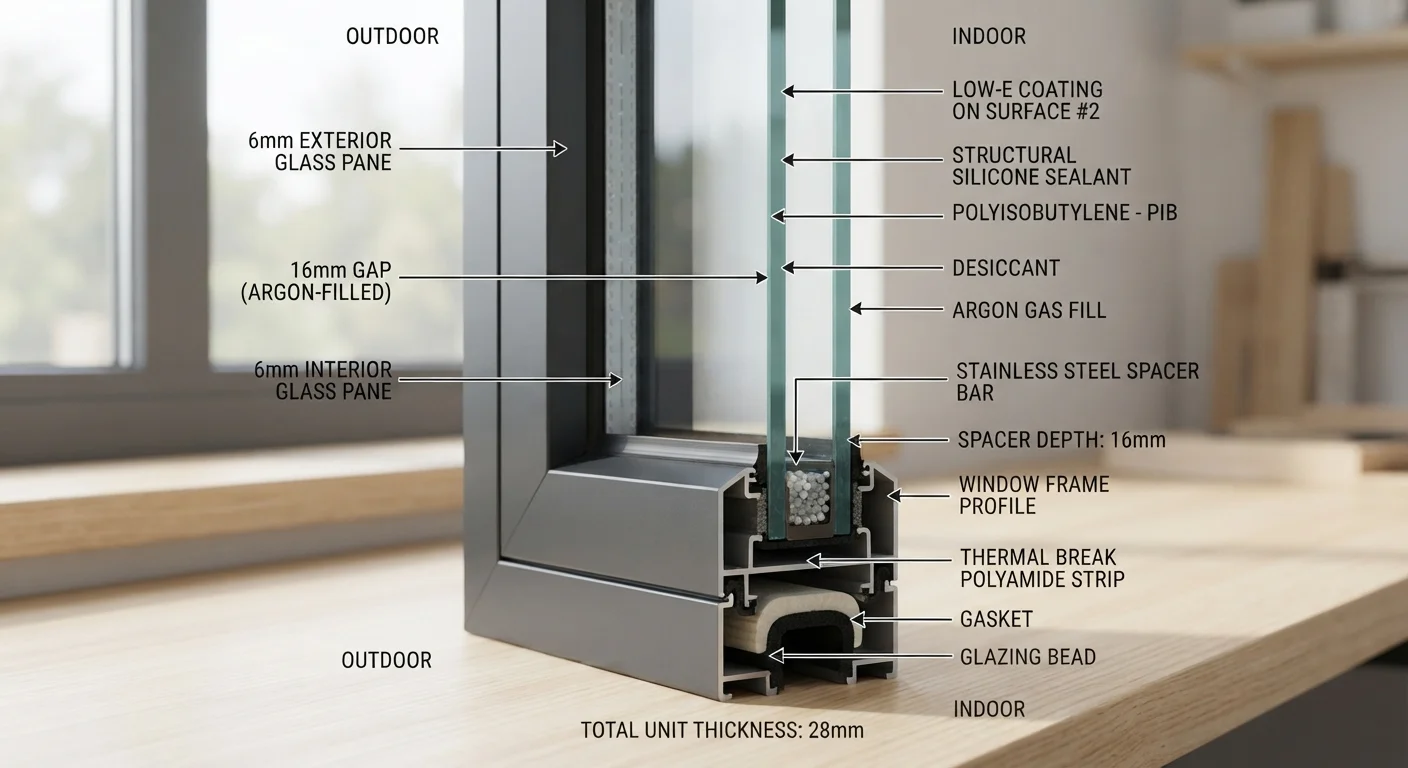
Photo: ScoutAnswers.com | Blogs That Ignite Curiosity editorial
Why Window Performance Ratings Matter
When you're shopping for replacement windows, the stickers and spec sheets are filled with numbers and acronyms that can feel overwhelming. But these ratings aren't marketing fluff - they're standardized measurements established by the National Fenestration Rating Council (NFRC) to help homeowners make meaningful comparisons between products.
Understanding even a handful of these terms puts you in a much stronger position to choose windows suited to your home's climate and your comfort goals. Think of this page as a decoder ring you can keep handy throughout the process. For a broader look at how building envelope insulation works together, see our complete overview of home insulation.
| Rating Authority | National Fenestration Rating Council (NFRC) |
| Lower is better for | U-factor, SHGC (hot climates), Air Leakage |
| Higher is better for | R-value, Visible Transmittance, Condensation Resistance |
| Typical residential U-factor range | 0.20 - 0.50 (NFRC certified product directory) |
| ENERGY STAR U-factor threshold (northern U.S.) | ≤ 0.27 (U.S. EPA ENERGY STAR program) |
| Common gas fills | Argon (most common), Krypton (higher performance) |
Core Performance Terms Defined
The following terms appear most often on NFRC labels and manufacturer spec sheets. Knowing what each measures - and which direction is better - helps you compare windows accurately.
U-Factor
A measure of how quickly a window conducts non-solar heat flow. U-factor runs from about 0.20 to 1.20; lower numbers indicate better insulating performance. It is the primary rating to compare when evaluating thermal efficiency.
R-Value
The mathematical inverse of U-factor (R = 1 ÷ U), expressing a window's resistance to heat flow. Higher R-values indicate better insulation. Windows typically have lower R-values than insulated walls, which is why frame and glazing choices matter.
Solar Heat Gain Coefficient (SHGC)
The fraction of solar radiation admitted through a window, both directly and absorbed then re-emitted inward. Values range from 0 to 1; lower numbers block more solar heat, which is preferable in hot climates.
Visible Transmittance (VT)
The percentage of visible light that passes through a window's glazing. Higher VT means a brighter interior. It is rated between 0 and 1; most residential windows fall between 0.30 and 0.70.
Air Leakage (AL)
The rate at which air passes through a closed window assembly, measured in cubic feet per minute per square foot of frame area. Lower AL values indicate a tighter seal; ratings below 0.30 are generally considered acceptable.
Low-E Coating
A microscopically thin metallic layer applied to glass to reduce infrared and ultraviolet transmission without significantly reducing visible light. Low-E coatings help achieve lower U-factors and can be tuned to allow more or less solar gain depending on climate needs.
Condensation Resistance (CR)
An optional NFRC rating measuring how well a window resists interior condensation forming on its surface. CR is scored from 1 to 100; higher numbers indicate better resistance, which is relevant in humid climates or rooms like kitchens and bathrooms.
Gas Fill
An inert gas - typically argon or krypton - sealed between panes of insulating glass to reduce conductive and convective heat transfer. Gas fills improve U-factor compared to air-filled units of the same thickness.
A quick note on R-value versus U-factor: they measure the same property (resistance to heat flow) but are expressed as inverses of each other. A window with a U-factor of 0.25 has an R-value of 4. Neither term is more correct; manufacturers and insulation guides simply favor different conventions. Our insulation reference guide explains how R-value applies to walls, attics, and floors if you want to see the full picture.
Reading an NFRC Label in Practice
The NFRC label is a small sticker affixed to certified windows. It lists U-factor, Solar Heat Gain Coefficient (SHGC), Visible Transmittance (VT), and sometimes Air Leakage and Condensation Resistance. No single number tells the whole story - the right balance depends on where you live and how your home is oriented.
Climate Zone Shapes the Right Choice
In cold climates, prioritize a low U-factor (better insulation) and a moderate-to-high SHGC on south-facing windows to capture passive solar heat in winter. In hot climates, a low SHGC on west- and east-facing windows reduces cooling loads. Visible Transmittance matters most if natural daylighting is a priority for a room.
Once you're comfortable with window performance language, you may find the same plain-language approach helpful elsewhere - for example, our guide to upholstery fabric performance ratings applies a similar framework to furniture choices by room.
This article is for general informational purposes only. Window code requirements and energy efficiency standards vary by state, municipality, and climate zone. Always verify local building codes and consult a licensed contractor or energy auditor before making decisions about your specific home.
The content on this site is for informational purposes only and is not a substitute for professional advice. Always consult a qualified professional for guidance specific to your situation.