
The Truth About Fertilizer Numbers: What N-P-K Actually Means

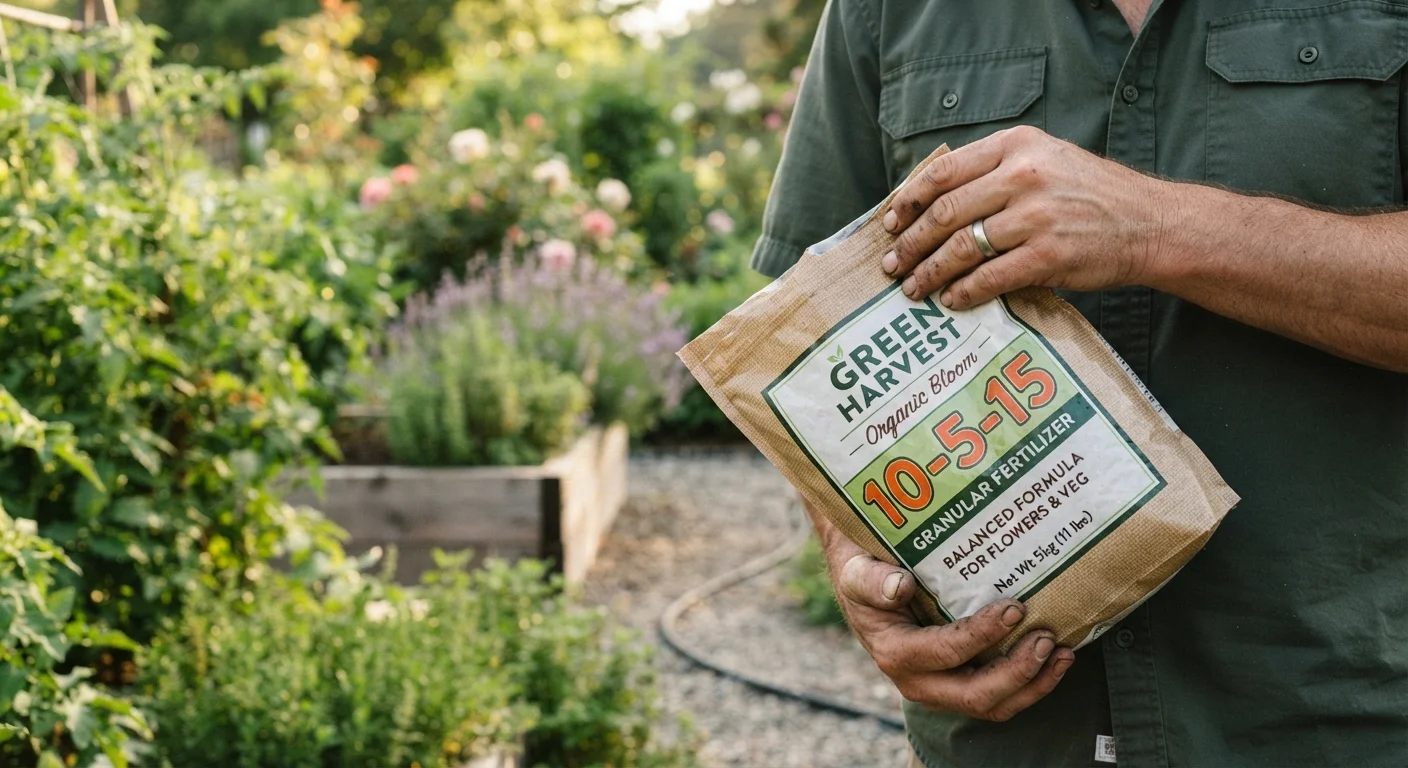
Photo: ScoutAnswers.com | Blogs That Ignite Curiosity editorial
Key Takeaways
- N-P-K numbers tell you the percentage of nitrogen, phosphorus, and potassium in a fertilizer.
- Each nutrient serves a distinct role: nitrogen feeds leaf growth, phosphorus supports roots and blooms, potassium strengthens overall plant health.
- Choosing the wrong N-P-K ratio can over-stimulate one growth process at the expense of others.
- A soil test is the most reliable way to determine which nutrients your garden actually needs.
- Higher numbers don't always mean better results - concentration and timing both matter.
Breaking Down the Three Numbers
Every fertilizer bag - granular, liquid, or slow-release - carries three numbers separated by hyphens. Reading them is straightforward once you understand the pattern: the first number is always nitrogen (N), the second is phosphorus (P), and the third is potassium (K). These numbers express the percentage of each nutrient by total bag weight.
So a 50-pound bag labeled 10-10-10 contains 5 pounds of nitrogen, 5 pounds of phosphorus, and 5 pounds of potassium. The remaining 35 pounds is carrier material - often sand, limestone, or other filler - that helps distribute the nutrients evenly when you apply them.
Think of it a bit like reading a nutrition label on packaged food: the label on your cereal box tells you how much protein, carbohydrate, or fat is inside per serving. The N-P-K label does the same job for your soil. For more on decoding percentage-based labels in everyday life, see our guide to reading nutrition labels.
3
Primary macronutrients in every fertilizer label
Nitrogen, phosphorus, and potassium are classified as primary macronutrients by the Association of American Plant Food Control Officials (AAPFCO), which governs fertilizer labeling standards.
46%
Nitrogen content in pure urea fertilizer
Urea (labeled 46-0-0) is one of the most concentrated nitrogen sources available, illustrating how dramatically N-P-K percentages can vary between products.
~50%
Of a granular fertilizer bag that is filler material
In a typical balanced 10-10-10 fertilizer, only 30% of the bag by weight is active nutrients; the rest is carrier material that aids even distribution.
What Each Nutrient Actually Does
Understanding the role of each nutrient helps you match the right fertilizer to your plants' actual needs, rather than guessing.
- Nitrogen (N) drives vegetative growth - the lush, green, leafy development above the soil line. Lawns, leafy vegetables, and ornamental grasses tend to be heavy nitrogen users. A nitrogen-deficient plant often looks pale yellow and grows slowly.
- Phosphorus (P) is critical for root development, flowering, and fruit set. It helps seedlings establish and supports energy transfer within the plant. You'll find phosphorus-heavy fertilizers marketed for transplanting and bloom promotion.
- Potassium (K) is sometimes called the "health nutrient" because it regulates water use, strengthens cell walls, and improves disease resistance. It plays a supporting role across virtually every plant function rather than driving one specific growth stage.
When plants struggle despite regular watering and adequate sunlight, a nutrient imbalance is often a contributing factor. It's also worth noting that soil pH directly controls how well roots can absorb these nutrients - even if the right elements are present, an imbalanced pH can lock them out. Our article on soil pH and plant health covers this in detail.
Test Your Soil Before You Fertilize
Choosing the Right Ratio for Your Garden
There is no single "correct" N-P-K ratio - the right choice depends on what you're growing and what your soil currently lacks. Here's a practical framework:
- Get a soil test first. County cooperative extension offices and many garden centers offer affordable soil testing. Results will tell you which nutrients are already adequate and which are deficient, so you're not adding what isn't needed.
- Match the ratio to the growth stage. New plantings and seedlings benefit from higher phosphorus to support root establishment. Established lawns in active growth need more nitrogen. Fruiting plants entering harvest season often respond well to a potassium boost.
- Understand concentration vs. quantity. A high-numbered fertilizer (like 30-10-10) is more concentrated, meaning you apply less per square foot. A low-numbered product (like 3-1-2) requires more material to deliver the same nutrition. Neither is inherently superior - what matters is the total amount of each nutrient delivered to the soil.
When in doubt, a balanced fertilizer - one where the numbers are equal or nearly equal, such as 10-10-10 - is a reasonable starting point for general garden beds. But relying on a soil test will always produce more targeted, effective results.
Common Mistakes When Reading Fertilizer Labels
Even experienced gardeners make a few recurring errors when selecting and applying fertilizers based on N-P-K values.
Assuming bigger numbers mean better results. A higher concentration means you simply use less product. Over-applying a high-concentration fertilizer is a common cause of burned plants and wasted money.
Ignoring the middle number. Phosphorus often gets overlooked, yet it's essential for flowering plants, root vegetables, and anything being transplanted. A fertilizer with a very low middle number - such as 20-0-10 - won't support blooming the way a 5-10-5 blend will.
Using the same product year-round. Seasonal plant needs shift. Cool-season grass in early spring has different requirements than the same lawn in late summer. Applying a high-nitrogen formula at the wrong time can stimulate vulnerable new growth ahead of a frost.
Fertilizing effectively is less about memorizing a formula and more about observing your plants, understanding your soil, and adjusting as conditions change throughout the growing season.
Frequently Asked Questions
The content on this site is for informational purposes only and is not a substitute for professional advice. Always consult a qualified professional for guidance specific to your situation.