
Prepaid vs. Postpaid Phone Plans: Understanding the Real Trade-Offs

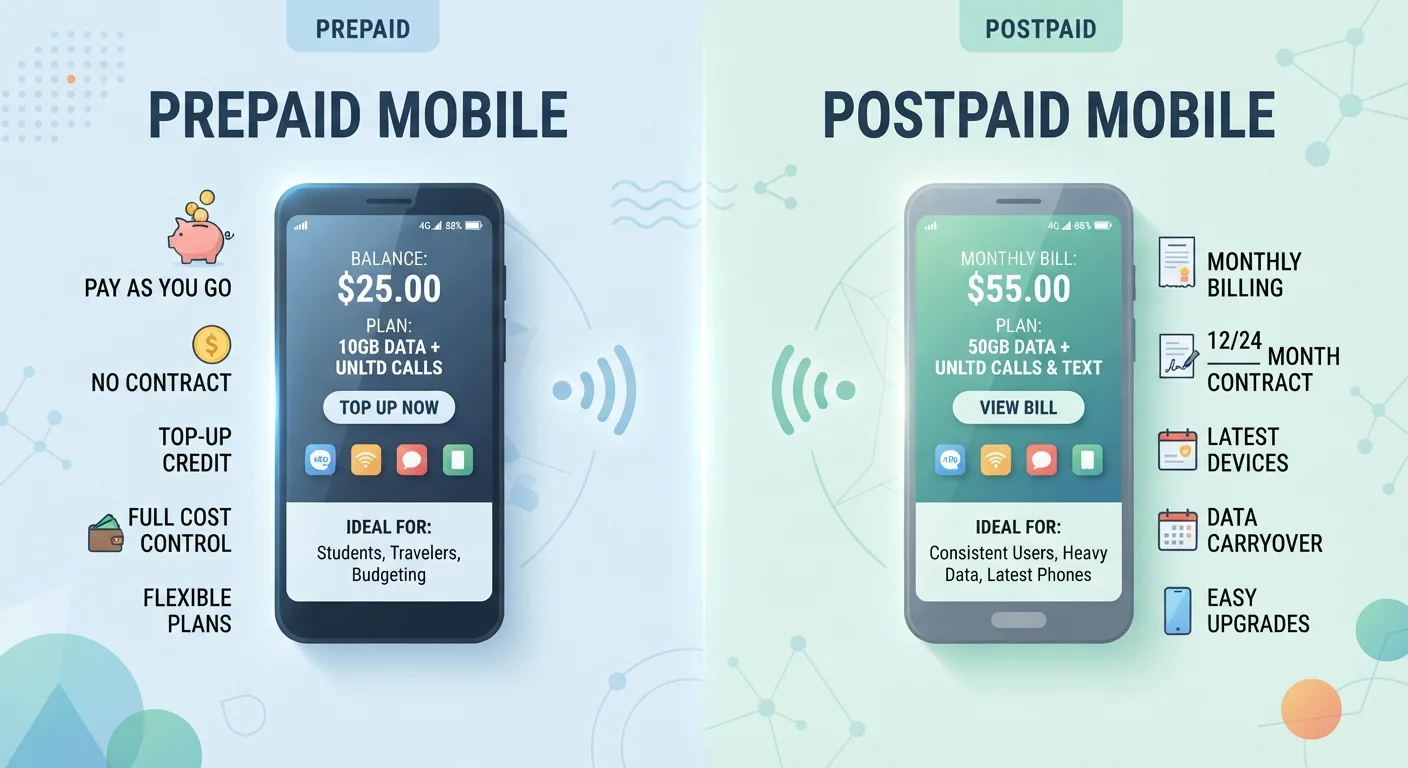
Photo: ScoutAnswers.com | Blogs That Ignite Curiosity editorial
Key Takeaways
- Prepaid plans charge you before use; postpaid plans bill you after, often with a credit check.
- Postpaid subscribers generally receive higher network priority during congestion than prepaid users on the same carrier.
- Prepaid eliminates overage surprises and long-term contracts, but may limit device financing options.
- Postpaid plans typically offer better access to flagship device payment installments and family line discounts.
- Hidden fees can inflate both plan types - always compare the all-in monthly cost, not just the advertised price.
How Each Billing Model Actually Works
The names give the structure away. Prepaid means you pay for service before using it - you load a set amount of data, minutes, or a flat monthly rate, and your service runs until that balance is consumed or the cycle ends. Postpaid means you use service throughout the month and receive a bill afterward, similar to a utility account.
That billing difference has real downstream effects. Postpaid accounts typically require a credit check, because the carrier is extending you a month of service before collecting payment. Prepaid accounts generally don't, making them accessible to people with limited or no credit history. If carrier terminology feels opaque, the field guide to wireless plan terms breaks down the language carriers use in their fine print.
| Criterion | Prepaid | Postpaid |
|---|---|---|
| Payment timing | Pay before use | Billed after use |
| Credit check required | Generally no | Typically yes |
| Contract or commitment | None | Often month-to-month or 24-month device term |
| Network priority during congestion | Lower priority | Higher priority |
| Device financing options | Limited or unavailable | Widely available |
| Multi-line discounts | Modest or none | Significant per-line savings |
| Spending control | Fixed - can't overspend | Variable - add-ons raise bill |
| Plan portability | Easy to switch carriers | Device financing may lock you in |
Network Priority: The Difference Most Ads Don't Mention
Both prepaid and postpaid customers on the same carrier use the same physical network infrastructure - the same towers, the same spectrum. The difference emerges during network congestion, when more users are competing for bandwidth than the tower can serve at full speed.
Major US carriers typically deprioritize prepaid and budget-tier data behind postpaid premium accounts. In practice, this means prepaid users may experience slower speeds during busy periods in dense urban areas or at large events. For many users in lower-traffic areas, this distinction is rarely noticeable. For commuters in major metros, it can be meaningful.
~30%
Share of US wireless subscribers on prepaid plans
According to CTIA industry data, roughly three in ten US mobile subscribers use prepaid service, a share that has grown steadily over the past decade.
$15-$25
Typical monthly gap between advertised and actual plan cost
Taxes, regulatory recovery fees, and bundled add-ons routinely raise the real monthly cost above the advertised rate on both prepaid and postpaid plans.
Postpaid plans also tend to include higher thresholds of premium data - the portion of your allotment that's protected from speed management - before throttling kicks in. Understanding where your plan's threshold sits is one of the more important questions to ask before committing to any plan. Our plan evaluation checklist walks through exactly what to ask.
Cost Structure and Hidden Fees
Advertised plan prices rarely reflect what you'll actually pay. Taxes, regulatory fees, and auto-enrolled extras can add $15-$25 or more to any monthly rate - prepaid or postpaid. For a full breakdown of where those charges typically come from, see our article on charges that quietly inflate your phone bill.
Prepaid plans tend to have simpler, flatter pricing - you often see fewer add-ons bundled in by default, which means fewer unwanted charges. Postpaid plans frequently include streaming subscriptions, cloud storage, or hotspot upgrades that raise the bill and may duplicate services you already pay for separately.
Device cost is another major variable. If you're bringing your own phone, prepaid can represent strong value. If you want to spread the cost of a new flagship device over 24 or 36 months, that financing is almost entirely tied to postpaid billing. An unlocked phone gives you the freedom to move between prepaid and postpaid carriers without compatibility friction.
MVNOs: A Middle Ground Worth Knowing
Choosing the Right Structure for Your Situation
Neither plan type is universally superior - the right choice depends on how you use your phone, how you manage finances, and what your household looks like. If you're on a single line and value simplicity and flexibility, prepaid is worth evaluating seriously. If you're coordinating multiple lines under one account, postpaid's per-line discount structure can reduce costs - though it adds coordination complexity. Our single-line vs. multi-line comparison goes deeper on how those structures compare.
Before committing to either type, verify actual coverage in the specific locations where you use your phone most - home, work, and your regular commute - using carrier coverage maps. Advertised network reach can differ from real-world performance in your zip code.
The content on this site is for informational purposes only and is not a substitute for professional advice. Always consult a qualified professional for guidance specific to your situation.