
Single-Line vs. Multi-Line Plans: Deciding What Structure Makes Sense

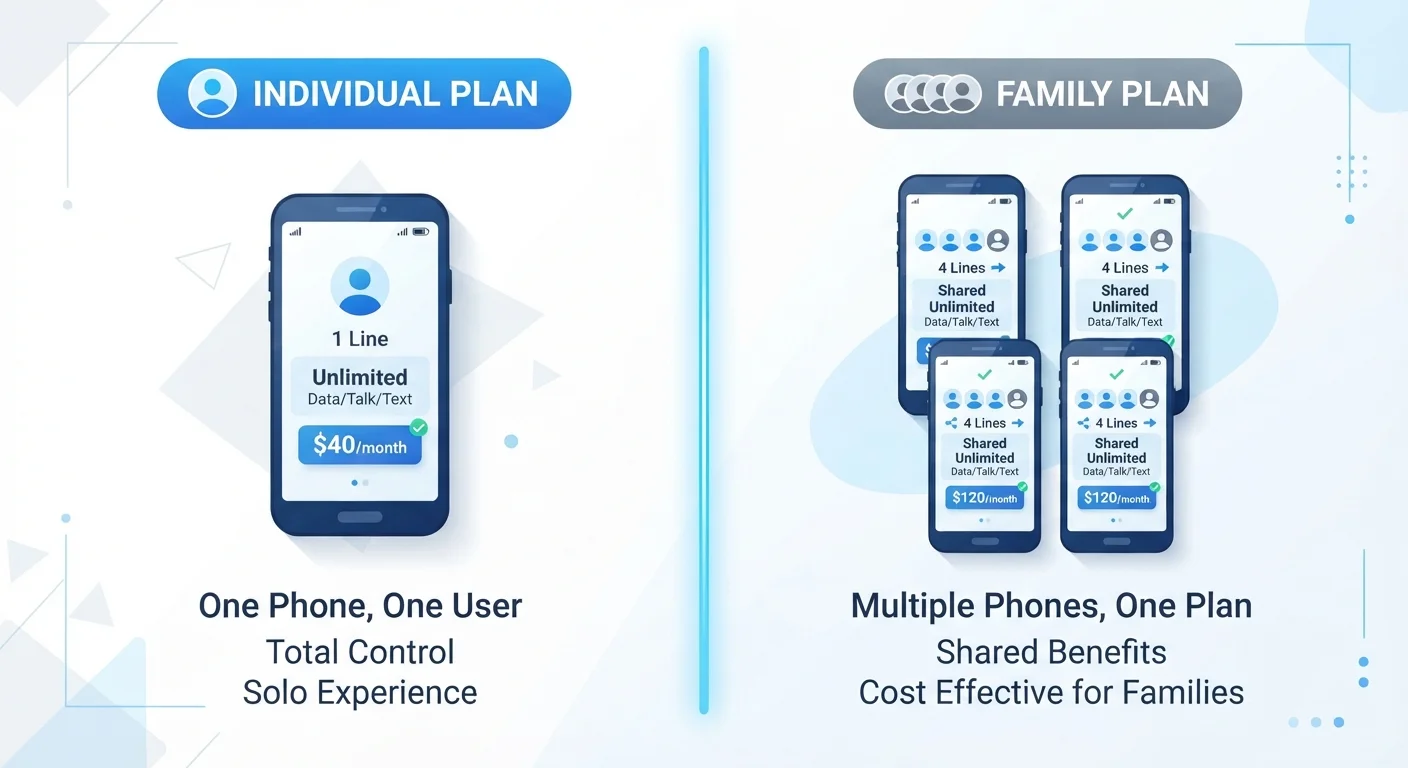
Photo: ScoutAnswers.com | Blogs That Ignite Curiosity editorial
Key Takeaways
- Multi-line plans often reduce the per-person monthly cost significantly compared to individual plans.
- Single-line plans offer billing independence and simpler account management for solo users.
- Adding lines to one account creates shared responsibility for the bill among all members.
- Household size, budget stability, and trust between account holders are key factors in the decision.
- Switching between plan structures is possible but may involve contract terms or device financing complications.
Complete billing independence from other users
Your account, payment, and service status are entirely your own. There's no risk of your service being affected by someone else's missed payment.
Simpler account management and decision-making
Changing your plan tier, switching carriers, or upgrading your device requires coordinating only with yourself - no group consensus needed.
Easier to customize coverage to personal needs
You can select exactly the data tier, international options, or add-ons that suit your usage without being locked into a plan built around multiple users.
No shared responsibility for the total bill
Single-line account holders aren't exposed to the financial risk of another person's non-payment or disputed charges appearing on their account.
Higher per-person cost than multi-line alternatives
Carriers price single lines at a premium relative to per-line costs in multi-line accounts. A household with two or more lines that each pay separately may pay significantly more combined.
Primary account holder bears full billing responsibility
If secondary line holders don't contribute their share, the primary account owner remains liable for the entire monthly bill. This can strain personal relationships when money is involved.
Coordination overhead when adding or removing lines
Changes to a multi-line account - such as someone leaving the group - can require adjusting device financing agreements, plan tiers, or porting numbers, which takes time and planning.
Less flexibility to switch carriers independently
If one person on a group plan wants to move to a different carrier, they may need to port their number off the shared account, which can temporarily disrupt service or trigger device payoff requirements.
What the Two Structures Actually Mean
A single-line plan is exactly what it sounds like: one wireless account, one phone number, one monthly bill. You're responsible only for your own usage, and there's no coordination required with anyone else.
A multi-line plan - sometimes marketed as a family plan - adds two or more lines under a single account. One person (the account holder) owns the billing relationship with the carrier, and additional lines are added at a lower per-line rate. These aren't always restricted to family members; some carriers allow any group of people to join a shared account.
Understanding how carriers price these structures is a necessary starting point before comparing them. For a deeper look at how to budget phone costs alongside other household expenses, see how monthly budget line items work.
The Case for a Single-Line Plan
Single-line plans are the cleaner, lower-commitment choice. There's no need to coordinate payments with roommates, family members, or anyone else - if you pay your bill, your service stays on.
Complete billing independence from other users
Your account, payment, and service status are entirely your own. There's no risk of your service being affected by someone else's missed payment.
Simpler account management and decision-making
Changing your plan tier, switching carriers, or upgrading your device requires coordinating only with yourself - no group consensus needed.
Easier to customize coverage to personal needs
You can select exactly the data tier, international options, or add-ons that suit your usage without being locked into a plan built around multiple users.
No shared responsibility for the total bill
Single-line account holders aren't exposed to the financial risk of another person's non-payment or disputed charges appearing on their account.
This structure also makes it easier to switch carriers or plan tiers without disrupting anyone else's service. If you're evaluating plan types more broadly, the comparison between prepaid and postpaid plans is worth reviewing, since single-line options exist across both billing models.
The Case for a Multi-Line Plan
The primary appeal of multi-line plans is straightforward: carriers offer progressively lower per-line pricing as you add lines, often with the steepest discounts at three or four lines. A household that would otherwise pay full price for three separate single-line plans may find that a multi-line account reduces the overall monthly spend noticeably.
Higher per-person cost than multi-line alternatives
Carriers price single lines at a premium relative to per-line costs in multi-line accounts. A household with two or more lines that each pay separately may pay significantly more combined.
Primary account holder bears full billing responsibility
If secondary line holders don't contribute their share, the primary account owner remains liable for the entire monthly bill. This can strain personal relationships when money is involved.
Coordination overhead when adding or removing lines
Changes to a multi-line account - such as someone leaving the group - can require adjusting device financing agreements, plan tiers, or porting numbers, which takes time and planning.
Less flexibility to switch carriers independently
If one person on a group plan wants to move to a different carrier, they may need to port their number off the shared account, which can temporarily disrupt service or trigger device payoff requirements.
Multi-line plans also consolidate administrative tasks - one bill, one customer service contact point, one account login. For households already managing shared expenses, this can simplify the picture rather than complicate it.
For a detailed walkthrough of how shared-line pricing and group discounts are structured by carriers, see how family phone plans are built.
~40%
Typical per-line discount at four lines vs. one
Industry pricing patterns across major US carriers commonly show per-line costs dropping by roughly 35-45% when comparing a four-line account to a single-line plan at equivalent tiers.
2-3 lines
Point where multi-line savings typically break even
For most carrier pricing structures, the combined savings of a multi-line plan tend to outpace two or three separate single-line plans starting at the second or third line added.
Key Considerations Before Choosing
The right structure depends on several factors that vary by household:
- Number of users: The per-line savings in multi-line plans typically become meaningful at two or more lines and grow with each additional line added.
- Financial trust: The primary account holder is legally responsible for the full bill. If a secondary line holder doesn't pay their share, the account owner is still on the hook.
- Credit and account eligibility: Opening or joining a postpaid multi-line account usually requires a credit check on the primary account holder. Individual lines may be easier to obtain on a prepaid basis.
- Device financing: If any line involves a financed device, leaving a multi-line plan mid-contract can trigger early payoff requirements for that device balance.
Before committing to any carrier or plan type, working through a structured evaluation helps avoid costly surprises. The phone plan checklist covers coverage, fees, and contract terms worth scrutinizing.
Plan Structure and Credit Are Linked
The content on this site is for informational purposes only and is not a substitute for professional advice. Always consult a qualified professional for guidance specific to your situation.