
Hawaii vs. the Caribbean: Choosing the Right Island Escape for Your Travel Style

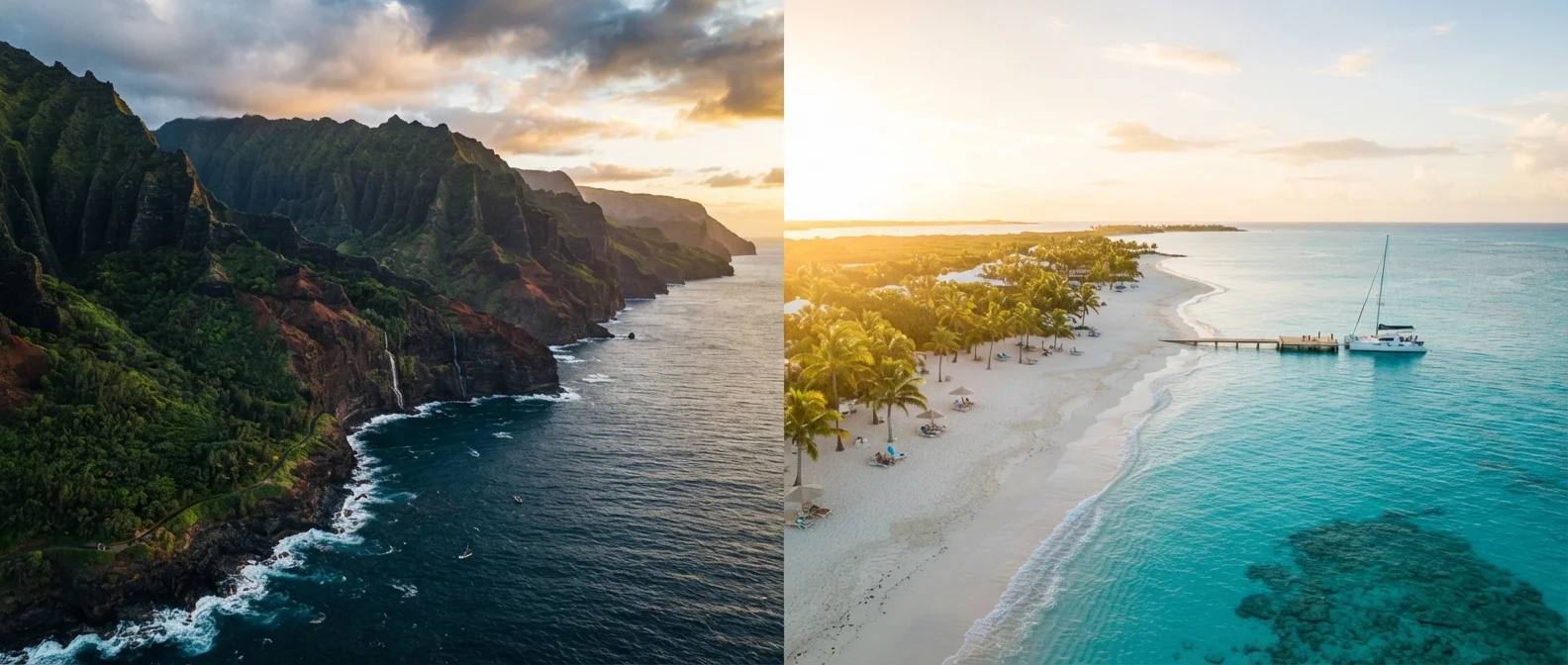
Photo: ScoutAnswers.com | Blogs That Ignite Curiosity editorial
Key Takeaways
- Hawaii requires no passport for US citizens and uses US dollars, making logistics simpler.
- The Caribbean spans dozens of islands with wildly different price points, cultures, and vibes.
- Hawaii typically costs more per day but involves fewer booking complexities for mainland Americans.
- Beach quality varies significantly by island in both destinations - research specific spots before booking.
- Your travel style - adventurous vs. relaxing, independent vs. resort-based - matters more than price alone.
- Both destinations have distinct high and low seasons that significantly affect crowds and costs.
The Core Difference: What Each Destination Actually Offers
Hawaii is a single US state spread across eight main islands, each with its own personality - from Oahu's urban energy to Kauai's untouched valleys. The Caribbean, by contrast, is a region of more than 700 islands spanning multiple countries, languages, and governing structures. That distinction shapes every planning decision you'll make.
In Hawaii, the experience tends to be cohesive: the same language, currency, food safety standards, and legal framework across every island. In the Caribbean, you might island-hop from a French overseas territory to a British Crown Dependency to an independent republic - each with different entry rules, currencies, and travel norms. That variety is part of the Caribbean's appeal, but it also adds planning complexity.
If you're trying to decide which fits your approach to budgeting a trip, see our guide on planning around a budget vs. budgeting around a trip - the method matters differently depending on where you're going.
| Criterion | Hawaii | The Caribbean |
|---|---|---|
| Passport required (US citizens) | No | Yes (most islands) |
| Flight time from US East Coast | ~10-11 hours | ~3-5 hours |
| Currency | US Dollar | Varies by island |
| Average daily cost (mid-range) | Higher overall | Wider range; can be lower |
| All-inclusive options | Very limited | Widely available |
| Beach variety | Black, red, white, green sand | Primarily white sand, calm water |
| Outdoor adventure (hiking, volcanoes) | Extensive | Limited on most islands |
| Hurricane season risk | Low | Moderate to high (Jun-Nov) |
| Cultural variety | Single cultural region | Dozens of distinct cultures |
Cost Realities: What Travelers Actually Pay
Hawaii has a reputation as expensive - and for good reason. Accommodation, food, and activities on popular islands like Maui and Oahu routinely run higher than comparable Caribbean alternatives. A mid-range hotel in Waikiki can easily exceed $300 per night, while dining out frequently adds up quickly given Hawaii's import-heavy economy.
The Caribbean offers a wider price band. Budget-friendly all-inclusive resorts in destinations like Mexico's Yucatán Peninsula (sometimes grouped with Caribbean-style travel) or the Dominican Republic can bring total trip costs well below a Hawaii equivalent. However, premium Caribbean islands - Turks and Caicos, St. Barts, the British Virgin Islands - rival or exceed Hawaii's pricing.
~$300+
Typical nightly hotel rate in Maui/Oahu (mid-range)
Based on widely reported travel industry averages for popular Hawaiian islands during moderate demand periods.
700+
Islands in the Caribbean region
The Caribbean spans an enormous geographic and cultural range, giving travelers significant destination choice.
3-5 hrs
Average US East Coast flight to most Caribbean islands
Shorter flight times make the Caribbean more accessible for long-weekend and short-trip travelers from eastern states.
For travelers open to resort-style stays, the trade-offs of all-inclusive packages are worth understanding before you book. Hawaii has far fewer true all-inclusive options than the Caribbean, which affects how you budget meals and activities.
Beaches, Scenery, and Activities: Where Each Destination Wins
The Caribbean's greatest strength is its beaches. Many of the world's most photographed white-sand, calm-water stretches - Grace Bay in Turks and Caicos, Seven Mile Beach in Grand Cayman - are found here. The Caribbean Sea's generally calm, clear water makes it especially well-suited for snorkeling, diving, and simply floating in warm shallows.
Hawaii's beaches are more varied and, in some cases, more dramatic. You'll find black sand beaches on the Big Island, red sand at Kaihalulu on Maui, and powerful surf breaks on Oahu's North Shore. But Hawaii's bigger draw for many travelers is what's beyond the sand: active volcanoes, ancient Hawaiian cultural sites, Na Pali Coast cliffs, and some of the world's most diverse hiking terrain.
If nature-immersion is your priority, Hawaii likely wins. If a beautiful beach and relaxed resort environment is the goal, the Caribbean has more options at more price points. For a broader framework on matching scenery type to your needs, our city break vs. nature retreat guide can help you think through what you're actually looking for.
Logistics, Timing, and Planning Considerations
For US citizens, Hawaii's logistics are among the simplest of any international-feeling trip: no passport required, no currency exchange, no international roaming surprises if you have a standard US phone plan. Flights from the West Coast run five to six hours; from the East Coast, expect ten or more hours - which is a real factor for shorter trips.
Caribbean travel requires a valid US passport for most destinations, though Puerto Rico and the US Virgin Islands are domestic territories and need only a government-issued ID. Flight times from the East Coast to many Caribbean islands range from three to five hours, making weekend or long-weekend trips more feasible than Hawaii allows.
Seasonality matters in both regions. Hawaii's peak season runs roughly December through March, with summer also busy. The Caribbean's high season overlaps similarly, but its hurricane season (generally June through November) introduces weather risk that Hawaii doesn't face to the same degree - especially for travelers eyeing the southern and eastern Caribbean. Always verify current travel advisories and entry requirements through official government sources before booking.
Travelers considering a cruise as a way to sample multiple Caribbean islands should review the cruising vs. independent travel comparison before committing to an itinerary format.
The content on this site is for informational purposes only and is not a substitute for professional advice. Always consult a qualified professional for guidance specific to your situation.