
Why Americans Keep Misreading Mexico as a Single Destination

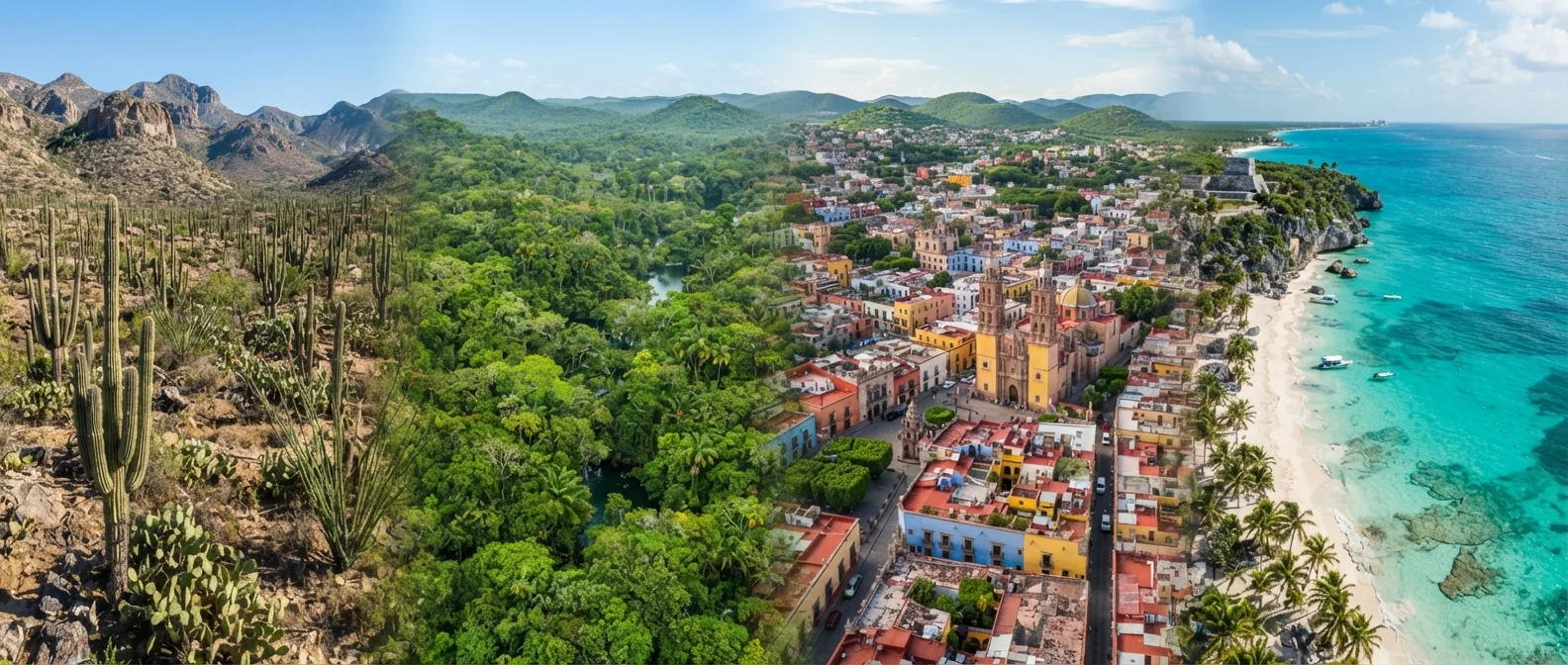
Photo: ScoutAnswers.com | Blogs That Ignite Curiosity editorial
Key Takeaways
- Mexico contains more than a dozen distinct regions with different climates, cultures, and travel logistics.
- The resort corridor image dominates American media but represents only a fraction of the country.
- Safety conditions, infrastructure, and tourism development vary enormously by region - blanket assessments mislead travelers.
- Choosing the right region requires matching your priorities to terrain, season, and travel style.
- Researching Mexico region-by-region produces far more reliable trip plans than treating it as one destination.
The Oversimplification Problem
Ask most Americans what they picture when someone says "Mexico," and a narrow set of images tends to surface: beach resorts in Cancún, margaritas, spring break crowds, or vague safety warnings. That mental shorthand is understandable - it reflects how Mexico is most often marketed to US travelers - but it creates real planning problems.
Mexico is the 14th largest country in the world by area, home to 31 states, dozens of distinct Indigenous cultures, ecosystems ranging from Sonoran desert to cloud forest, and cities that bear almost no resemblance to one another. Treating it as a single destination is roughly equivalent to a foreign visitor deciding all of the United States is just like Las Vegas.
The consequences of this oversimplification aren't trivial. Travelers arrive in the wrong region for their interests, visit during the wrong season, or skip destinations entirely based on fears (or enthusiasm) that apply to a completely different part of the country. Better decisions start with a more accurate mental map. See our step-by-step trip planning framework for how destination research fits into the broader planning process.
Myth
Mexico is essentially one destination - if you've been to one part, you understand the country.
Fact
Mexico spans roughly 760,000 square miles with biomes ranging from desert to tropical rainforest, and its regional cultures, languages, and infrastructure vary enormously.
The country's size alone should challenge the single-destination assumption. Mexico City sits at over 7,300 feet of elevation and has a temperate climate, while Cancún on the Caribbean coast is sea-level and tropical. Oaxaca's indigenous food traditions bear little resemblance to northern Sonora's ranching culture. Travelers who visit one region and generalize the experience often miss destinations that would suit them far better.
Myth
Mexico is uniformly unsafe for American tourists.
Fact
Safety conditions vary significantly by region and city - some areas have robust tourism infrastructure and low visitor incident rates, while others carry elevated risk.
The U.S. State Department issues advisories broken down by individual Mexican state, not a blanket country-level assessment. Some states receive a Level 1 (exercise normal precautions) rating, comparable to many European destinations. Travelers who apply a single nationwide safety judgment - in either direction - are working with incomplete information. Checking state-specific advisories before planning is a practical, non-alarmist step that produces more accurate decisions.
Myth
The best time to visit Mexico is winter, no matter where you're going.
Fact
Optimal travel seasons differ substantially by region - highland cities, Pacific coast, Caribbean coast, and desert areas each follow different weather patterns.
December through March is ideal dry season for the Yucatán Peninsula, but Pacific coast destinations like Oaxaca's beaches often see their best conditions from November through April as well, with some regional variation. The Central Highlands - including Mexico City - have a rainy season (roughly May through October) that brings afternoon showers but also lush landscapes and lower prices. Baja California's climate is almost Mediterranean. Visiting the wrong region in the wrong season is one of the most common and avoidable planning mistakes.
Myth
Visiting Mexico means staying at an all-inclusive resort on the coast.
Fact
Resorts represent one narrow travel style; Mexico also supports city-based cultural travel, archaeological site visits, eco-tourism, culinary travel, and adventure travel across very different terrain.
The all-inclusive model is heavily marketed to American travelers and dominates the Cancún-Riviera Maya corridor, but it accounts for a small slice of what Mexico actually offers. Colonial cities like Oaxaca, Guanajuato, and Puebla are internationally recognized for food, architecture, and cultural heritage. Chiapas draws travelers for jungle trekking and Maya ruins at Palenque. Copper Canyon in Chihuahua is larger than the Grand Canyon and accessible by a historic rail journey. Travelers who equate Mexico with resort stays are effectively ignoring the majority of the country.
Myth
Spanish fluency is required to travel comfortably in Mexico.
Fact
English is widely spoken in major tourism corridors, though learning basic Spanish phrases meaningfully improves the experience and is appreciated throughout the country.
In Cancún, Los Cabos, Puerto Vallarta, and Mexico City's tourist districts, English-language services are common in hotels, restaurants, and tour operations. Outside these corridors - particularly in rural Oaxaca, Chiapas, or small Yucatán towns - Spanish becomes far more necessary, and some communities primarily speak Indigenous languages. Carrying a translation app and learning core courtesy phrases (greetings, asking for directions, ordering food) is practical regardless of where you go, and demonstrates respect for local culture.
How to Actually Think About Mexico's Regions
A more useful approach is to think about Mexico in clusters that reflect geography, infrastructure, and traveler experience rather than political borders alone.
- The Yucatán Peninsula (Cancún, Tulum, Mérida, Bacalar) - Caribbean and Gulf coasts, Maya archaeological sites, cenotes, humid tropical climate. Heavy tourism infrastructure alongside genuinely remote areas.
- Pacific Coast (Puerto Vallarta, Oaxacan coast, Mazatlán) - distinct from the Caribbean in water temperature, wave patterns, and character. More varied in development level.
- Central Highlands (Mexico City, Oaxaca city, Puebla, San Miguel de Allende, Guanajuato) - colonial architecture, world-class food scenes, cooler temperatures at altitude, strong arts and cultural heritage.
- The North (Copper Canyon, Baja California, Chihuahuan Desert) - dramatically different from tropical Mexico. Sparse, rugged, suited to adventure travelers. Baja is almost its own travel category.
- The South (Chiapas, Tabasco) - dense jungle, Zapatista history, some of the most significant Maya ruins in the Americas. Less tourist infrastructure than other corridors.
Each cluster rewards specific types of travelers at different times of year. Matching your goals to a region - rather than defaulting to whichever destination appears in an ad - is the single most useful planning shift most American travelers can make. If you've navigated similar regional complexity closer to home, the American Southwest road trip planning resource applies the same region-by-region logic.
31
Mexican states with distinct regional identities
Mexico's federal structure includes 31 states and one federal entity, each with its own geography, climate patterns, and cultural heritage.
~35M
International tourists visiting Mexico annually
Mexico consistently ranks among the world's top 10 most-visited countries, according to the UN World Tourism Organization's recent data.
68+
Indigenous languages recognized in Mexico
Mexico's National Institute of Indigenous Languages recognizes more than 68 Indigenous language groupings, reflecting the country's deep cultural diversity.
Reading Mexico More Accurately Before You Book
Two habits consistently improve how American travelers approach Mexico trip research.
First, apply regional filters to everything you read. Safety statistics, weather data, traveler reviews, and cost estimates are only meaningful when attached to a specific place. A headline about one state tells you nothing reliable about a city 800 miles away. The same principle applies to travel reviews generally - our guide on reading destination reviews critically can help you extract accurate signal from noisy sources.
Second, verify current entry, safety, and health requirements through official sources. The U.S. State Department maintains region-specific travel advisories for Mexico that distinguish between states - they are not a single country-level judgment. Check those advisories alongside Mexico's official tourism resources and, for health-related requirements, consult the CDC's traveler health guidance. Conditions and requirements change; always verify before booking and again before departure.
Mexico rewards travelers who approach it with curiosity and specificity. The country that emerges from careful regional research is almost always more interesting - and more navigable - than the flattened image that American media tends to project. For a useful comparison in regional complexity, see what travelers get wrong about Costa Rica, where similar assumptions create similar planning gaps.
The content on this site is for informational purposes only and is not a substitute for professional advice. Always consult a qualified professional for guidance specific to your situation.