
Carry-On Only: What Actually Fits and What Doesn't

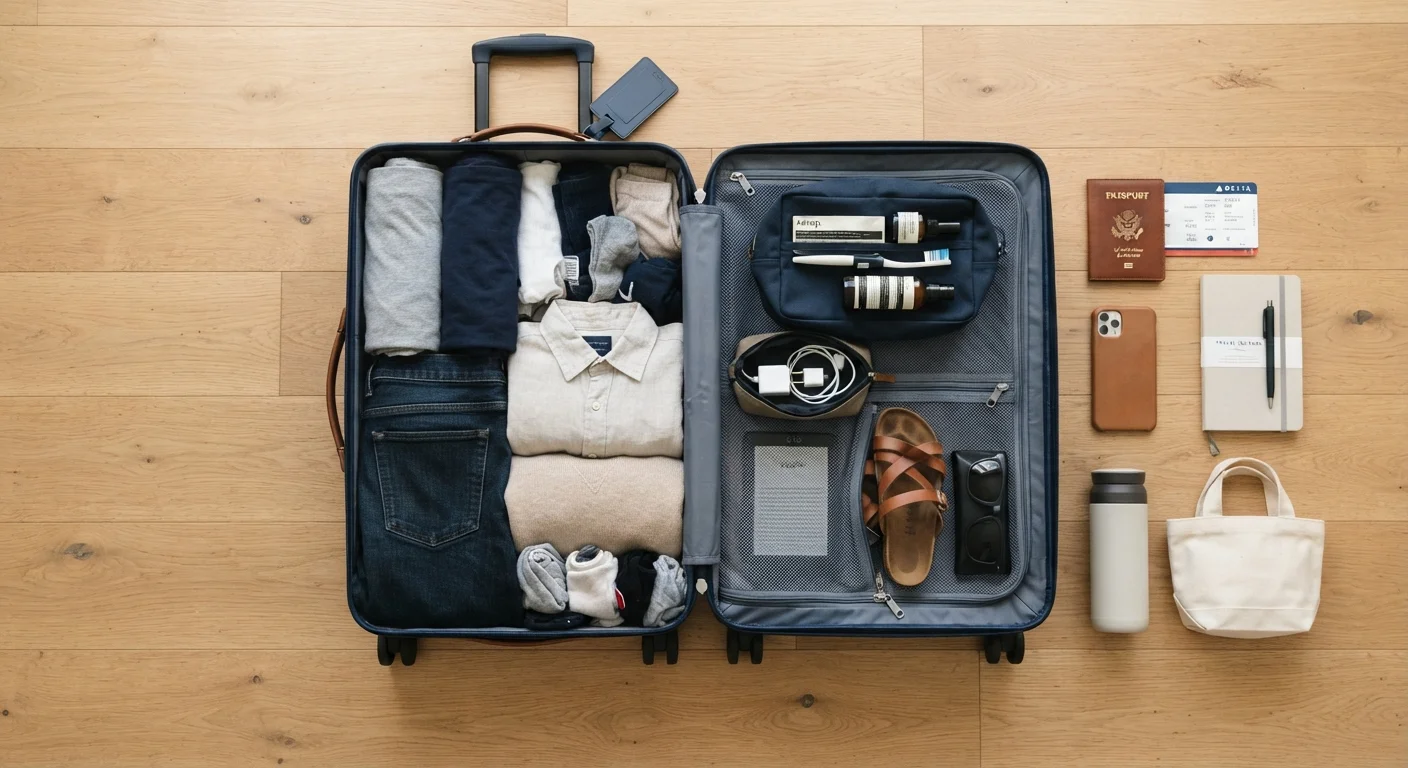
Photo: ScoutAnswers.com | Blogs That Ignite Curiosity editorial
Key Takeaways
- Carry-on travel works best for trips under one week with flexible clothing needs.
- Airline size and weight limits vary significantly - always check before you fly.
- Liquids, medications, and specialty gear are the most common carry-on complications.
- Gate-checking can happen involuntarily on full flights, removing your control over the bag.
- The time and fee savings are real, but only if your packing discipline holds up.
No baggage claim wait after landing
Skipping baggage claim can save 20 to 45 minutes per arrival, which adds up significantly on multi-city itineraries or trips with tight ground transfer windows.
Eliminates risk of lost or delayed luggage
When your bag stays with you in the cabin, it can't be misrouted or delayed by a missed connection in another city.
Avoids checked bag fees on many airlines
Domestic checked bag fees typically range from $30 to $40 per bag each way, meaning round-trip savings can be meaningful for frequent travelers.
Faster airport navigation overall
No check-in desk stop, no drop-off queue, and no early arrival requirement just to check a bag - carry-on travelers move through airports more efficiently.
Greater flexibility for last-minute flight changes
Rebooking or switching flights is simpler when you don't have a bag already tagged and loaded into cargo on another plane.
Strict size and weight limits constrain packing
Carry-on dimensions differ by airline, and weight limits on international carriers can be as low as 15 lbs. A bag that fits one airline's rules may be rejected at another gate.
TSA liquid rules limit personal care options
The 3-1-1 liquids rule restricts most personal care products to small containers, which is a real inconvenience for travelers who depend on specific products or need prescription liquids.
Gate-checking risk on full flights
When overhead bins fill up, airline staff can require passengers to check their carry-on at the gate - removing the time and logistics advantages you planned for.
Not practical for trips longer than one week
Going beyond seven days without doing laundry typically requires more clothing than a carry-on can hold, especially across varied activities or weather conditions.
Specialty gear simply doesn't fit
Hiking boots, formal wear, bulky camera equipment, or medical devices often exceed carry-on dimensions or weight limits, making this format unsuitable for those trip types.
Packing discipline required every single trip
Carry-on only only works when you plan carefully every time - one impulse purchase, extra pair of shoes, or souvenir can push you over the limit on the return journey.
The Real Promise of Carry-On Only
The appeal is straightforward: skip the check-in line, walk straight to security, land and head for the exit without waiting at baggage claim. For many travelers, that combination of speed and simplicity is worth restructuring their entire packing approach.
Carry-on travel also eliminates the risk of lost or delayed checked luggage - a frustration that affects a meaningful number of passengers every year. When your bag is in the overhead bin above you, you know exactly where it is at every point in the journey.
The savings can be real too. Many domestic airlines charge checked bag fees that add up quickly, especially on round trips or multi-leg itineraries. For context, see our guide to budget travel realities for a fuller picture of where those costs do and don't add up.
No baggage claim wait after landing
Skipping baggage claim can save 20 to 45 minutes per arrival, which adds up significantly on multi-city itineraries or trips with tight ground transfer windows.
Eliminates risk of lost or delayed luggage
When your bag stays with you in the cabin, it can't be misrouted or delayed by a missed connection in another city.
Avoids checked bag fees on many airlines
Domestic checked bag fees typically range from $30 to $40 per bag each way, meaning round-trip savings can be meaningful for frequent travelers.
Faster airport navigation overall
No check-in desk stop, no drop-off queue, and no early arrival requirement just to check a bag - carry-on travelers move through airports more efficiently.
Greater flexibility for last-minute flight changes
Rebooking or switching flights is simpler when you don't have a bag already tagged and loaded into cargo on another plane.
What Carry-On Travel Actually Demands of You
The discipline required is often underestimated. Successful carry-on packing isn't about stuffing more efficiently - it's about bringing less. That means choosing a versatile, mix-and-match wardrobe, accepting that you'll do laundry mid-trip on longer stays, and making real trade-offs about shoes, toiletries, and gear.
Liquids are one of the biggest sticking points. TSA's 3-1-1 rule (containers of 3.4 oz or less, in a single quart-sized bag) limits what personal care products you can bring. Travelers who rely on specific shampoos, skincare routines, or prescription liquids need to plan carefully. Purchasing items at your destination is sometimes the simplest workaround, though not always practical.
Always Check Your Specific Airline's Rules
Size and weight limits are the other hidden hazard. The FAA doesn't set a universal carry-on size - each airline does. A bag accepted on one carrier may be gate-checked on another. Ultra-low-cost carriers in particular often enforce stricter dimensions and charge for overhead bin access as a separate fee. Always verify limits on your specific airline before you pack.
When Carry-On Only Falls Short
There are trip types where carry-on only creates more stress than it saves. Formal events - weddings, business conferences, cruises with dress codes - typically require clothing that doesn't pack small. A suit jacket or formal dress will either wrinkle beyond repair or consume most of your bag's space.
Family travel with young children is another category where carry-on only usually breaks down. Between extra clothing layers, snacks, entertainment items, and medical or safety supplies, a family of four realistically needs more space than two carry-ons provide.
Outdoor and adventure trips present a similar challenge. Hiking boots, a rain layer, a mid-layer fleece, and trekking poles simply don't fit the carry-on model. The same applies to ski trips, beach vacations requiring snorkel gear, or extended travel across multiple climates.
Strict size and weight limits constrain packing
Carry-on dimensions differ by airline, and weight limits on international carriers can be as low as 15 lbs. A bag that fits one airline's rules may be rejected at another gate.
TSA liquid rules limit personal care options
The 3-1-1 liquids rule restricts most personal care products to small containers, which is a real inconvenience for travelers who depend on specific products or need prescription liquids.
Gate-checking risk on full flights
When overhead bins fill up, airline staff can require passengers to check their carry-on at the gate - removing the time and logistics advantages you planned for.
Not practical for trips longer than one week
Going beyond seven days without doing laundry typically requires more clothing than a carry-on can hold, especially across varied activities or weather conditions.
Specialty gear simply doesn't fit
Hiking boots, formal wear, bulky camera equipment, or medical devices often exceed carry-on dimensions or weight limits, making this format unsuitable for those trip types.
Packing discipline required every single trip
Carry-on only only works when you plan carefully every time - one impulse purchase, extra pair of shoes, or souvenir can push you over the limit on the return journey.
For a more structured comparison of when each luggage format fits the trip type, our article on choosing between checked bags and carry-on walks through the decision in detail.
Making It Work: Practical Habits That Help
Travelers who consistently succeed with carry-on only tend to share a few habits. They build around a neutral color palette so every item pairs with everything else. They wear their bulkiest items - boots, thick sweater, jacket - on travel days rather than packing them. They use packing cubes to compress soft items and keep the bag organized through multiple stops.
Checking in online and boarding early (when your ticket allows) helps secure overhead bin space before it fills up. On busy flights, bins fill from the front, and late-boarding passengers often find their bags gate-checked involuntarily - exactly the outcome carry-on packing was meant to avoid.
Before your next trip, use our structured packing checklist to plan what you actually need category by category. And if you're still finalizing your full pre-departure routine, the pre-trip readiness checklist covers documents, bookings, and essentials beyond just packing.
20-45 min
Typical time saved skipping baggage claim
Baggage claim wait times vary by airport and flight size, but travelers commonly report waits in this range on domestic routes.
~$60-$80
Average round-trip checked bag fee (domestic)
Most major U.S. carriers charge $30-$40 per checked bag each way for the first bag, based on publicly published fee schedules.
7 days
Practical upper limit for carry-on only packing
Travel experts generally consider one week the point at which laundry planning becomes necessary to sustain carry-on only travel comfortably.
The content on this site is for informational purposes only and is not a substitute for professional advice. Always consult a qualified professional for guidance specific to your situation.