
Travel Tips

Packing for Any Trip in Under an Hour

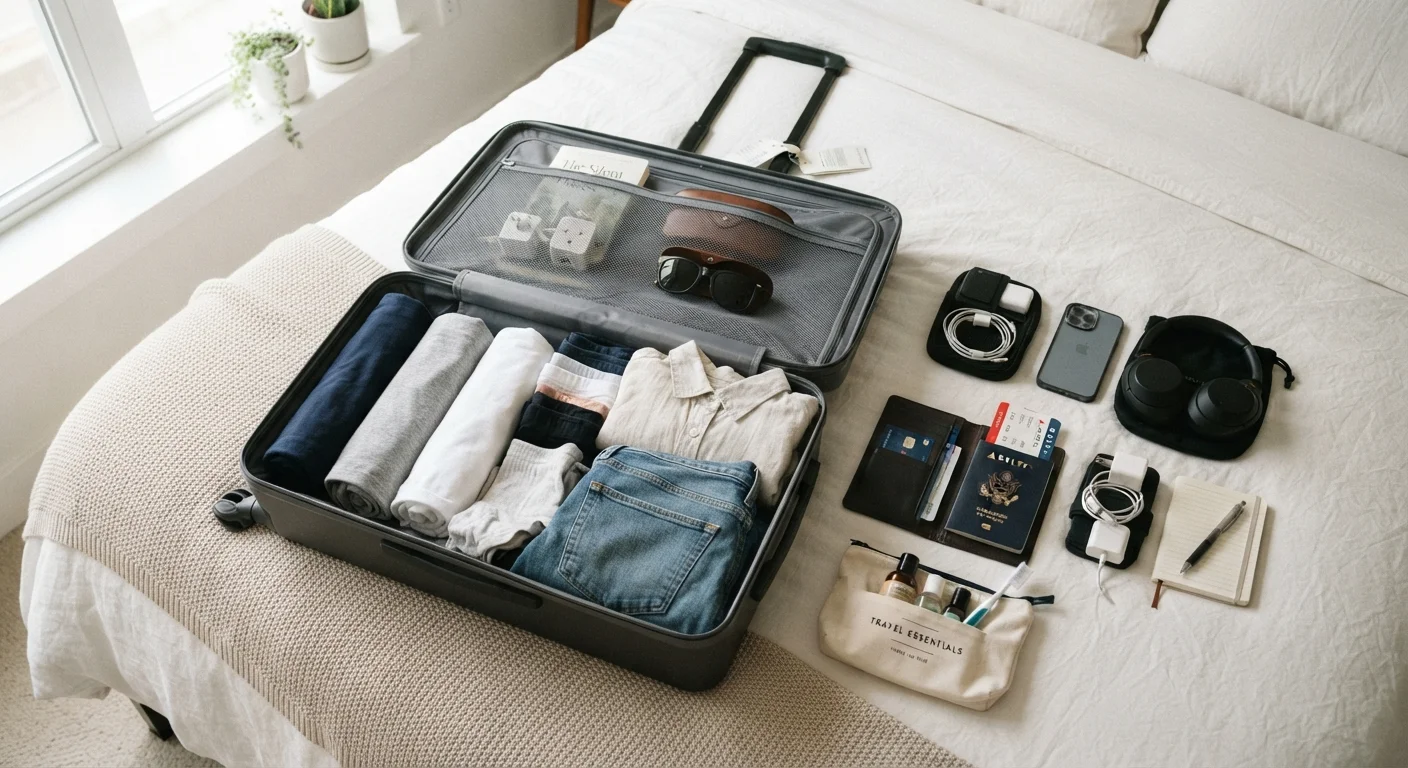
Packing for Any Trip in Under an Hour

Photo: ScoutAnswers.com | Blogs That Ignite Curiosity editorial

A structured packing checklist covering clothing, documents, electronics, and health essentials — adaptable for weekend trips or long hauls.

Key Takeaways

  • A category-based approach prevents forgotten items without requiring a long, complicated list.
  • The same core checklist works for a weekend trip or a two-week journey — scale quantities, not categories.
  • Documents and electronics should be packed last so they stay accessible and aren't buried.
  • Laying everything out before packing it is the single fastest way to catch omissions.
  • A digital backup of your key documents takes minutes but can save hours at the border.

Why a Packing System Beats a Packing List

Most travelers either over-pack or forget something critical — rarely both at once. The root cause is usually the same: packing from memory rather than from a repeatable framework. A category-based checklist solves this by giving your brain a clear scanning sequence instead of a chaotic recall exercise.

The goal of this checklist isn't to dictate every item you carry — it's to make sure no entire category slips your mind. Clothing is obvious; a phone charger is easy to forget. Travel insurance confirmation? Often packed nowhere. Structure prevents those gaps.

This checklist works whether you're heading out for a long weekend or a multi-week haul. The quantities change; the categories don't. If you want a broader framework for the full trip-planning process, see The Anatomy of a Well-Planned Trip for context on how packing fits into your overall preparation.

Documents & Financial

Pack your passport (and visa if required) in an easily accessible pocket of your carry-on — never in checked luggage. Must
Bring a printed or downloaded copy of your flight confirmation, hotel reservation, and any activity bookings. Must
Carry at least two payment methods (e.g., a debit card and a credit card) in separate locations in case one is lost. Must
Save digital backups of your passport, insurance card, and key bookings to a secure cloud folder or email. Should
Include your travel insurance policy number and the insurer's emergency contact number in an accessible note. Should

Clothing

Pack bottoms that can serve double duty (e.g., pants suitable for both hiking and a casual dinner) to reduce total volume. Must
Include one layer warmer than you expect to need — planes, trains, and air-conditioned restaurants are frequently cold. Must
Choose a shoe count of two pairs maximum for trips under two weeks: one for walking, one for evenings or formality. Should
Pack a packable rain layer or compact umbrella, especially for destinations with unpredictable weather. Should
Bring enough underwear and socks for the full trip, or plan for laundry — this category is the most common under-pack. Must

Electronics & Connectivity

Pack charging cables for every device you're bringing — a dead phone in an unfamiliar city is a real logistical problem. Must
Include a compact multi-port USB charger so a single outlet powers multiple devices simultaneously. Should
For international travel, pack the correct plug adapter for your destination country before you leave home. Must
Download offline maps, boarding passes, and any destination apps before departure so you're not reliant on local data. Should
Consider a portable battery pack for long travel days or destinations where outlets are scarce. Nice to have

Health & Personal Care

Pack all prescription medications in their original labeled containers and carry them in your carry-on, not checked luggage. Must
Include a small supply of over-the-counter basics such as pain reliever, antacid, and any allergy medication you use regularly. Should
Pack sunscreen appropriate to your destination, particularly if you're traveling to higher elevations or coastal environments. Should
Bring a small first aid kit with adhesive bandages and blister treatment — walking more than usual is guaranteed on most trips. Should
Include any required vaccination records or health documentation if your destination or airline requires them. Must

Toiletries

Use travel-sized containers for liquids and confirm all carry-on liquids comply with current airline rules for your route. Must
Pack toiletries in a clear, sealable bag stored at the top of your carry-on for quick removal at security. Should
Skip items that are universally available at your destination — shampoo, conditioner, and soap are standard in most hotels. Nice to have

How to Use This Checklist Efficiently

Before you open a bag, lay every candidate item on your bed. This visual audit lets you make cut decisions before weight and space pressure set in. Then work through each category below in order — documents first, toiletries last, since toiletries are easiest to buy at your destination if something is forgotten.

Never Check Medications or Critical Documents

Prescription medications, passports, and travel insurance information should always travel in your carry-on bag. Checked luggage can be delayed, misdirected, or temporarily inaccessible for hours or days. Running out of medication or being without identification at a border crossing creates serious, difficult-to-resolve problems. Keep these items on your person or in your personal item at all times during transit.

If you're attempting carry-on-only travel, the category order matters even more. Our guide on carry-on packing realities walks through realistic volume limits so you can make informed cuts before you get to the gate.

For international trips, cross-reference your documents section against a destination-specific checklist. American travelers heading to Europe, in particular, should review this pre-Europe checklist — adapters, entry requirements, and health documentation add several items not covered here.

Optional

Packing cubes

Compress and separate clothing categories so your bag stays organized throughout the trip.

Optional

Luggage scale

Verify bag weight before departure to avoid airline overweight fees at check-in.

Required

Secure document wallet or travel pouch

Keeps passports, cards, and printed confirmations together and accessible during transit.

Required

Resealable clear quart bag

Required for carry-on liquids at TSA security checkpoints on domestic and many international flights.

After You've Packed: Quick Final Checks

Once your bag is zipped, run through these three final steps before you leave the house. First, confirm your bag weight — many airlines have different limits for domestic and international legs on the same itinerary, and checked-bag fees for overweight luggage can be significant. Second, photograph your packed bag's contents with your phone; if your luggage is delayed, this record helps when filing a claim. Third, verify that your carry-on contains everything you'd need for 24–48 hours if checked bags are delayed: a change of clothes, medications, chargers, and documents.

For a broader pre-departure audit that includes bookings, health prep, and confirmations beyond your bag, the Pre-Trip Readiness Checklist is a useful companion. And if your itinerary still feels overstuffed even after packing light, building a flexible itinerary can help you reduce pressure on the ground.

Liquids Rules Vary by Route and Carrier

TSA rules for carry-on liquids apply to US domestic flights and most US departures, but international security checkpoints — including connections — may have different standards. Always verify current rules with your airline and the relevant aviation authority for each leg of your journey before you pack. Rules can change, and what passed security on departure may be flagged on a return through another country.

Travel Editorial Team

ScoutAnswers.com | Blogs That Ignite Curiosity

Travel Editorial Team is the collective byline for our editorial team and contributor network. Articles published under this byline or an editorial pen name are researched, written, and reviewed according to our editorial standards for clarity, consistency, and independence before publication.

Trip PlanningDestinations GuideTravel Tips
View author profile

The content on this site is for informational purposes only and is not a substitute for professional advice. Always consult a qualified professional for guidance specific to your situation.