
Adjusting Your Mirrors Correctly Before Every Drive

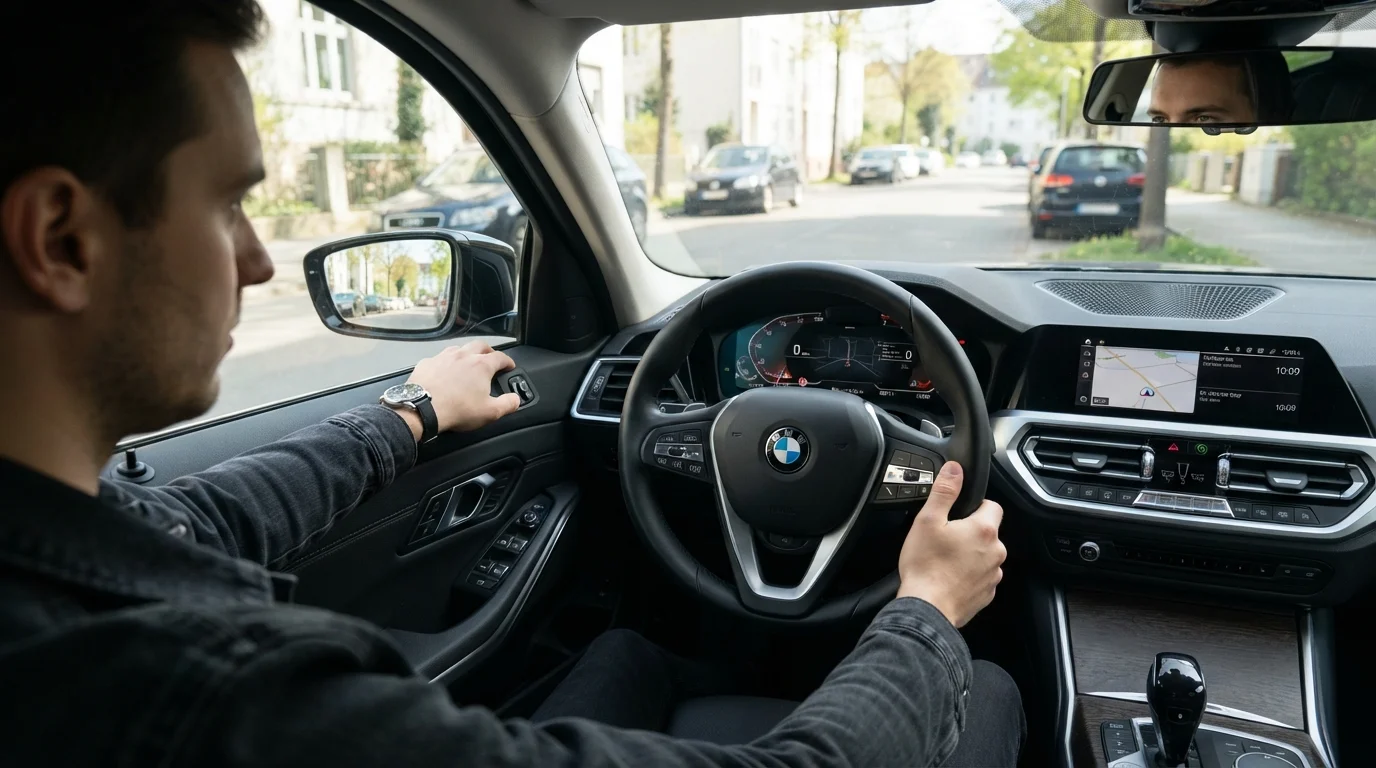
Photo: ScoutAnswers.com | Blogs That Ignite Curiosity editorial
Key Takeaways
- Mirrors should be adjusted after you're seated in your normal driving position, not before.
- The SAE blind-spot reduction method positions side mirrors outward to shrink traditional danger zones.
- Your rearview mirror should frame the full rear window without requiring you to move your head.
- Blind spots are never fully eliminated - a shoulder check remains essential before lane changes.
- Readjust mirrors whenever someone else has driven your vehicle or your seating position changes.
Why Mirror Adjustment Matters More Than Most Drivers Realize
Most drivers set their mirrors once and forget them - or never adjust them at all after purchasing a vehicle. The result is a predictable, invisible danger zone that follows them on every trip. Blind spots on a typical passenger car or SUV can be large enough to conceal an entire motorcycle or compact car, and the traditional mirror positioning taught for decades actually makes those zones larger than they need to be.
The good news: correctly positioned mirrors, combined with a shoulder check habit, allow you to monitor nearly all of the space around your vehicle. This pre-drive routine takes under three minutes and requires no tools. It's one of the simplest, highest-impact safety habits available to any driver. For a broader look at habits that protect you in demanding conditions, see our condition-by-condition safe driving breakdown.
What you will need
Step-by-Step: Setting Your Mirrors the Right Way
Follow these steps in order every time you sit down to drive, especially after anyone else has used your vehicle.
Sit in your normal driving position first
Before touching any mirror, sit down, close the door, and adopt the posture you actually use while driving - seat height, recline angle, and distance from the steering wheel all in their usual positions. Mirror angles are relative to your eye position, so calibrating them from any other position produces inaccurate results.
Set the rearview mirror
Reach up and position the interior rearview mirror so that the entire rear window is visible within the frame without tilting your head. The top edge of the mirror should align roughly with the top of the rear window opening. You should not need to crane your neck or shift your body to see a car directly behind you.
Set the driver-side mirror using the SAE method
The Society of Automotive Engineers (SAE) published research demonstrating that angling side mirrors outward - farther than tradition suggests - significantly reduces blind spots. To set the driver-side mirror: lean your head until it nearly touches the driver's window glass, then adjust the mirror outward until you can just barely see the left rear corner of your vehicle. When you return to your normal upright position, your own car should no longer be visible in the mirror. The mirror should now show the lane beside you.
Set the passenger-side mirror using the same outward method
Lean your head to the center of the vehicle - toward the center console or rearview mirror - and adjust the passenger-side mirror outward until you can just barely see the right rear corner of your car. Return to your normal driving position. The mirror should now show the right lane, with only a sliver of your vehicle visible at the inner edge, if any.
Verify your full field of coverage
With all three mirrors set, do a quick mental sweep. A vehicle moving in the lane to your left should become visible in your driver-side mirror just as it exits your rearview mirror's frame - the coverage should overlap slightly, not leave a gap. The same principle applies to the right side. If you identify a gap, fine-tune the relevant mirror before you move the vehicle.
Commit to a shoulder check for lane changes regardless
Even optimally adjusted mirrors cannot eliminate every blind spot - vehicle pillars, trailer hitches, and individual vehicle geometry all affect coverage. Before any lane change or merge, turn your head briefly to check the area mirrors cannot reach. This habit is a permanent supplement to mirror adjustment, not a fallback for when mirrors fail. Combine both for the highest level of situational awareness.
Check Mirrors Again After Parking Lot Maneuvers
Common Mistakes and What They Cost You
Even drivers who do adjust their mirrors regularly often make one of these errors:
- Seeing too much of your own car. A mirror angled inward so that your rear quarter panel occupies a quarter of the frame is showing you something stationary and already known - your own vehicle. That space is wasted coverage.
- Adjusting while already in motion. Mirror adjustments made at a stoplight, with your torso shifted or your arm extended, produce an angle calibrated to the wrong body position. Always adjust before you move.
- Skipping readjustment after a shared vehicle. If a family member or valet has moved the seat, your mirror angles are no longer calibrated to your eye position. Check every time.
- Relying solely on mirrors for lane changes. Even optimally set mirrors leave a residual blind spot. A quick shoulder check before merging remains a non-negotiable habit. Our guide on merging and right-of-way rules explains how visibility and lane-change decisions interact.
Night driving amplifies every visibility gap. Learn why nighttime driving carries uniquely elevated risk and how to compensate.
The content on this site is for informational purposes only and is not a substitute for professional advice. Always consult a qualified professional for guidance specific to your situation.