
Driving in Rain, Snow, Ice, and Fog: A Condition-by-Condition Breakdown

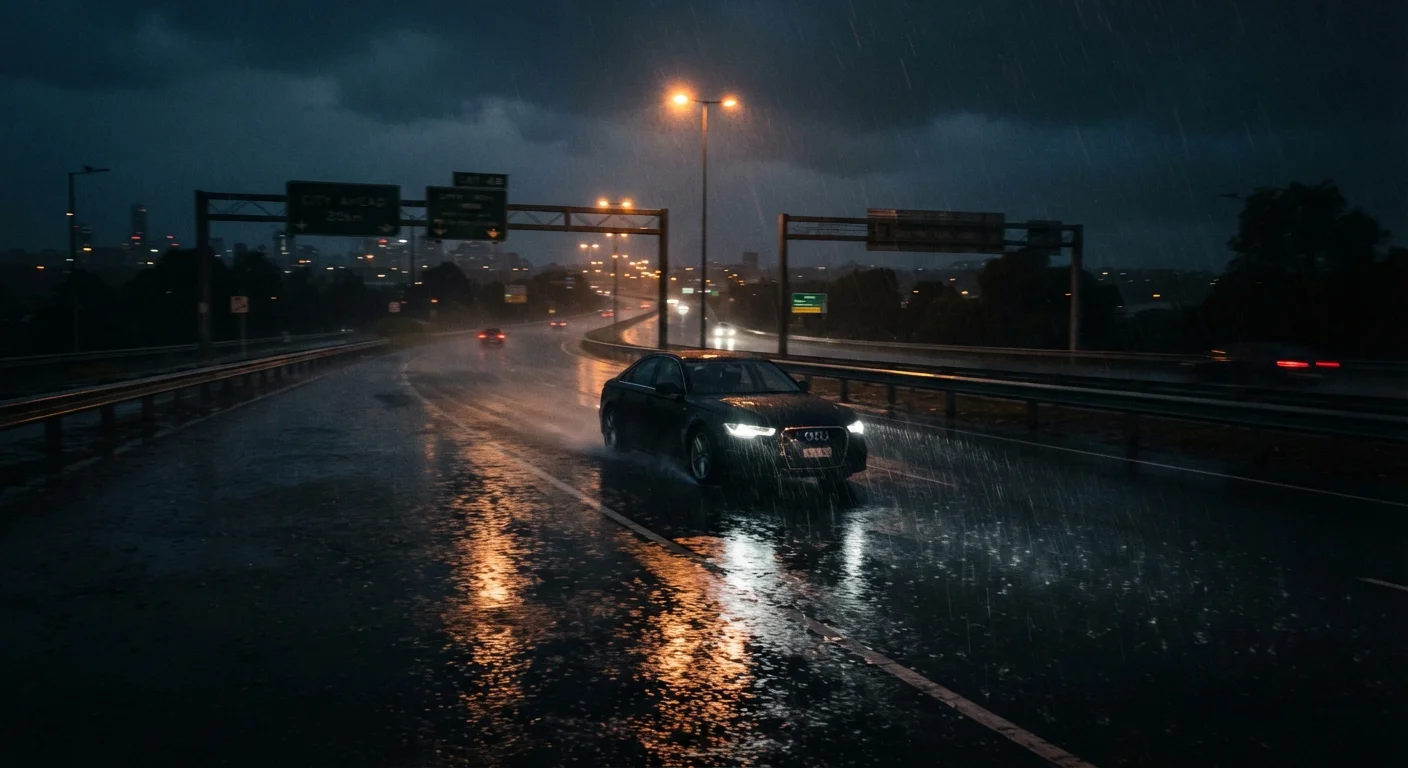
Photo: ScoutAnswers.com | Blogs That Ignite Curiosity editorial
Key Takeaways
- Rain, snow, ice, and fog each demand distinct driving adjustments - not just reduced speed.
- Hydroplaning on rain-slicked roads can occur at speeds as low as 35 mph with worn tires.
- Black ice is nearly invisible; treat any dark, glossy pavement as potentially icy.
- In fog, low-beam headlights outperform high beams, which reflect glare back at the driver.
- Vehicle condition - especially tires and brakes - determines how well any technique actually works.
- Leaving earlier and building in extra time is one of the most underused safety strategies.
Why One Approach Doesn't Fit All Weather
Most drivers know they should slow down in bad weather. That's a reasonable starting point - but it's incomplete. Rain creates hydroplaning risk. Snow changes how braking force distributes. Ice eliminates meaningful traction almost entirely. Fog removes visual range without changing the road surface at all. Each condition imposes a different physics problem, and each calls for a specific set of adjustments.
Defensive driving is the underlying mindset that makes condition-specific technique effective. When drivers anticipate hazards rather than just react to them, they have time to apply the right response before a situation escalates. This guide gives you a condition-by-condition breakdown so those responses become second nature.
Driving in Rain
Rain reduces tire grip by introducing a film of water between the tire and the pavement. The primary risk is hydroplaning - when a tire rides on top of standing water rather than maintaining contact with the road. This can cause sudden and complete loss of steering control.
- Slow down progressively. Hydroplaning risk increases with speed. The faster you travel, the less time water has to disperse from under the tire.
- Increase following distance. Wet roads extend stopping distances significantly. A gap that feels comfortable in dry conditions is insufficient in rain.
- Avoid sudden inputs. Hard braking, sharp steering, and abrupt acceleration all reduce the tire's ability to maintain grip on a wet surface.
- Turn headlights on. In most U.S. states, law requires headlights when wipers are in use. Beyond legality, being visible to others is as important as seeing clearly.
- If you hydroplane: Release the accelerator gently, hold the wheel straight, and avoid braking hard. Let the vehicle slow naturally until the tires regain road contact.
Tire tread depth plays a major role in rain performance. Worn tires channel water far less effectively, making hydroplaning more likely even at moderate speeds.
In rain, test your brakes gently shortly after entering a wet road to confirm the response is what you expect - do this when there's no one close behind you.
When driving in snow, look as far ahead as possible and plan your speed changes well in advance - the later you react, the less traction can help you.
Driving in Snow
Snow affects both traction and visibility simultaneously, and road conditions can change rapidly as temperatures fluctuate. Packed snow behaves differently than fresh powder, and wet snow near freezing is particularly treacherous.
- Accelerate slowly. Spinning wheels lose traction. Apply throttle gently from a stop and build speed gradually.
- Brake early and lightly. Begin slowing much earlier than you would on dry roads. If your vehicle has ABS (Anti-lock Braking System), apply steady pressure and let the system do its work - don't pump the pedal.
- Use low gears on descents. Engine braking reduces reliance on wheel brakes and helps maintain control on downhill grades.
- Clear your vehicle completely. Snow left on the roof becomes a hazard for drivers behind you when it slides off at highway speed. In several states, this is also a finable offense.
Before winter driving season begins, review the seasonal car maintenance checklist to ensure your wipers, battery, and tires are winter-ready.
Driving on Ice
Ice is the most unforgiving driving surface a driver will encounter under normal conditions. Friction drops to a fraction of what dry pavement provides, and even cautious inputs can trigger a skid. Black ice - a thin, transparent layer that takes on the color of the pavement beneath - is particularly dangerous because it is nearly invisible.
Never Assume Ice Has Melted
- Identify suspect surfaces. Bridges, overpasses, and shaded road sections freeze before open pavement. Treat any dark, glossy-looking surface as potentially icy.
- Drive at the minimum safe speed. There is no safe speed on glare ice - the goal is to maintain enough momentum to keep moving while avoiding any maneuver that could trigger a slide.
- Steer gently and precisely. On ice, overcorrecting a skid almost always makes it worse. If the rear slides out, steer gently in the direction of the skid to realign.
- Leave enormous following distance. Stopping distances on ice can be ten times longer than on dry pavement.
Consider reviewing the pre-drive winter checklist before any cold-morning departure - clearing ice from mirrors and windows is safety-critical, not optional.
Driving in Fog
Fog is unique among hazardous conditions because it impairs vision without changing road grip. Drivers often misjudge their actual visibility range and travel faster than their ability to stop within the distance they can see ahead - a concept sometimes called overdriving your headlights.
- Use low beams, not high beams. High beams reflect off fog particles and back toward the driver, reducing visibility further. Low beams direct light downward and ahead more effectively.
- Use fog lights if your vehicle has them. Designed for exactly this scenario, front fog lights have a wide, low beam pattern that cuts under fog banks.
- Slow to match visibility. If you can see 200 feet ahead, you should be able to stop within 200 feet. Adjust speed so this is realistically achievable.
- Use the road's edge markings as reference. In dense fog, the right edge of the road can be a more reliable guide than the center line.
- Pull over safely if visibility drops to near zero. Turn off your headlights (so other drivers don't follow your lights thinking you are on the road) and activate your hazard flashers instead.
Proper mirror adjustment becomes especially important in fog, when you need maximum situational awareness about what is alongside and behind you.
21%
U.S. crashes linked to weather conditions
According to the Federal Highway Administration, weather-related crashes account for approximately 21% of all vehicle crashes annually in the United States.
10x
Longer stopping distance on ice vs. dry pavement
Transportation safety research consistently shows stopping distances can increase tenfold or more on glare ice compared to dry road surfaces at equivalent speeds.
35 mph
Minimum speed at which hydroplaning can begin
Hydroplaning can occur at speeds as low as 35 mph when tire tread is worn and standing water is present, according to road safety guidance from the National Safety Council.
Vehicle Readiness Across All Conditions
No driving technique compensates fully for a vehicle that isn't mechanically prepared for adverse weather. The connection between vehicle condition and actual road safety is direct and measurable.
- Tires: Adequate tread depth and correct inflation are the single most important preparation factor. Both affect grip, braking distance, and handling response.
- Wipers and washers: Streaking or skipping wiper blades impair vision in rain and snow. Winter-rated blades resist ice buildup better than standard ones.
- Lights: Verify all exterior lights - headlights, taillights, brake lights, and fog lights - are functional before each season's first difficult weather event.
- Brakes: Worn brake pads and rotors extend stopping distances in any condition; on ice or wet roads, the compounding effect is severe.
- Defrosters: Front and rear defrosters must work reliably. A fogged windshield in cold weather is a visibility emergency, not a minor inconvenience.
For a structured approach, the seasonal maintenance guide covers what to inspect as conditions change through the year. Drivers heading into unfamiliar territory in winter conditions face compounded risk and should be especially deliberate about vehicle preparation.
Ultimately, the most powerful adjustments a driver can make in hazardous weather are upstream ones: leaving earlier, researching conditions before departure, and choosing to delay a trip when forecasts are severe. Technique and vehicle readiness matter - but so does honest judgment about when not to drive at all.
The content on this site is for informational purposes only and is not a substitute for professional advice. Always consult a qualified professional for guidance specific to your situation.