
Night Driving Is Genuinely More Dangerous - Here's the Science Behind It

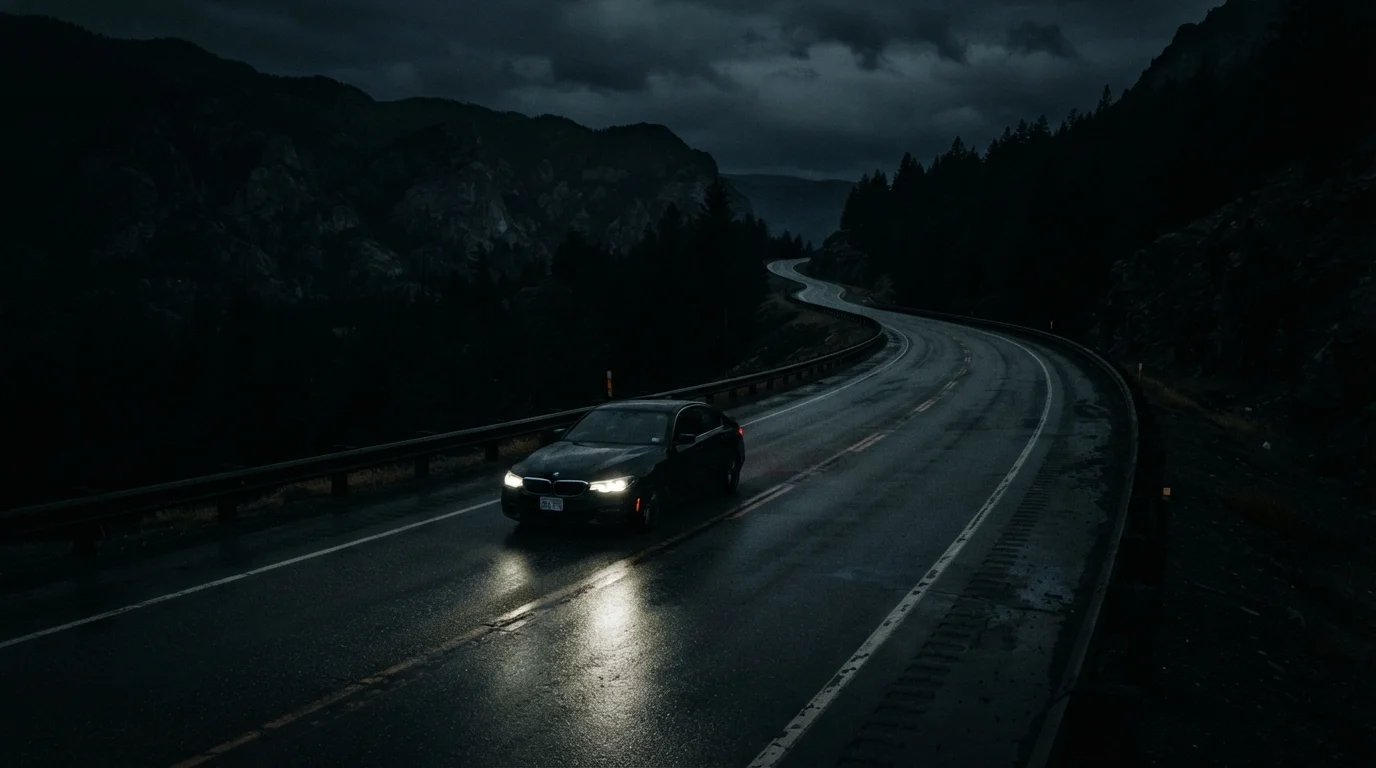
Photo: ScoutAnswers.com | Blogs That Ignite Curiosity editorial
Key Takeaways
- Fatal crash rates per mile driven are substantially higher at night than during daylight hours.
- Human eyes are poorly adapted for high-speed driving in low light, limiting detection distance and depth accuracy.
- Standard low-beam headlights illuminate only about 160 feet - far less than the stopping distance at highway speeds.
- Driver fatigue compounds visual impairment at night, slowing reaction times significantly.
- Pedestrians and cyclists are far more vulnerable after dark and harder for drivers to detect.
- Adjusting speed, following distance, and headlight habits reduces nighttime risk in practical ways.
The Numbers Don't Lie: Night Driving Is Disproportionately Deadly
Traffic thins out after dark, but the roads do not become safer. Data from the National Highway Traffic Safety Administration (NHTSA) consistently shows that approximately half of all traffic fatalities in the United States occur at night, even though nighttime travel represents a substantially smaller share of total miles driven. That gap - between traffic volume and fatality share - is the core of the problem.
The reasons are not mysterious or random. A distinct set of physiological and environmental factors converge after dark to elevate crash severity. Understanding each of them is the first step toward driving more intelligently at night. As defensive driving principles emphasize, anticipating hazards before they occur is far more effective than reacting to them.
~50%
Of U.S. traffic fatalities occurring at night
NHTSA data consistently shows approximately half of all fatal crashes occur in dark conditions, despite significantly lower nighttime traffic volume.
160 ft
Typical low-beam headlight illumination range
At highway speeds, stopping distance regularly exceeds this figure, meaning most drivers on low beams at night are technically overdriving their headlights.
3x
Higher nighttime fatality rate per mile driven
Traffic safety researchers estimate the fatal crash rate per mile driven at night is roughly three times higher than during daylight, reflecting the compounding effect of multiple risk factors.
What Happens to Your Vision After Dark
The human eye was not engineered for high-speed travel in low light. In darkness, the eye shifts from cone-based (color, detail) to rod-based (light/dark, peripheral) vision. Rods are more light-sensitive but offer poor spatial resolution and no color discrimination - exactly the wrong tools for detecting a pedestrian in dark clothing or reading road markings at speed.
Depth perception, which relies heavily on stereoscopic vision and contrast cues, degrades significantly in low light. Judging how quickly a vehicle ahead is decelerating, or how far away an intersection actually is, becomes genuinely less accurate - not a perception of risk but a measurable physiological limitation.
Glare from oncoming headlights compounds this. The pupil needs several seconds to readjust after a bright light source passes, creating a window of compromised vision. Older drivers are particularly affected, as the eye's ability to adapt to changing light levels declines steadily with age.
Properly adjusted mirrors can help maximize what limited light you do have available. Our guide on adjusting your mirrors correctly explains how to eliminate blind spots before every drive.
Headlight Range vs. Stopping Distance: A Math Problem Most Drivers Ignore
Standard low-beam headlights illuminate roughly 160 feet of road ahead. At 60 mph, your vehicle is covering about 88 feet per second. Factor in a typical perception-reaction time of 1.5 seconds plus braking distance, and your total stopping distance can exceed 240 feet - well beyond what your headlights reveal.
This is known as overdriving your headlights: traveling at a speed where your ability to stop safely exceeds your ability to see. It is a widespread and underappreciated phenomenon. High beams, when conditions allow their use - no oncoming traffic, no vehicles ahead - extend visibility to roughly 350-500 feet and meaningfully close that gap.
Keeping a greater following distance at night directly addresses this. Following distance at highway speeds should be extended beyond the two-second rule after dark, giving additional buffer for both reaction time and reduced illumination.
Use High Beams Strategically
Fatigue, Circadian Rhythms, and the Late-Night Crash Window
Reduced visibility does not act alone. Driver fatigue is the other major factor that makes the overnight window - roughly midnight to 6 a.m. - disproportionately dangerous. Human circadian rhythms naturally push the body toward sleep during these hours, regardless of how rested a driver feels subjectively.
Research has demonstrated that fatigue impairs reaction time in ways comparable to moderate alcohol intoxication. Critically, fatigued drivers often underestimate their own impairment, making the problem self-concealing. The combination of impaired vision and slower reaction time creates a compounding risk that far exceeds either factor alone.
Recognizing the warning signs of fatigue before they become dangerous is a skill every driver should develop. Our article on the hidden dangers of drowsy driving covers the specific indicators to watch for and when stopping is the responsible choice.
The Midnight-to-6 A.M. Risk Window
Vulnerable Road Users and the Visibility Gap
Pedestrians and cyclists are far more exposed after dark, and drivers are far less able to detect them in time. Pedestrian fatalities are heavily concentrated in nighttime hours - NHTSA data has consistently shown the majority of pedestrian deaths occur in dark conditions. Dark clothing, absence of reflective gear, and limited street lighting create a detection gap that headlights alone cannot reliably close.
Intersections are particularly high-risk environments at night, where pedestrian movements, turning vehicles, and signal timing all converge. Understanding the dynamics at play can meaningfully reduce collision risk - our guide on navigating intersections safely addresses the visibility and positioning habits that matter most.
When driving on unfamiliar roads at night, these risks multiply. Unexpected curves, unmarked hazards, and unfamiliar lane configurations are all harder to process under reduced illumination. Slowing down on unfamiliar roads at night is not overcaution - it is an appropriate response to genuinely elevated risk.
Frequently Asked Questions
The content on this site is for informational purposes only and is not a substitute for professional advice. Always consult a qualified professional for guidance specific to your situation.