
What Your Following Distance Actually Needs to Be at Highway Speeds

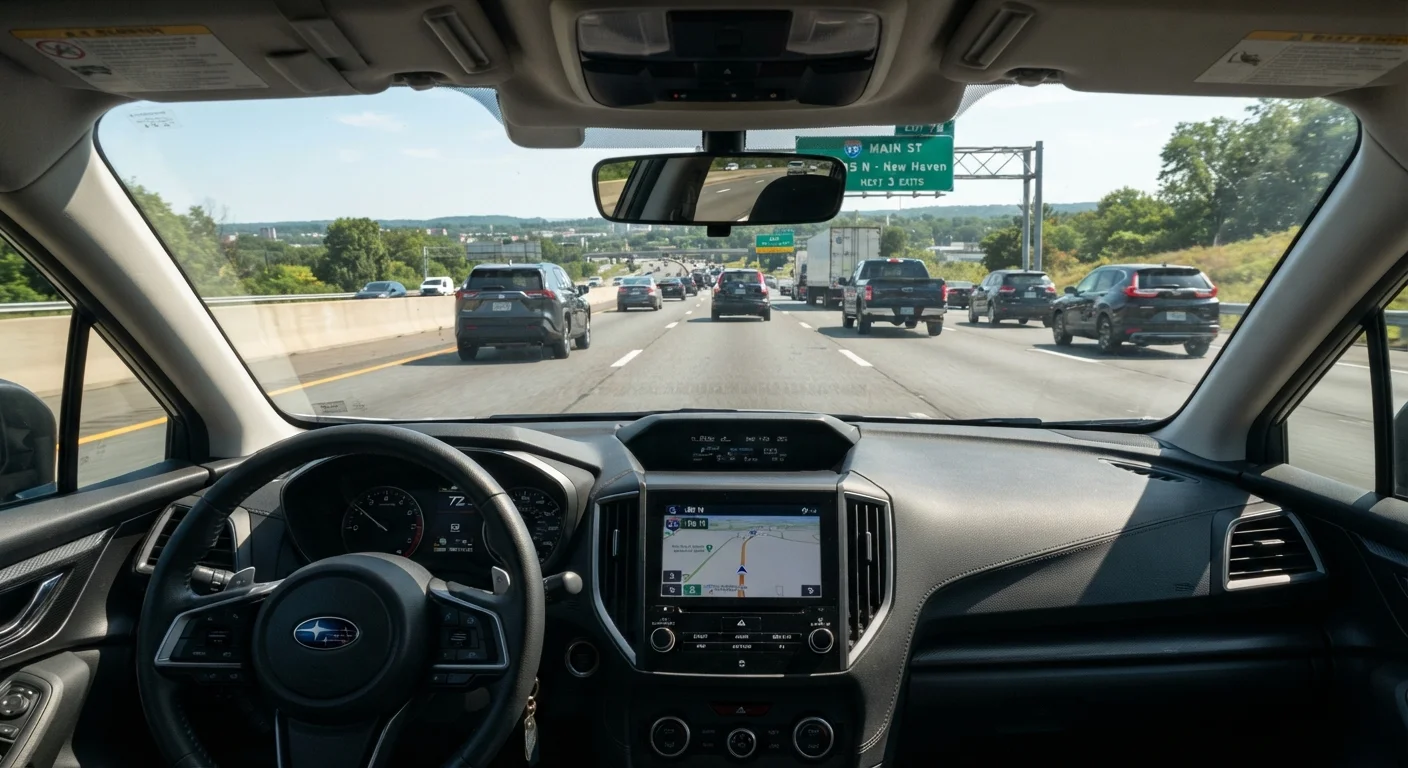
Photo: ScoutAnswers.com | Blogs That Ignite Curiosity editorial
Key Takeaways
- The two-second rule is a minimum baseline, not an ideal target, especially at highway speeds.
- At 65 mph, a car travels roughly 95 feet per second - reaction time alone can consume 150+ feet.
- Most driving experts recommend a three- to four-second gap on open highways under normal conditions.
- Wet roads, heavy vehicles, and fatigue all require additional following distance beyond the standard recommendation.
- Tailgating is a leading contributing factor in rear-end collisions, which are among the most common crash types in the U.S.
Why the Two-Second Rule Has Limits
The two-second rule is one of the most widely taught concepts in driver education. The idea is simple: when the vehicle ahead passes a fixed point, at least two seconds should pass before your vehicle reaches the same spot. For residential streets and moderate speeds, it offers a reasonable starting point.
But highways are a different environment. At 65 mph, your vehicle is covering approximately 95 feet every single second. Two seconds gives you roughly 190 feet of buffer - which sounds like a lot until you factor in the full picture of how stopping actually works. Reaction time alone - the interval between perceiving a hazard and pressing the brake - typically falls between 1.5 and 2.5 seconds for an alert driver. That reaction phase can eat through 140 to 230 feet before your brakes even engage.
Add braking distance on top of that, and the math becomes uncomfortable quickly. The two-second rule, at highway speeds, often leaves drivers with far less margin than they assume. Most safety-focused driving programs now point to a three- to four-second gap as the more practical target for open highway travel under normal conditions. Defensive drivers build this kind of buffer deliberately, rather than reacting only after a hazard appears.
What Actually Goes Into Stopping Distance
Understanding stopping distance helps explain why following distance recommendations aren't arbitrary. There are two components involved: reaction distance and braking distance.
Reaction distance is how far you travel from the moment you perceive a problem to the moment your foot presses the brake. At 65 mph with a 1.5-second reaction time, that's roughly 143 feet before braking even starts. Braking distance is then the additional space required to bring the vehicle to a full stop - and this increases exponentially with speed, not linearly. Going from 30 mph to 60 mph doesn't double your braking distance; it roughly quadruples it under similar road conditions.
Combined, a vehicle traveling at 65 mph on dry pavement may require 300 feet or more to stop completely. That's nearly the length of a football field. A two-second gap at that speed gives you a fraction of that space to work with.
~300 ft
Estimated total stopping distance at 65 mph
Includes both reaction distance and braking distance on dry pavement for a typical passenger vehicle - roughly the length of a standard football field.
~29%
Of all U.S. crashes that are rear-end collisions
According to the National Highway Traffic Safety Administration (NHTSA), rear-end crashes are among the most frequent crash types reported nationally.
1.5-2.5 sec
Typical driver reaction time range
At 65 mph, even the shorter end of this range means your vehicle travels more than 140 feet before braking begins.
Conditions narrow this margin further. Wet pavement significantly reduces tire traction, extending braking distances. Worn tires, heavy loads, and vehicles with less-responsive braking systems all add to the equation. Fatigue also slows reaction time measurably - a point worth considering on long highway trips, especially after dark. Our article on why night driving carries elevated risk covers how diminished alertness compounds these factors.
Adjusting Distance for Conditions and Vehicle Type
The three-to-four second recommendation assumes normal conditions: dry pavement, daylight, an alert driver, and a passenger vehicle in good mechanical condition. Each variable that deviates from that baseline is a reason to increase your gap.
- Rain, snow, or ice: Wet roads reduce friction between tires and pavement substantially. A commonly referenced guideline is to double your following distance in rain and increase it even further on snow or ice.
- Following a large truck or bus: Heavy commercial vehicles have longer stopping distances and block your view of the road ahead. More space behind a truck gives you more time to react to what the truck driver has already seen.
- Towing a trailer: Adding trailer weight increases your own stopping distance. The extra mass means your brake system has more to slow down, and trailer sway can complicate emergency maneuvers.
- Fatigue or distraction: Reaction times lengthen noticeably when you're tired or mentally occupied. Additional space compensates for a slower response window.
Use a Fixed Marker to Check Your Gap
One important note: following distance is only one dimension of spatial awareness. Mirror positioning directly affects how well you can see vehicles approaching from the rear, giving you the information needed to manage both your forward gap and your exposure from behind.
Common Misconceptions About Highway Spacing
A persistent belief among many drivers is that maintaining a larger gap will simply invite other vehicles to cut in, negating the benefit. In practice, on open highways with light to moderate traffic, a generous buffer typically leads to fewer disruptions than drivers expect - and when a vehicle does merge into that space, easing off the accelerator to rebuild the gap is the correct response, not braking hard or closing in aggressively.
Another misconception: that following too closely keeps traffic moving faster. In reality, the opposite is often true. Research on traffic flow has shown that close following distances contribute to stop-and-go wave patterns, where small speed variations ripple backward through traffic and trigger unnecessary braking chains. Maintaining space actually supports smoother, more consistent flow.
Finally, some drivers equate highway confidence with reduced following distance - treating a tight gap as a sign of skill. Skilled driving means understanding the physics of the road and managing risk proactively. As with merging and right-of-way decisions, the drivers who consistently avoid crashes are those who give themselves more room, not less.
Frequently Asked Questions
The content on this site is for informational purposes only and is not a substitute for professional advice. Always consult a qualified professional for guidance specific to your situation.