
Debt Consolidation: What It Is and How It Generally Works

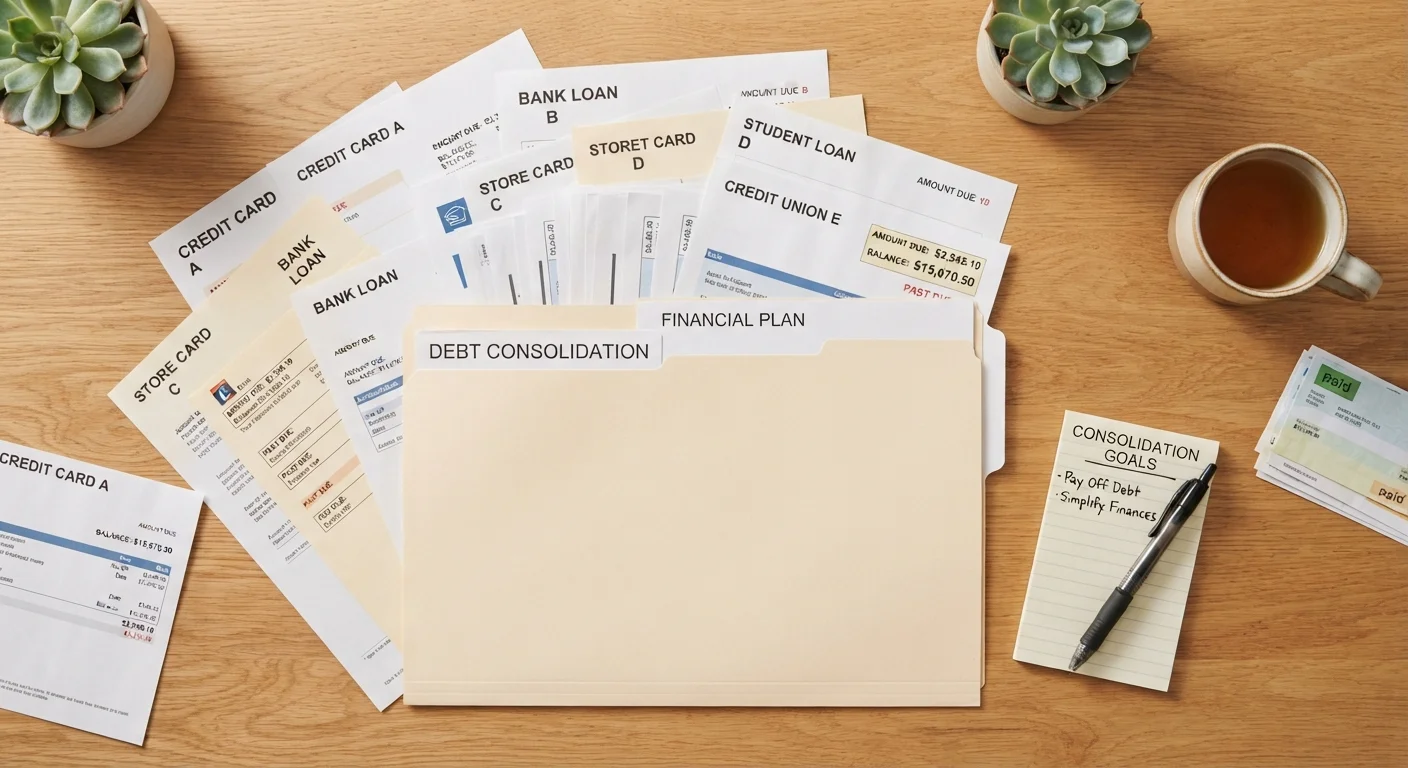
Photo: ScoutAnswers.com | Blogs That Ignite Curiosity editorial
Key Takeaways
- Debt consolidation combines multiple debts into one payment, not forgiveness of what you owe.
- Common consolidation tools include personal loans, balance transfer credit cards, and home equity products.
- A lower interest rate is the primary financial benefit, but it depends on your credit profile.
- Consolidation can simplify budgeting, but it requires discipline to avoid accumulating new debt.
- Consulting a nonprofit credit counselor can help you evaluate whether consolidation makes sense for your situation.
The Core Idea Behind Debt Consolidation
If you're managing several different debt payments each month - a credit card here, a medical bill there, maybe a personal loan - debt consolidation offers a way to streamline that picture. Instead of tracking multiple due dates, interest rates, and minimum payments, you move those balances into a single new obligation with one monthly payment.
The appeal is straightforward: fewer moving parts, and potentially a lower interest rate than what you were paying across your individual debts. However, consolidation is a restructuring tool, not a debt-elimination tool. The balance you owe doesn't shrink - what changes is the structure of how you repay it.
This distinction matters. Consolidation works best as part of a broader financial plan, not as a standalone fix. If the spending habits or circumstances that created the debt remain unchanged, there's a real risk of accumulating new balances on top of the consolidated one. That's a pattern worth understanding before pursuing any consolidation option.
Common Forms Debt Consolidation Can Take
There's no single method - consolidation can happen through several different financial products, each with its own structure and trade-offs.
$1.14T
Total U.S. credit card debt outstanding
According to the Federal Reserve Bank of New York's Household Debt and Credit report, U.S. credit card balances have reached historically high levels, making debt management a pressing concern for many households.
20%+
Average credit card interest rate
Federal Reserve data shows average credit card interest rates have climbed to historically elevated levels, making the rate comparison central to any consolidation decision.
3-5%
Typical balance transfer fee
Most balance transfer credit cards charge a fee of 3% to 5% of the transferred amount, a cost that should be factored into any comparison of consolidation options.
- Personal loans: A fixed-rate personal loan from a bank, credit union, or online lender is one of the most straightforward consolidation tools. You borrow a lump sum, pay off your existing debts, and repay the loan in fixed installments over a set term. The interest rate depends heavily on your credit score and financial profile.
- Balance transfer credit cards: Some credit cards offer a promotional low or zero percent annual percentage rate (APR) on transferred balances for an introductory period - often 12 to 21 months. This can be effective for paying down debt quickly if you can clear the balance before the promotional period ends. See how these two approaches compare in our article on personal loans vs. balance transfer cards.
- Home equity products: Homeowners may have access to home equity loans or lines of credit (HELOCs), which typically carry lower rates because the loan is secured by the home. This approach carries significant risk - defaulting could mean losing your home.
- Debt management plans (DMPs): Offered through nonprofit credit counseling agencies, DMPs are not loans. Instead, a counselor negotiates with your creditors to reduce interest rates, and you make a single monthly payment to the agency, which distributes it to your creditors.
What to Weigh Before Consolidating
Deciding whether consolidation makes sense requires an honest look at a few key factors.
Get a Free Credit Counseling Session First
Interest rate comparison: The most important number to evaluate is whether the consolidated rate is genuinely lower than what you're currently paying across your debts. If it isn't, consolidation may cost you more in the long run.
Total repayment cost: A longer loan term can reduce your monthly payment while increasing the total interest paid over time. Run the full numbers, not just the monthly figures.
Fees: Balance transfer cards often charge a transfer fee (commonly 3-5% of the transferred amount). Personal loans may carry origination fees. Factor these into your cost comparison.
Your credit profile: The rates you qualify for depend on your credit score and debt-to-income ratio. If your credit is in fair or poor shape, the rates available to you may not provide meaningful savings.
It's also worth considering how consolidation fits alongside other financial priorities. If you're trying to build an emergency fund while managing debt, balancing both goals at once requires a clear-eyed look at cash flow. Consolidation that reduces your monthly obligation could free up room for savings - but only if the freed funds are actually redirected that way.
For those weighing consolidation against other repayment approaches, the debt avalanche and debt snowball methods offer structured alternatives that don't require new credit at all.
Once debt is repaid - whether through consolidation or another approach - building habits to stay out of debt long-term is the next critical step.
This article is for general informational purposes only and does not constitute personalized financial, legal, or tax advice. Consult a qualified financial professional for guidance specific to your situation.
Frequently Asked Questions
The content on this site is for informational purposes only and is not a substitute for professional advice. Always consult a qualified professional for guidance specific to your situation.