
The Debt Avalanche and the Debt Snowball: How Each Method Works

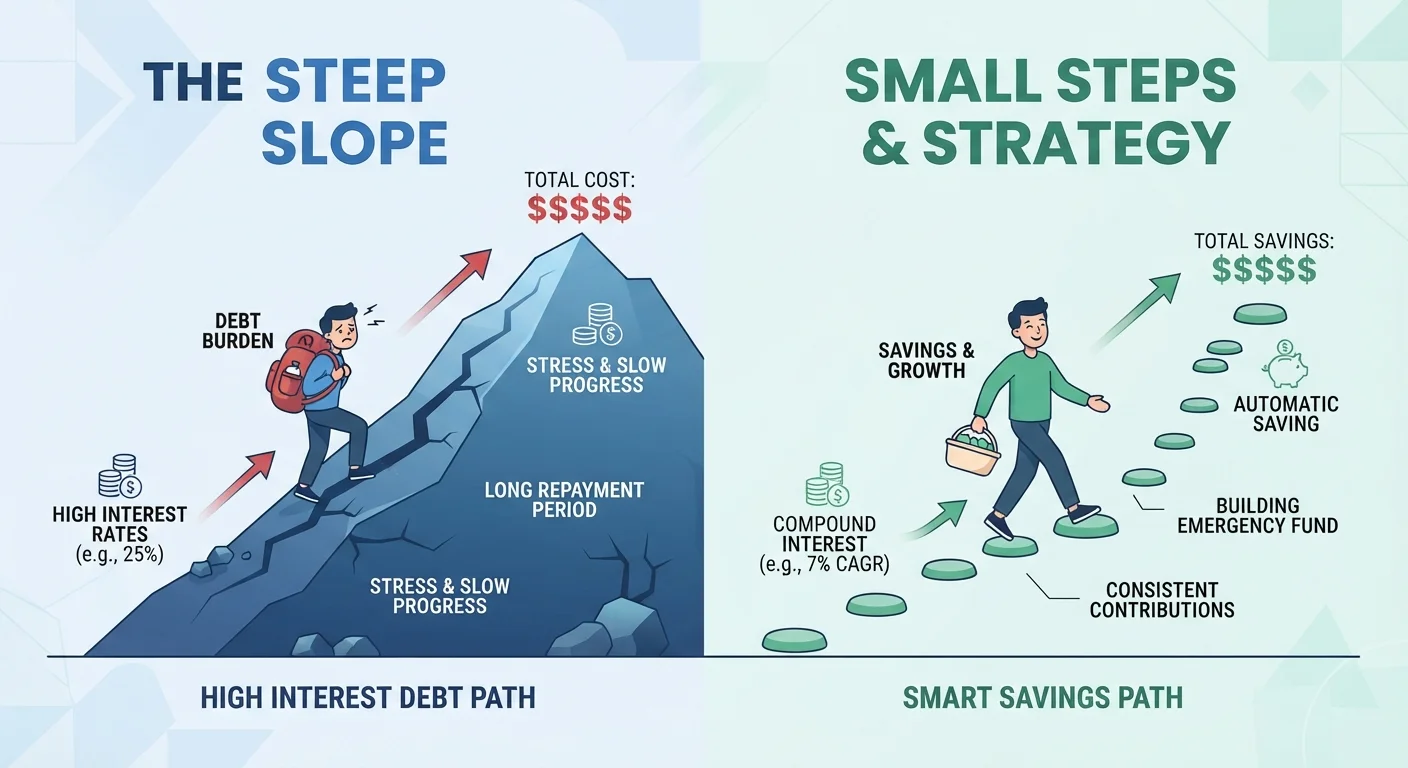
Photo: ScoutAnswers.com | Blogs That Ignite Curiosity editorial
Key Takeaways
- The debt avalanche targets the highest-interest debt first, reducing total interest paid over time.
- The debt snowball targets the smallest balance first, generating early wins that can sustain motivation.
- Neither method requires extra income - both rely on redirecting existing minimum payments as debts close.
- The avalanche is generally more cost-effective; the snowball may be more effective for those prone to giving up.
- Both methods work best when paired with a realistic budget and, ideally, a small emergency fund.
- Choosing the right method depends on your financial profile and your personal relationship with motivation.
The Core Idea Behind Both Methods
Both the debt avalanche and the debt snowball are structured payoff strategies built on the same mechanical foundation: you make minimum payments on all your debts, then direct any extra money toward one targeted account at a time. When that account reaches zero, the payment you were making on it rolls into the next target - creating a growing wave of repayment power.
Where the two strategies diverge is in how they decide which debt to target first. That single difference has meaningful implications for both your wallet and your willpower. If you're newer to managing multiple debts, see the starter's roadmap for financial beginners for a broader orientation before diving into strategy selection.
| Criterion | Debt Avalanche | Debt Snowball |
|---|---|---|
| Payoff order | Highest interest rate first | Smallest balance first |
| Primary benefit | Minimizes total interest paid | Generates early motivational wins |
| Time to first payoff | Potentially longer (if high-rate debt is large) | Faster (smallest balance closed first) |
| Total cost | Generally lower over time | Can be higher if rates vary widely |
| Best suited for | Disciplined, math-focused planners | Those who need emotional momentum |
| Complexity | Low - sort by APR | Low - sort by balance |
How the Debt Avalanche Works
The avalanche method ranks your debts by annual percentage rate (APR) - the cost of borrowing expressed as a yearly rate - from highest to lowest. You put all available extra money toward the highest-rate debt while maintaining minimums on the rest. Once that debt is eliminated, you shift your full payment to the next highest-rate account, and so on.
The mathematical logic is straightforward: high-interest debt compounds faster. Every month you carry a 24% APR credit card balance, more of your money evaporates into interest rather than reducing principal. Attacking it first limits that damage. Over a multi-year payoff timeline, the interest savings can be substantial - though the exact amount varies widely by balance size, rate, and how much extra you can put toward debt each month.
The trade-off is patience. If your highest-rate debt also happens to be your largest balance, it may take many months before you see a single account fully closed. That slow start can feel demoralizing for some people.
~20%
Average credit card APR in the US
The Federal Reserve tracks average credit card interest rates; rates above 20% have become common in recent years, making high-rate debt especially costly to carry.
3-4 debts
Typical number of debts held by indebted US households
Federal Reserve data and consumer surveys suggest many households juggle multiple obligations simultaneously, making a prioritization strategy practically valuable.
How the Debt Snowball Works
The snowball method ranks debts by outstanding balance, from smallest to largest, regardless of interest rate. You throw extra money at the smallest balance until it's gone, then roll that payment into the next smallest, and continue. The payments compound in size - like a snowball rolling downhill - as each eliminated debt adds its full monthly payment to the next target.
The primary benefit is psychological. Closing an account quickly - even a small one - delivers a concrete sense of progress. Behavioral research on habit formation generally supports the idea that early rewards help sustain effortful behavior over time. For many people, the motivation to keep going is worth the additional interest cost that may come from not prioritizing high-rate accounts first.
It's worth noting that the snowball and avalanche aren't mutually exclusive in concept - some people start with the snowball to build confidence, then shift to avalanche logic once they've gained momentum. Whatever structure keeps you consistent is the one most likely to succeed. You can also explore how paying off debt while saving at the same time fits alongside either approach.
Choosing the Right Method - and What Else to Consider
Neither method is universally superior. The avalanche typically wins on cost; the snowball often wins on adherence. If you're highly disciplined and can tolerate a slow start, the avalanche may save you more money. If you've abandoned debt payoff plans before, the snowball's early wins might be what keeps you in the game long enough to finish.
A few additional factors are worth weighing:
- Emergency fund: Most financial educators suggest having at least a modest cash cushion - commonly cited as $500 to $1,000 - before aggressively paying down debt. Without it, an unexpected expense can force you back into high-interest borrowing, undoing your progress.
- Debt type: Some debts, like federal student loans, carry unique protections and repayment options that may influence your strategy. See how credit card debt and student loan debt differ for context.
- Consolidation as an alternative: If your interest rates are very high across the board, restructuring the debt itself - rather than just the payoff order - might be worth exploring. Debt consolidation is one route; personal loans and balance transfer cards are others.
Once you've paid off your debts, the habits you build during the process matter enormously. Staying out of debt after you've paid it off requires intentional choices that go beyond the payoff strategy itself.
This article is for general informational and educational purposes only and does not constitute personalized financial or legal advice. Consult a qualified financial professional before making decisions based on your individual circumstances.
The content on this site is for informational purposes only and is not a substitute for professional advice. Always consult a qualified professional for guidance specific to your situation.