
Personal Loans vs. Balance Transfer Cards for Paying Off Debt

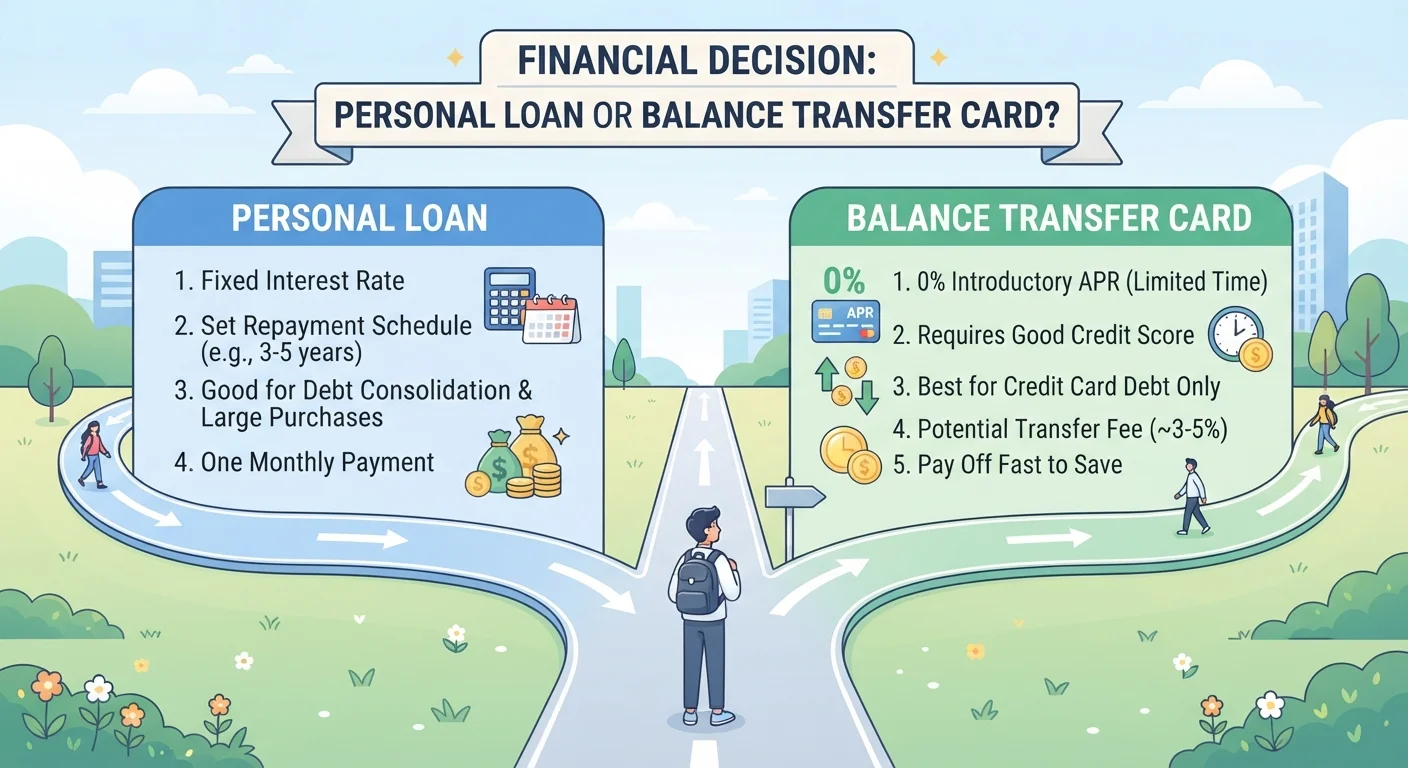
Photo: ScoutAnswers.com | Blogs That Ignite Curiosity editorial
Key Takeaways
- Personal loans offer fixed interest rates and structured repayment timelines, making budgeting predictable.
- Balance transfer cards can offer 0% introductory APR periods, but standard rates apply after the promotional window closes.
- Balance transfer fees typically range from 3% to 5% of the transferred amount, which adds to the total cost.
- Your credit score significantly influences which option - and what terms - you may qualify for.
- Neither tool eliminates debt on its own; spending discipline is essential to avoid accumulating new balances.
How Each Tool Works
When high-interest credit card debt accumulates, two widely used strategies for managing it are personal loans and balance transfer cards. Understanding how each is structured helps you evaluate which might fit your situation. This article provides general financial information and is not personalized financial advice - consult a licensed financial professional for guidance specific to your circumstances.
Personal loans are installment loans issued by banks, credit unions, or online lenders. You borrow a lump sum and repay it in fixed monthly installments over a set term - typically two to seven years. Interest rates are fixed for most personal loans, so your payment amount stays the same each month. If used for debt consolidation, the loan proceeds pay off existing balances and you make a single payment to the new lender.
Balance transfer cards are credit cards that allow you to move existing debt from one or more accounts onto the new card, often at a promotional 0% annual percentage rate (APR) for a defined introductory period - commonly 12 to 21 months. After that period ends, the card's standard variable APR applies to any remaining balance. Most cards charge a balance transfer fee of 3%-5% of the amount moved. To learn more about how revolving interest compounds over time, see how balances grow on revolving credit.
Cost Comparison: Interest, Fees, and the Math That Matters
| Personal Loan | Balance Transfer Card | |
|---|---|---|
| Interest rate structure | Fixed rate throughout term | 0% promotional, then variable APR |
| Repayment timeline | Fixed term (2-7 years) | Flexible; promotional period 12-21 months |
| Upfront fees | Origination fee (0%-8% typical) | Balance transfer fee (3%-5%) |
| Credit score required | Good to excellent for best rates | Good to excellent for 0% offers |
| Risk of new spending | Lower (lump sum disbursed once) | Higher (revolving credit line stays open) |
| Best debt size | Larger balances, longer payoff needed | Smaller balances, short payoff window |
The true cost of each approach depends on several variables: the size of your debt, your credit profile, the loan or card terms you qualify for, and how consistently you make payments.
With a personal loan, you pay interest from day one. However, a fixed rate means you know exactly how much interest you'll pay in total over the life of the loan - there are no surprises. With a balance transfer card, if you pay off the entire balance before the promotional period ends, you may pay little to no interest. But if a balance remains when the promotional period expires, the standard APR - which can be quite high - applies immediately to whatever is left.
It's also worth factoring in the balance transfer fee. On a $5,000 balance, a 3% fee equals $150 added to your debt upfront. Depending on the personal loan rate you qualify for, this fee might make one option less economical than it initially appears. Minimum payments can extend the repayment timeline dramatically, which is especially risky with a balance transfer card once the 0% window closes.
3%-5%
Typical balance transfer fee range
Most balance transfer cards charge between 3% and 5% of the transferred balance as an upfront fee, per general industry disclosures.
12-21 months
Common 0% APR promotional window
Introductory 0% APR periods on balance transfer cards generally range from 12 to 21 months depending on the card and applicant creditworthiness.
Credit Score Requirements and Impact
Both options generally require good to excellent credit to access the most favorable terms. Personal loans are available across a broader credit range, though borrowers with lower scores may receive higher interest rates. Balance transfer cards with lengthy 0% promotional periods are typically reserved for applicants with strong credit histories.
Applying for either product triggers a hard inquiry on your credit report, which can cause a modest temporary dip in your score. Opening a new account also changes your average account age and credit utilization ratio - factors that influence your overall credit profile. If you're comparing how different types of debt affect your credit and financial standing, the article on credit card debt vs. student loan debt offers useful context.
Key Risks to Keep in Mind
Watch Out for Post-Promotional Rate Shock
The most significant risk with a balance transfer card is reverting to high-interest debt if the balance isn't cleared during the promotional window. Because the card remains open and available, it's also possible to accumulate new charges - potentially leaving you with more debt than you started with.
With a personal loan, the primary risk is taking on a fixed obligation you can't sustain if income drops or unexpected expenses arise. Some personal loans also carry origination fees or prepayment penalties, so it's important to review the full loan agreement before committing.
Neither tool replaces the need for a broader debt payoff strategy. Tools like the debt avalanche or debt snowball can complement whichever consolidation method you choose - see how the debt avalanche and debt snowball methods work for a side-by-side overview. And if you're also trying to build an emergency fund while paying down debt, balancing savings and debt repayment simultaneously addresses that common challenge directly.
This article is for general informational and educational purposes only and does not constitute personalized financial, legal, or tax advice. Consult a licensed financial professional before making decisions about your specific financial situation.
The content on this site is for informational purposes only and is not a substitute for professional advice. Always consult a qualified professional for guidance specific to your situation.