
DIY Deck Building: Scope, Skills, and What the Project Actually Involves

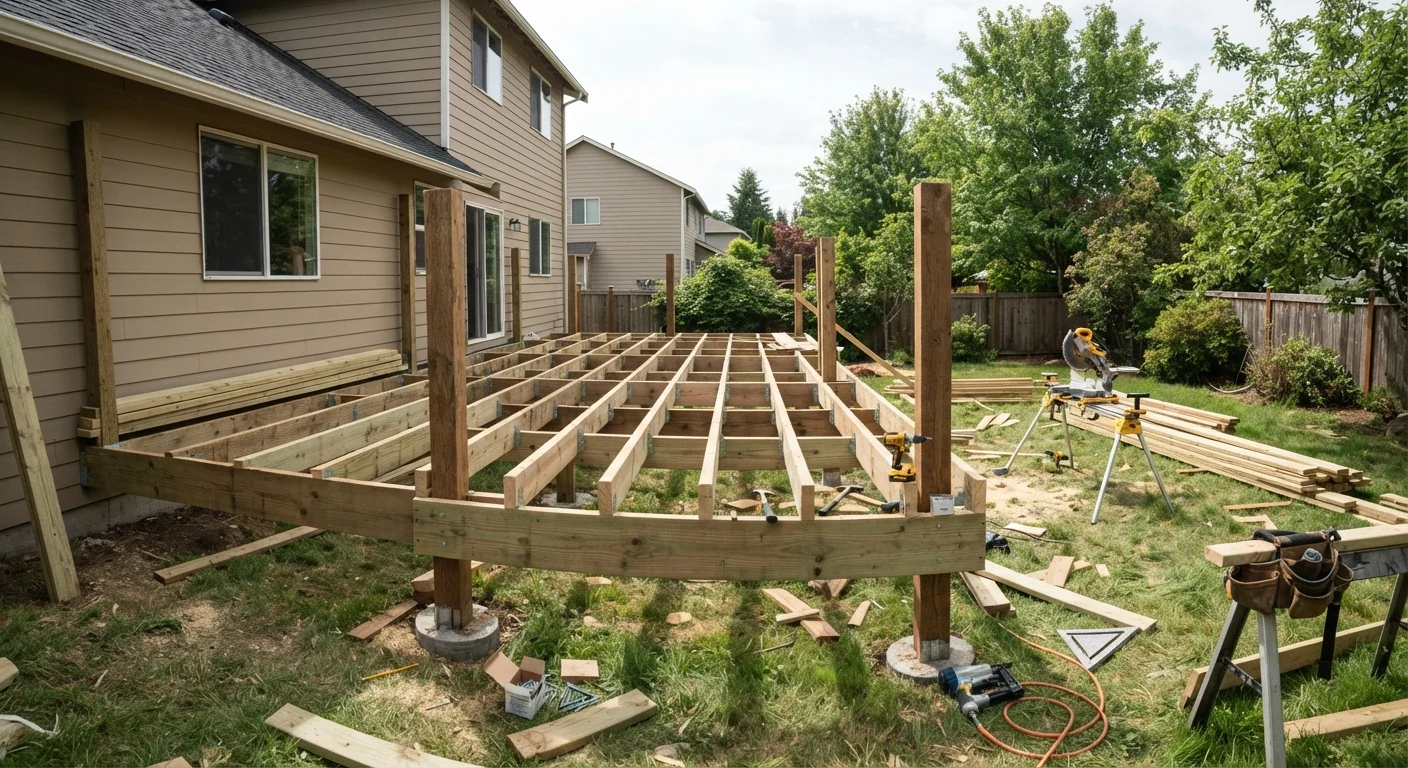
Photo: ScoutAnswers.com | Blogs That Ignite Curiosity editorial
Key Takeaways
- Most deck builds require permits and inspections - skipping them can create legal and resale problems.
- The framing and ledger attachment stages demand precision and carry structural safety implications.
- DIY deck building can reduce labor costs substantially, but material and tool costs still add up.
- A realistic timeline for a mid-size deck is several weekends to several weeks for a motivated DIYer.
- Certain tasks - especially ledger attachment to the house - may require a licensed contractor in some jurisdictions.
Significant labor cost savings possible
Professional deck installation labor can account for 40-60% of total project cost. Handling the work yourself can redirect those funds toward better materials or future projects.
Full control over materials and quality
You select every board, fastener, and piece of hardware, ensuring nothing is substituted without your knowledge - a common complaint with contracted work.
Builds transferable carpentry skills
The framing, fastening, and layout techniques used in deck building apply broadly to other home improvement projects, making this a genuinely educational undertaking.
Flexible scheduling around your availability
You're not dependent on a contractor's calendar and can pause and resume the project as your schedule allows, within permit validity windows.
Structural errors carry serious safety risk
Improperly attached ledger boards and undersized footings are leading causes of deck failure. Mistakes in these areas can result in collapse under normal load conditions.
Permits and inspections add time and complexity
Permit processing can take days to several weeks depending on your municipality. Failed inspections require corrections and re-inspection, extending your timeline further.
Tool and material costs are often underestimated
Between tool rentals, structural hardware, concrete, and fasteners, ancillary costs can add several hundred dollars to a budget that only accounted for lumber and decking.
Physically demanding and time-intensive
Post-hole digging, lifting heavy beams, and working in awkward positions over multiple weekends requires real physical stamina and commitment.
Some work may require licensed professionals
Ledger attachment, electrical rough-in for deck lighting, and gas line work for outdoor grills typically fall under regulated trade work in many U.S. jurisdictions.
What You're Actually Taking On
Building a deck from scratch involves far more than cutting boards and driving screws. At its core, a deck is a structural addition to your home, and it must be engineered to support real loads - furniture, people, and weather stress - safely over many years. That means the project touches on site preparation, foundation work (footings and posts), framing, decking, and finishing, along with railings and stairs if your design includes them.
Before a single board goes down, most municipalities require a building permit. The permit process typically involves submitting a site plan and structural drawings, and the finished deck will usually need at least one inspection - sometimes two or three at different construction stages. Skipping this step isn't just a code violation; it can complicate a future home sale and void homeowner's insurance coverage related to the structure. See our pre-project checklist before you pick up a single tool.
The scope of the project scales quickly with deck size, elevation, and complexity. A simple ground-level platform differs substantially from an elevated deck attached to a second-story door, which introduces fall protection requirements, more complex framing, and a structurally critical ledger connection to the house.
The Case for Doing It Yourself
Significant labor cost savings possible
Professional deck installation labor can account for 40-60% of total project cost. Handling the work yourself can redirect those funds toward better materials or future projects.
Full control over materials and quality
You select every board, fastener, and piece of hardware, ensuring nothing is substituted without your knowledge - a common complaint with contracted work.
Builds transferable carpentry skills
The framing, fastening, and layout techniques used in deck building apply broadly to other home improvement projects, making this a genuinely educational undertaking.
Flexible scheduling around your availability
You're not dependent on a contractor's calendar and can pause and resume the project as your schedule allows, within permit validity windows.
Labor is typically the largest line item in a professionally built deck, often representing half or more of the total project cost. Doing the work yourself eliminates that expense, which can be meaningful for a mid-size build. Beyond cost, DIY gives you direct control over material selection, pacing, and construction quality - you know exactly what went into the structure because you built it.
Deck building is also one of the more learnable large construction projects. Unlike electrical or plumbing work, the fundamental techniques - measuring, cutting lumber, fastening with structural screws and joist hangers - are skills a capable DIYer can develop through research and careful practice. Many homeowners report that completing a deck build substantially improves their confidence for future home improvement work.
The Honest Drawbacks
Structural errors carry serious safety risk
Improperly attached ledger boards and undersized footings are leading causes of deck failure. Mistakes in these areas can result in collapse under normal load conditions.
Permits and inspections add time and complexity
Permit processing can take days to several weeks depending on your municipality. Failed inspections require corrections and re-inspection, extending your timeline further.
Tool and material costs are often underestimated
Between tool rentals, structural hardware, concrete, and fasteners, ancillary costs can add several hundred dollars to a budget that only accounted for lumber and decking.
Physically demanding and time-intensive
Post-hole digging, lifting heavy beams, and working in awkward positions over multiple weekends requires real physical stamina and commitment.
Some work may require licensed professionals
Ledger attachment, electrical rough-in for deck lighting, and gas line work for outdoor grills typically fall under regulated trade work in many U.S. jurisdictions.
The structural complexity of deck framing is genuinely unforgiving. Errors in ledger attachment - the point where the deck connects to the house band joist - are among the most common causes of deck collapses. This connection must be flashed correctly to prevent water intrusion and fastened with approved hardware to meet load requirements. In some jurisdictions, this specific phase of the work must be inspected or performed by a licensed contractor.
Beyond technical risk, the time investment is substantial. A 200-to-300-square-foot deck can take an experienced DIYer two to four weekends under good conditions, and longer if weather delays, permit timelines, or material deliveries intervene. Underestimating this is a common mistake. The hidden costs of renovation projects often include tool rentals, fastener quantities, and post-hole digging equipment that first-timers don't anticipate.
When to Bring In a Professional
Skills and Tools the Project Requires
At minimum, you should be comfortable reading a tape measure precisely, operating a circular saw and a miter saw safely, using a drill and impact driver, and understanding basic framing concepts like crown direction, joist spacing, and beam sizing. If any of those terms are unfamiliar, plan for a learning curve before committing to a large build.
On the tool side, you'll need: a post-hole digger or auger (often rented), concrete mixing equipment or ready-mix, a speed square, chalk line, level, and clamps. Structural hardware - joist hangers, post bases, hurricane ties, and approved ledger fasteners - is non-negotiable and shouldn't be substituted with cheaper alternatives to save money.
~50%
Portion of deck cost typically attributed to labor
Industry estimates consistently place labor at roughly half of total professional deck installation costs, making DIY potentially impactful on overall spend.
40 lbs/sq ft
Minimum live load most U.S. deck codes require
Most U.S. residential building codes specify decks must be designed to support at least 40 pounds per square foot of live load, which directly drives footing and framing requirements.
It's also worth comparing this undertaking to other complex DIY decisions. Much like the calculus in DIY car maintenance vs. professional service, the right answer depends heavily on your existing skill set and the specific task involved - not just on cost.
Planning Before You Build
Successful deck projects start months before construction does. Begin by contacting your local building department to understand permit requirements, setback rules, and any restrictions on deck height or square footage relative to your lot. Pull those requirements into your design from the start rather than retrofitting them later.
Choose your decking material early, since it affects framing spacing decisions. Pressure-treated lumber remains the most common choice for framing. Composite decking is increasingly popular for the surface because it requires less maintenance, though it costs more upfront and has its own installation nuances. Also review the areas of your home that may be affected by the build - commonly overlooked details like subfloor and exterior wall conditions can surface once you start attaching a ledger board.
Finally, be honest with yourself about the timeline, physical demands, and your available help. Deck framing is heavy work that goes considerably faster with a second person. Building alone is possible but slower and, for some steps, less safe.
The content on this site is for informational purposes only and is not a substitute for professional advice. Always consult a qualified professional for guidance specific to your situation.