
Matter: The Smart Home Standard That's Trying to End the Compatibility Problem

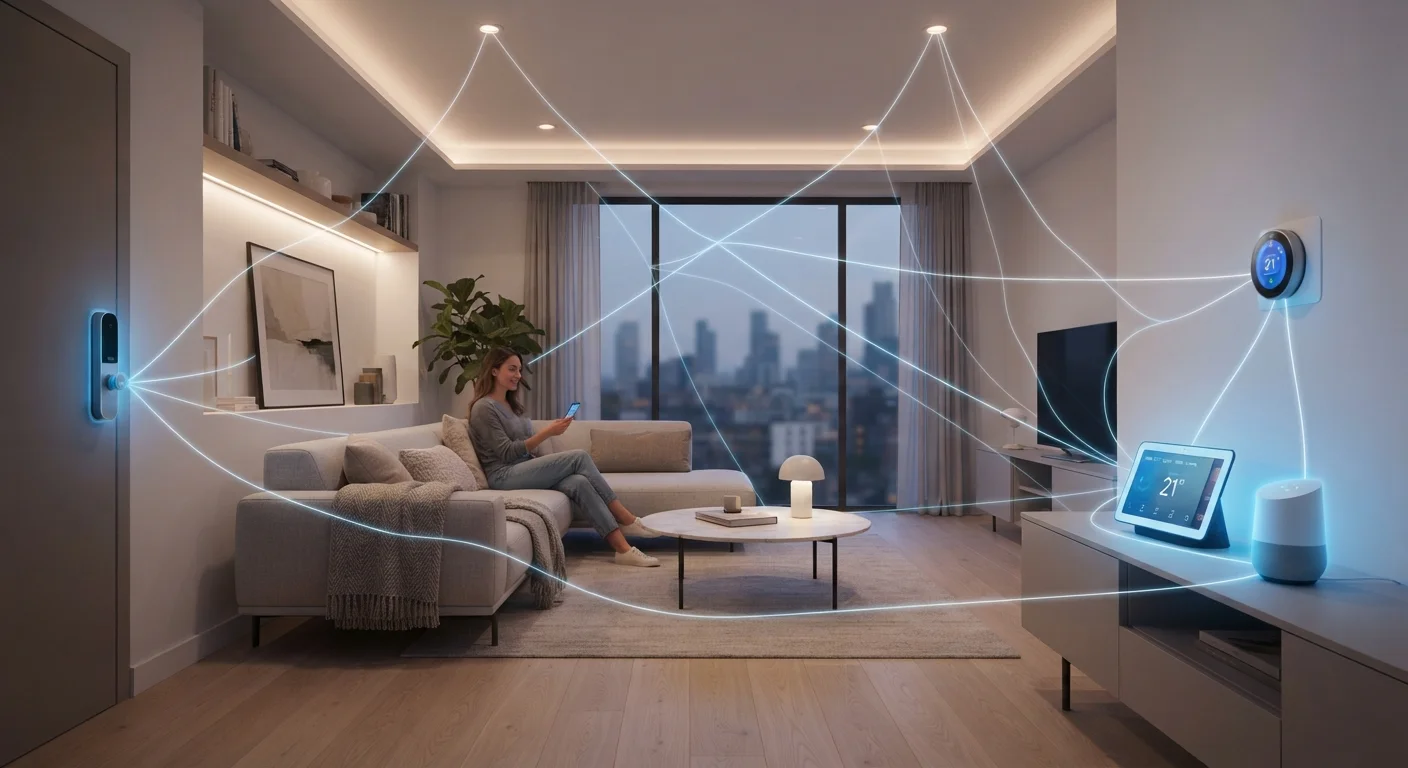
Photo: ScoutAnswers.com | Blogs That Ignite Curiosity editorial
Key Takeaways
- Matter is an industry-wide standard designed to make smart home devices work across brands without proprietary hubs.
- It is backed by major tech companies including Apple, Google, Amazon, and Samsung.
- Matter devices communicate over Wi-Fi and Thread, and can work locally without cloud dependency.
- Not every existing smart home device supports Matter; older hardware typically requires replacement or a bridge.
- Matter reduces - but does not completely eliminate - compatibility issues in complex smart home setups.
Why Smart Home Compatibility Has Been Such a Problem
For years, buying a smart home device meant committing to a brand's ecosystem. A bulb from one manufacturer might refuse to integrate with a hub from another. A lock that worked with one voice assistant might be invisible to a second. The result was a fragmented landscape that forced consumers to either pick a single brand for everything or manage multiple separate apps and platforms.
This frustration is rooted in a basic technical reality: smart home devices use different communication protocols and proprietary software stacks. As our guide on wireless protocols behind smart devices explains, technologies like Zigbee, Z-Wave, Wi-Fi, and Bluetooth each have different strengths - and historically, they rarely played together.
Matter was created specifically to address this. Launched in late 2022 by the Connectivity Standards Alliance (CSA), it established a shared application layer so that devices speaking different radio languages can still understand each other's commands.
How Matter Actually Works
Matter sits at the application layer of smart home communication. Think of it as a shared language that devices use once they're connected - regardless of whether they're using Wi-Fi or Thread to carry the signal. A Matter-certified thermostat and a Matter-certified smart lock both understand the same vocabulary of commands, even if they come from entirely different manufacturers.
Every Matter device goes through a certification process managed by the CSA, which verifies that it meets interoperability requirements. This means when you see the Matter logo on packaging, the device has been tested to work within the standard's parameters.
280+
Companies backing the Matter standard
The Connectivity Standards Alliance reports broad industry membership including Apple, Google, Amazon, Samsung, and hundreds of device makers.
2022
Year Matter specification launched
Matter 1.0 was released in October 2022 after years of development under the CSA, formerly known as the Zigbee Alliance.
Thousands
Matter-certified products available
The CSA's product registry lists thousands of certified devices across lighting, climate, security, and other categories as the standard matures.
One of Matter's most important architectural decisions is its emphasis on local control. When you tap a button in an app to dim your lights, that command travels over your local network - not up to a cloud server and back down. This makes responses faster and keeps basic functions working during internet outages. For a deeper look at how devices, apps, and the cloud interact, see our overview of the connected home ecosystem.
What Matter Supports - and What It Doesn't
Matter covers a growing list of device categories: smart lights, plugs, locks, thermostats, blinds, sensors, robot vacuums, and more have been added across successive specification updates. The standard also supports a feature called multi-admin, which allows one device to be enrolled in multiple platforms simultaneously - so a single smart lock can appear in both Apple Home and Google Home without conflict.
“The goal of Matter is simple: if it says Matter on the box, it will work - full stop. That promise of interoperability is what the industry has needed for a long time.”
— Tobin Richardson, President and CEO, Connectivity Standards Alliance
However, Matter is not a universal solution for every smart home scenario. Several device categories - including many security cameras, complex irrigation systems, and some proprietary alarm panels - either aren't yet covered by the standard or are only partially supported. The standard also doesn't eliminate every setup hurdle; adding a Matter device still requires a compatible controller app and, for Thread-based devices, a Thread border router.
Older devices that predate Matter generally won't receive support unless the manufacturer explicitly releases a firmware update - and many won't. A Matter bridge can sometimes help, translating commands between a legacy device and a Matter network, but availability varies by product and brand.
What This Means for Everyday Smart Home Users
For someone building a smart home from scratch today, Matter meaningfully lowers the stakes of buying the wrong device. Shopping with an eye toward Matter certification reduces the risk of painting yourself into a brand-specific corner. That said, Matter doesn't guarantee a perfectly seamless experience - how well any device performs in a given platform still depends on implementation details on both sides.
For existing smart home owners, the calculus is more nuanced. If your current devices work well and you're not hitting compatibility walls, there's no urgent reason to replace them. If you're expanding your setup and want more flexibility going forward, prioritizing Matter-certified additions is a reasonable strategy.
If you're new to all of this, our guide to what a smart home actually means is a useful starting point before diving into protocol specifics. And for practical setup guidance, building your first connected home walks through the key decisions in plain terms.
Check for Matter Certification Before Buying
Matter represents genuine progress on a problem that frustrated consumers for over a decade. It's not a finished solution, but it's a credible, industry-wide framework that continues to expand - and for most buyers, it's now a meaningful factor worth considering.
Frequently Asked Questions
The content on this site is for informational purposes only and is not a substitute for professional advice. Always consult a qualified professional for guidance specific to your situation.