
Western Europe vs. Southeast Asia: Which Region Fits Your First Big International Trip

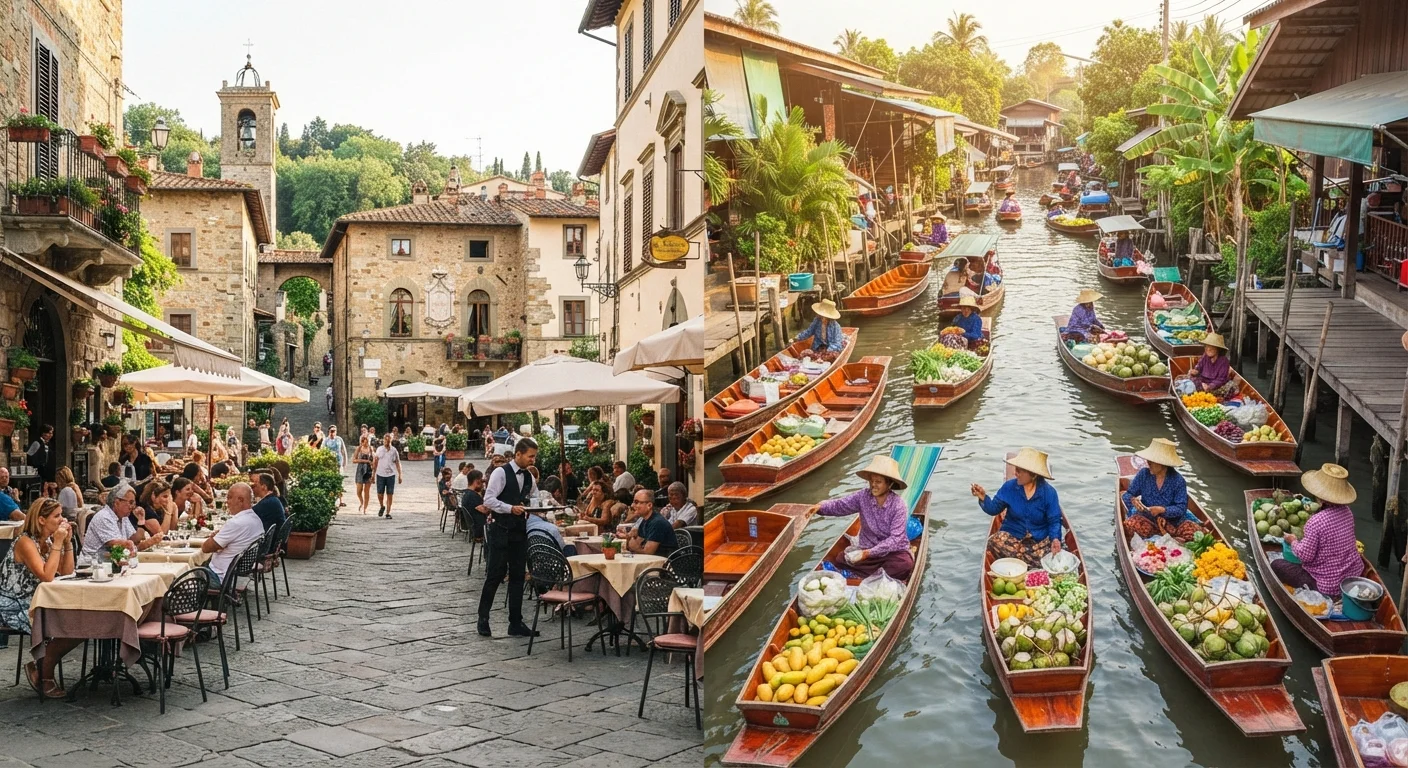
Photo: ScoutAnswers.com | Blogs That Ignite Curiosity editorial
Key Takeaways
- Western Europe costs significantly more per day but offers easier navigation for first-timers.
- Southeast Asia stretches a travel budget further, though it requires more logistical preparation.
- Both regions are accessible to American passport holders, but entry requirements differ by country.
- Flight times, jet lag, and health prep vary considerably between the two regions.
- Your travel style - comfort-seeking vs. adventurous - is the most reliable decision-making filter.
The Core Difference: Familiarity vs. Discovery
Choosing between Western Europe and Southeast Asia for your first big international trip comes down to one honest question: how far outside your comfort zone do you want to step?
Western Europe - think France, Germany, Spain, Italy, the Netherlands - shares deep cultural roots with the United States. Road signs, menus, and transit systems often appear in English or include English translations. Credit cards are broadly accepted. The legal framework feels recognizable. For many Americans, it feels like traveling somewhere foreign but not entirely alien.
Southeast Asia - Thailand, Vietnam, Cambodia, Indonesia, the Philippines - is a more pronounced departure. Languages, scripts, currencies, traffic patterns, and social customs are genuinely different from anything most Americans encounter at home. That contrast is precisely why so many travelers say the region changed how they see the world. But it also requires more pre-trip research and a higher comfort level with uncertainty.
Neither region is objectively better. They reward different kinds of travelers. See our guide on matching destinations to your travel personality for a deeper framework on this kind of decision.
Cost, Logistics, and Getting There
| Criterion | Western Europe | Southeast Asia |
|---|---|---|
| Flight duration (from US East Coast) | ~7-10 hours | ~18-24 hours with connections |
| Typical daily travel cost | Higher (comparable to US cities) | Lower (budget options widely available) |
| English accessibility | Widely spoken in tourist areas | Variable; less consistent outside hubs |
| Visa requirements for US citizens | Visa-free (Schengen, up to 90 days) | Varies by country; often visa-free or on arrival |
| Health prep required | Minimal beyond travel insurance | Vaccines and medications may be recommended |
| Transportation between cities | Extensive rail network | Buses, domestic flights, ferries |
| Cultural contrast from US life | Moderate | Significant |
Flight costs fluctuate based on season, departure city, and booking timing - but as a general pattern, roundtrip flights to Western Europe from US hubs run shorter in duration (roughly 7-10 hours from the East Coast) compared to Southeast Asia (typically 18-24 hours with connections). That difference in travel time affects jet lag recovery and how many usable days you actually get on a shorter trip.
On the ground, Western Europe's cost of living is considerably higher. Accommodation, meals, and transportation in cities like Paris, Amsterdam, or Barcelona carry price tags closer to major US cities. Southeast Asia, by contrast, offers a wide range of budget-friendly options - guesthouses, street food, and local transport that can keep daily costs low for travelers willing to embrace them.
Visa requirements matter, too. As of general policy, US citizens can enter most Western European countries visa-free for tourism under the Schengen Area agreement (typically up to 90 days within a 180-day period). Many Southeast Asian countries also offer visa-free or visa-on-arrival access to American travelers, but rules vary by country and can change. Always verify current entry requirements directly through official government sources - both the US State Department and the destination country's official immigration authority - before booking.
90 days
Visa-free stay in Schengen Area for US citizens
US passport holders can visit most Western European countries without a visa for tourism, within a 180-day rolling window - verify current rules before travel.
18-24 hrs
Typical US-to-Southeast Asia flight time
Most routes from US cities require at least one connection, adding significant transit time compared to transatlantic flights.
Health, Safety, and Practical Preparation
Western Europe generally requires minimal additional health preparation beyond what Americans already maintain. Tap water is safe to drink in most countries, food safety standards are high, and healthcare infrastructure is strong. Travel insurance is still strongly recommended, as US health plans rarely cover care abroad.
Southeast Asia calls for more deliberate health planning. Depending on which countries you visit, the US Centers for Disease Control and Prevention (CDC) may recommend certain vaccines or antimalarial medications. Tap water is not reliably safe to drink in many areas. Heat, humidity, and food sourced from street vendors require some adjustment. None of this should deter you - millions of Americans travel Southeast Asia safely each year - but it does mean building more preparation time into your planning.
Safety conditions also vary significantly within Southeast Asia by country and region. Consulting the US State Department's travel advisories for each specific country you plan to visit is an essential step, not an optional one. For solo travelers especially, understanding local norms and common scam patterns before arriving makes a meaningful difference. Our guide to building confidence before your first solo trip covers practical safety habits worth reviewing regardless of destination.
Always Check Official Sources Before You Travel
Making the Call: Which Region Is Right for You
If your priorities are minimizing friction, keeping logistics manageable, and still experiencing world-class history and culture, Western Europe is a strong first choice. The region's tourist infrastructure is mature and well-documented. You can plan an efficient multi-city itinerary - say, London, Amsterdam, and Paris - using trains and carry-on luggage alone.
If your priorities are stretching your budget, encountering genuinely different ways of living, and returning home with stories that feel truly foreign, Southeast Asia delivers in ways Europe often cannot. A two-week trip through Thailand and Vietnam, for example, can expose you to ancient temples, tropical coastlines, incredibly varied food cultures, and cities that feel nothing like anywhere in the United States.
There's also no rule against doing both - many travelers use Europe as a first-trip training ground, then head to Southeast Asia once they've built confidence navigating abroad. Our solo travel planning guide walks through destination selection and budgeting in more detail if you're still working out the full picture. And before finalizing any European itinerary, our pre-travel checklist for American travelers heading to Europe is worth running through well before you book.
The content on this site is for informational purposes only and is not a substitute for professional advice. Always consult a qualified professional for guidance specific to your situation.