
Teen Drivers and Graduated Licensing: What the Research Says Works

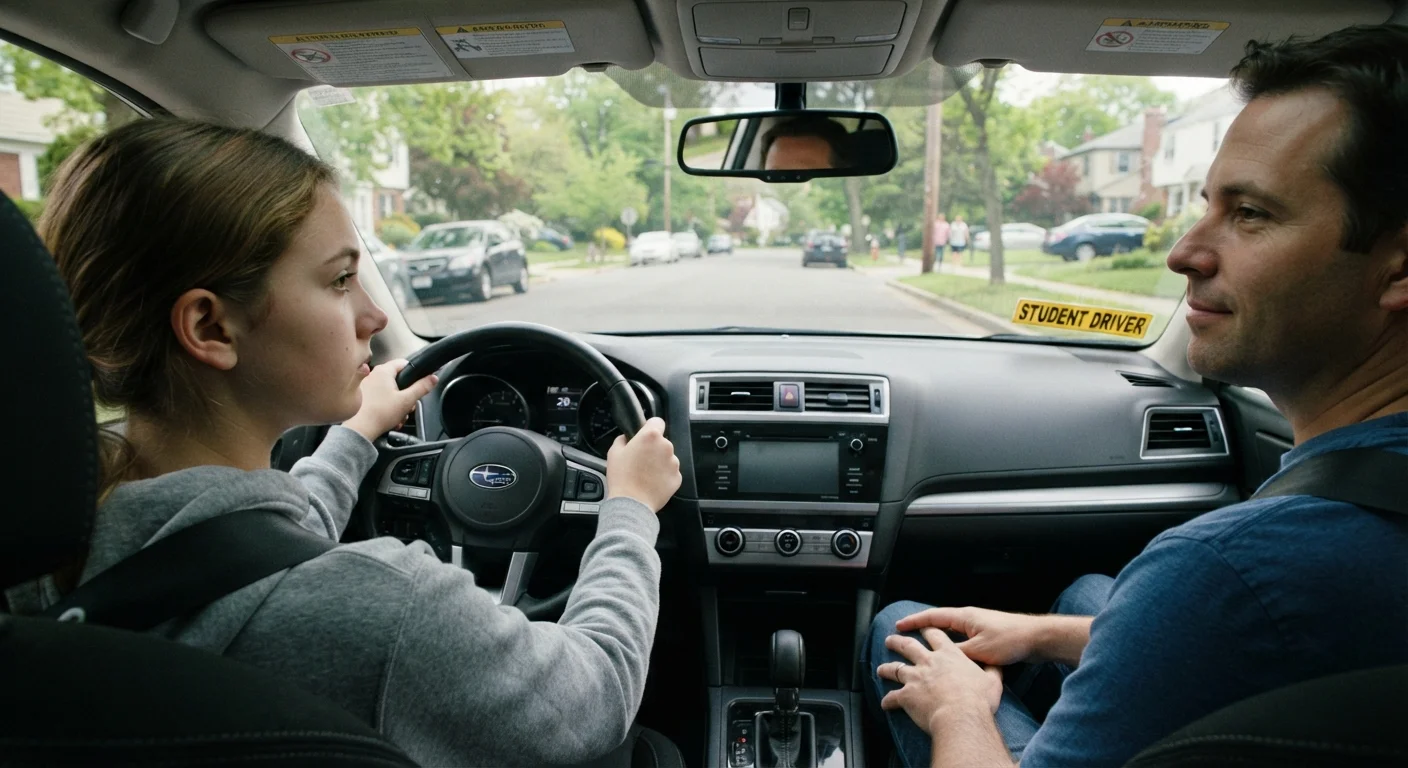
Photo: ScoutAnswers.com | Blogs That Ignite Curiosity editorial
Key Takeaways
- Graduated licensing reduces teen crash rates by building skills incrementally across multiple supervised stages.
- Nighttime driving and passenger restrictions target the two highest-risk conditions for new teen drivers.
- Research consistently shows that the strongest GDL laws produce the largest reductions in teen fatalities.
- Parental enforcement of GDL rules significantly extends the program's protective effect beyond legal requirements.
- The first six to twelve months of independent driving carry the highest crash risk for teenagers.
- GDL does not replace the need for ongoing coaching and habit-building throughout early driving years.
Why Teen Crash Risk Is Uniquely High
Motor vehicle crashes remain the leading cause of death for teenagers in the United States, according to the Centers for Disease Control and Prevention (CDC). This sobering reality isn't primarily about recklessness - it's about inexperience combined with high-stakes conditions that experienced drivers navigate largely on pattern recognition built over years.
New drivers of any age face an elevated crash risk. But teen drivers face a compounding challenge: the adolescent brain is still developing the judgment and impulse-control functions that help experienced drivers recognize and manage hazard in real time. Pair that with low mileage, no internalized traffic patterns, and social pressure from peers, and the risk profile is steep.
The first year behind the wheel is statistically the most dangerous period. GDL systems are designed specifically to slow that exposure curve and structure the conditions under which skills develop.
#1
Cause of teen death in the U.S.
Motor vehicle crashes are the leading cause of death among U.S. teenagers, according to the Centers for Disease Control and Prevention (CDC).
~50%
Estimated crash risk reduction from strong GDL
Research published by the Insurance Institute for Highway Safety has found that comprehensive GDL programs are associated with substantial reductions in fatal crash rates among 16-year-old drivers.
3x
Crash risk increase with multiple teen passengers
Studies indicate that teen drivers carrying two or more peer passengers face approximately three times the crash risk of driving alone, underlining the importance of passenger restrictions.
How Graduated Licensing Programs Work
A standard GDL system moves teen drivers through three distinct stages, each with its own requirements and restrictions.
Stage 1: Learner's Permit
At this stage - typically available around age 15 or 16, depending on the state - teens may only drive with a licensed adult supervisor in the vehicle. Most states require a minimum holding period of six months to one year. The aim is to accumulate supervised hours across a range of conditions before any solo driving begins.
Stage 2: Intermediate (Provisional) License
Once teens pass a road test, they advance to a provisional license. This stage permits independent driving but restricts two high-risk conditions: nighttime driving (commonly prohibited between 9 p.m. or 11 p.m. and 5 a.m.) and the number of teen passengers allowed in the vehicle. Research consistently identifies these two factors as the leading contributors to teen crash risk during early independent driving.
Nighttime driving carries elevated risk even for experienced adults - for new drivers, the combination of reduced visibility, fatigue, and limited hazard-recognition experience is particularly consequential.
Stage 3: Full Unrestricted License
After completing the intermediate stage - typically requiring a minimum holding period and a clean record - teens qualify for a full license, usually at age 17 or 18.
What the Research Actually Shows
The evidence base supporting GDL is among the most consistent in traffic safety research. Studies from the IIHS, the AAA Foundation for Traffic Safety, and public health journals have repeatedly documented that states with stronger GDL laws see greater reductions in teen fatality rates than states with weaker provisions.
Key findings from the research literature include:
- Nighttime restrictions are among the single most effective GDL provisions, associated with meaningful reductions in late-night teen crashes in states that enforce them.
- Passenger restrictions reduce distraction-related crashes during the provisional stage. Each additional teen passenger in the vehicle is associated with a measurable increase in crash probability.
- Longer learner permit holding periods - particularly those requiring 50 to 100 supervised hours - are linked to lower crash rates in the months after licensure.
- Comprehensive GDL packages outperform states that implement only one or two provisions.
“The research on graduated licensing is remarkably consistent: when states adopt stronger provisions and enforce them, teen crash deaths go down. The question is not whether GDL works - it's whether programs are comprehensive enough to deliver their full potential benefit.”
— Anne McCartt, Former Senior Vice President for Research, Insurance Institute for Highway Safety
Critically, research also identifies gaps. GDL protections primarily apply to 16- and 17-year-olds who begin licensing through the system. Teens who wait until 18 to start driving often bypass intermediate-stage restrictions in many states - a gap that some researchers have flagged as an area for policy attention.
The Role Parents Play in Extending GDL's Effect
GDL laws create a legal framework, but parents function as the primary enforcement mechanism during the learner and provisional stages. Research suggests that parental involvement significantly shapes outcomes beyond what the law alone achieves.
Families that extend supervised practice beyond statutory minimums - driving in heavier traffic, on highways, in rain or darkness - produce teens who enter independent driving with a broader skill base. Anticipating hazards rather than just reacting to them is a mindset that develops through guided repetition, not just hours logged.
Parent-teen driving agreements - written commitments that set household rules around passengers, phone use, and curfews - have been used in some state programs and evaluated in research settings as a way to sustain safe habits. While outcomes vary, the underlying principle is sound: norms established early in the licensing process tend to persist into independent driving.
Parents who voluntarily enforce provisional-stage restrictions beyond the legal expiration date give their teen additional months to consolidate skills before facing the full risk environment. That measured extension of the protective period has measurable safety value.
Building on GDL - What Comes Next
Graduating from a GDL program is not the finish line - it's the beginning of independent driving. The habits formed during the licensed stages carry forward, for better or worse. New drivers benefit from continued deliberate practice on conditions that weren't fully covered during supervised phases: highway merging, unfamiliar routes, adverse weather, and complex intersections.
Intersections are among the most dangerous points on any road, yet they're often underestimated precisely because they seem routine. Building consistent habits around scanning, yielding, and positioning pays long-term dividends in crash avoidance.
Similarly, driving on unfamiliar roads introduces variables that experience helps manage - something new license holders continue to encounter well beyond their GDL period. GDL creates the foundation; ongoing learning reinforces it.
This article is for general informational purposes only. Driving laws, licensing requirements, and age thresholds vary by state. Always verify current requirements with your state's Department of Motor Vehicles or equivalent licensing authority.
Frequently Asked Questions
The content on this site is for informational purposes only and is not a substitute for professional advice. Always consult a qualified professional for guidance specific to your situation.