
Sectional Sofa vs. Separate Sofa and Loveseat: Which Layout Works for Your Living Room

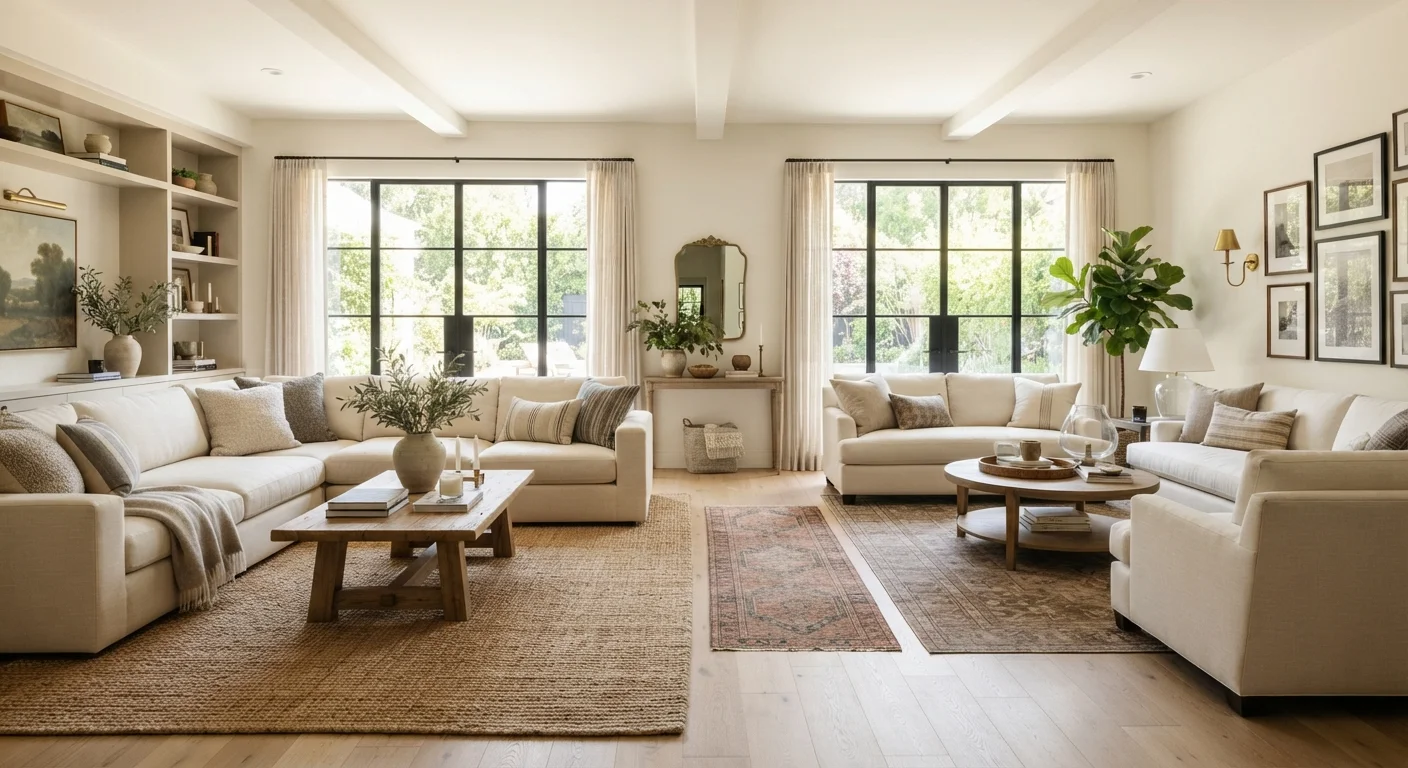
Photo: ScoutAnswers.com | Blogs That Ignite Curiosity editorial
Key Takeaways
- Sectionals work best in rooms at least 12×15 feet; smaller spaces usually suit a sofa-and-loveseat combo better.
- A sofa-and-loveseat setup offers more flexibility - pieces can be rearranged, separated, or moved to another room.
- Sectionals typically consolidate seating cost into one purchase, while separate pieces allow phased buying.
- Traffic flow and doorway clearance are critical factors that differ significantly between both layouts.
- Room shape - square, rectangular, or open-plan - is often the single biggest deciding factor.
How Room Size and Shape Drive the Decision
Before comparing comfort or cost, measure your room - and measure it carefully. A sectional sofa typically requires a footprint of at least 12 feet on its longest side to sit proportionally in a space. In a room smaller than roughly 12×15 feet, a standard L-shaped sectional often crowds traffic lanes and overwhelms the visual scale of the room.
Square rooms present a particular challenge for sectionals. An L-shaped piece tends to push all seating toward one corner, leaving the opposite side of the room functionally empty. A sofa-and-loveseat pairing, arranged in an L or facing each other, distributes seating more evenly and keeps the room balanced.
Rectangular rooms, on the other hand, often suit sectionals well - especially if the long wall allows the sofa to run its full length. In open-plan homes, a large sectional can serve as a room divider, clearly marking where the living area ends. For a deeper look at this strategy, see our article on defining functional zones without walls.
| Criterion | Sectional Sofa | Sofa and Loveseat |
|---|---|---|
| Minimum room size | ~12×15 ft recommended | Works in rooms from ~10×12 ft |
| Traffic flow impact | Can restrict pathways if oversized | Easier to preserve circulation routes |
| Rearrangement ease | Difficult; often a one-time setup | High; pieces move independently |
| Move-out/transport | Challenging through narrow spaces | Standard sizes fit most doorways |
| Seating continuity | Uninterrupted surface, ideal for lounging | Gap between pieces; more formal feel |
| Zone-defining ability | Strong anchor in open-plan spaces | Less definitive as a room divider |
| Phased purchasing | Single upfront investment | Can buy sofa first, add loveseat later |
| Replacement flexibility | Full reconfig if one section fails | Replace individual pieces independently |
Also consider your entryway and hallway dimensions. Sectional pieces, especially chaise lounges and corner modules, can be difficult to maneuver through narrow doorways or up stairwells - a practical constraint that catches many buyers off guard.
Flexibility, Configuration, and Long-Term Livability
The sofa-and-loveseat combination wins on pure flexibility. Each piece operates independently - you can angle the loveseat, push it against a wall, or eventually move it to a bedroom or office. When one piece wears out, you replace only that item rather than reconsidering your entire seating plan.
Sectionals, while modular in some designs, are generally configured once and stay that way. Rearranging a sectional is a significant project, and not all sectional modules are reversible (meaning a left-facing chaise can't simply become a right-facing one). That said, truly modular sectionals - where each seat is a self-contained piece - do offer genuine reconfigurability, though they usually cost more.
63%
Renters who move every 1-3 years
According to U.S. Census Bureau data, a significant share of American renters relocate within a three-year window, making furniture portability a practical priority.
~14 ft
Average U.S. living room width
General residential construction data suggests the typical American living room measures roughly 12-16 feet in width, a range where both layout types can work depending on exact dimensions.
For renters especially, a sofa-and-loveseat set is typically the more pragmatic choice. Pieces that fit one apartment may not translate to the next, and individual sofas are far easier to load, transport, and fit into a new space than a six- or seven-piece sectional.
When it comes to comfort specifications, both formats can achieve the same range of seat depths, cushion fills, and frame quality. Understanding those specs matters regardless of which layout you choose - our guide on sofa depth, seat height, and fill walks through what the numbers actually mean for everyday comfort.
Cost, Value, and the Real Trade-Offs
Pricing comparisons between sectionals and sofa-loveseat combos depend heavily on quality tier, size, and material, so general rules matter more than specific figures. At comparable quality levels, a sectional typically consolidates your spending into one purchase - which can feel efficient but also means a larger single outlay. A sofa and loveseat bought separately allow phased purchasing: acquire the sofa first, add the loveseat when the budget allows.
Consider also the cost of replacement. If a sectional's chaise module gets damaged or the fabric fades unevenly, repairing or reupholstering a custom-shaped piece can be more complex than addressing a standard rectangular sofa. Separate pieces, being more conventional in shape, are generally easier and less expensive to reupholster.
For a broader look at how fixed versus flexible furniture choices play out financially over time, the comparison in built-in storage vs. freestanding furniture offers a useful parallel framework. And if you're planning furniture across multiple rooms at once, the room-by-room furniture planning walkthrough can help you budget and sequence purchases strategically.
The content on this site is for informational purposes only and is not a substitute for professional advice. Always consult a qualified professional for guidance specific to your situation.