
Satellite Internet in 2024: Who It Serves Well and Who It Doesn't

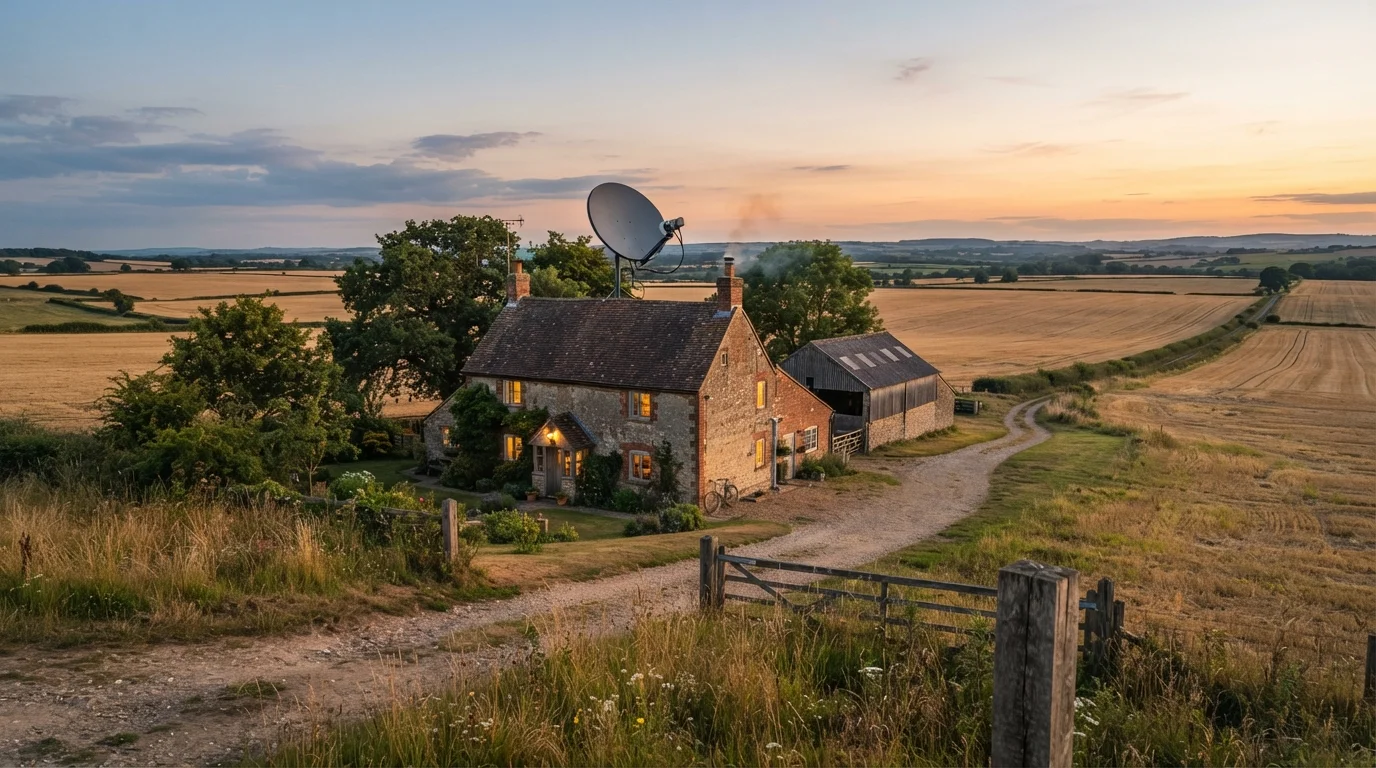
Photo: ScoutAnswers.com | Blogs That Ignite Curiosity editorial
Key Takeaways
- Satellite internet is often the only broadband option for rural or remote households with no cable, fiber, or fixed wireless coverage.
- Low-Earth-orbit (LEO) satellite services deliver noticeably lower latency than older geostationary satellite systems.
- High monthly costs, equipment fees, and data caps make satellite a poor value for households that have cable or fiber available.
- Latency on even the best satellite systems is higher than wired broadband, which affects real-time applications like competitive gaming and video calls.
- Weather and physical obstructions can temporarily interrupt satellite signals, unlike underground cable connections.
- Government subsidy programs have helped offset hardware and subscription costs for eligible rural households.
How Satellite Internet Actually Works
Every satellite internet connection involves three points: a dish at your home, a satellite in orbit, and a ground station (called a gateway) connected to the broader internet. When you load a webpage, your request travels from your dish up to the satellite, back down to the gateway, out to the internet, and returns the same way - all in fractions of a second on a well-functioning system.
The critical variable is orbital altitude. Legacy geostationary (GEO) satellites hover about 22,000 miles above the equator, meaning signals must cover an enormous distance twice per request. That distance produces latency - often 600 ms or more - that makes interactive applications feel sluggish. Newer low-Earth-orbit (LEO) constellations circle at a few hundred miles up, cutting that signal journey dramatically. LEO systems typically deliver latency in the 20-60 ms range, which is still higher than fiber or cable but far more usable for everyday tasks.
For a broader comparison of how satellite stacks up against wired technologies, see our breakdown of fiber, cable, DSL, and fixed wireless.
~21 million
Rural Americans lacking broadband access
The FCC's 2022 Broadband Data Collection estimated roughly 21 million Americans lack access to fixed broadband meeting the 25/3 Mbps threshold, with rural areas disproportionately affected.
20-60 ms
Typical LEO satellite latency range
Industry testing of low-Earth-orbit satellite services generally places round-trip latency in the 20-60 ms range, compared with 600+ ms for legacy geostationary systems.
22,000 mi
Altitude of geostationary satellites
Traditional geostationary satellites orbit approximately 22,000 miles above Earth, a distance that physically limits how fast signals can travel and return.
Where Satellite Internet Genuinely Excels
The single strongest argument for satellite internet is geographic reach. Cable, fiber, and fixed wireless all require ground-level infrastructure - towers, conduit, poles - that utilities have little financial incentive to build in sparsely populated areas. Satellite bypasses that problem entirely. A household in a remote mountain valley or on agricultural land miles from the nearest town can receive broadband from a dish in the yard, provided there's an unobstructed view of the sky.
Rural households exploring their broadband options will frequently find satellite is one of the only technologies capable of meeting the FCC's definition of broadband (25 Mbps download / 3 Mbps upload at a minimum), particularly in areas where the alternative is a sluggish DSL line over aging copper telephone wire.
Satellite also suits temporary or mobile use cases - RVers, remote job sites, and emergency response teams have used satellite kits as portable connectivity solutions where no fixed infrastructure exists.
Where Satellite Internet Falls Short
Cost is the most immediate barrier. Equipment purchase or lease fees, combined with monthly subscription rates, make satellite among the more expensive residential broadband options per megabit delivered. For households that have access to cable or fiber, those technologies typically offer more consistent speeds at lower cost.
Latency remains a structural limitation. Even with LEO improvements, the physics of sending signals to space and back mean satellite connections will never match the sub-10 ms round-trip times that fiber routinely delivers. This gap is largely invisible during web browsing or video streaming, but becomes apparent in competitive online gaming, high-frequency financial applications, or certain enterprise VPN configurations. Our article on internet speed myths explains why raw Mbps numbers alone don't tell the full story about connection quality.
Weather interference is real. While modern dish designs manage most conditions reasonably well, heavy precipitation and snow accumulation can cause temporary signal loss. Underground cable connections simply don't share this vulnerability. Data policies also deserve scrutiny - throttled speeds after hitting a priority data threshold can turn a fast connection into a frustratingly slow one mid-month.
Check Your Address Before Assuming Satellite Is Your Only Option
Making an Informed Decision
The core question is simple: what are your actual alternatives? If fiber or cable service is available at your address, those technologies almost always provide better value - lower latency, more consistent speeds, and typically lower monthly costs. Fiber offers symmetrical upload and download speeds that satellite cannot match, though it isn't universally available. For a head-to-head look at wired options, see our cable vs. fiber comparison.
If you're in a rural or remote area with no viable wired alternative, satellite - particularly a LEO service - represents a meaningful upgrade over slow DSL or no connection at all. Before committing, verify whether a trial or return window exists, inspect data policy terms carefully, and check whether any federal or state subsidy programs apply to your situation. The right broadband connection is the one that reliably meets your household's needs given what's actually available at your address - not a theoretical ideal.
This article is for general informational purposes only and reflects publicly available information about satellite internet technologies. Availability, pricing, and program eligibility change frequently; verify current details directly with providers and relevant government sources before making a purchase decision.
Frequently Asked Questions
The content on this site is for informational purposes only and is not a substitute for professional advice. Always consult a qualified professional for guidance specific to your situation.