
Common Myths About Smart Home Devices, Examined

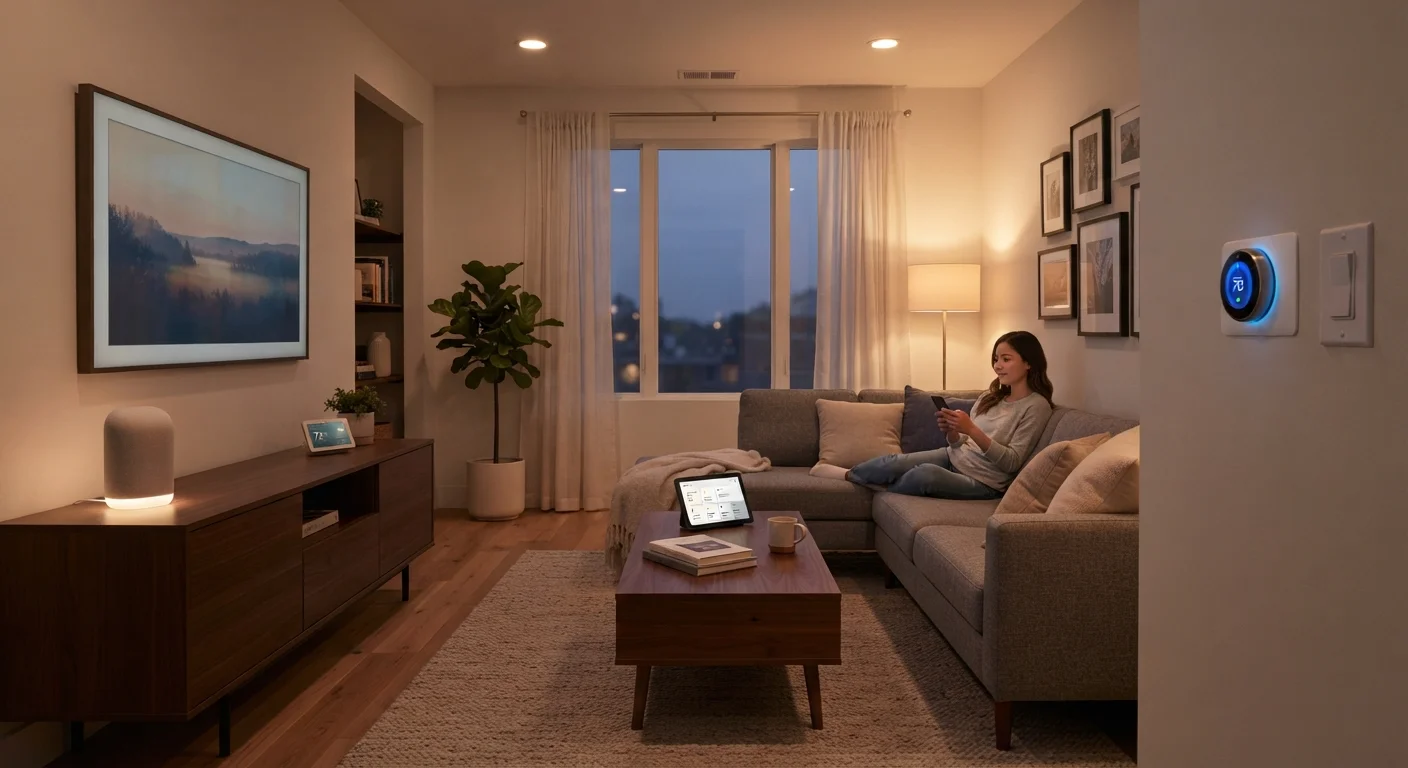
Photo: ScoutAnswers.com | Blogs That Ignite Curiosity editorial
Key Takeaways
- Smart speakers only process audio after detecting a wake word, not continuously recording conversations.
- Many modern smart devices are designed for straightforward setup, often requiring just a smartphone app.
- Smart devices do not require a subscription to function; many core features work without ongoing fees.
- Compatibility has improved significantly with emerging standards like Matter reducing ecosystem lock-in.
- Adding smart devices to a home network carries manageable security risks with proper configuration.
Why Smart Home Myths Spread So Easily
Smart home technology has moved from novelty to mainstream faster than most consumers have had time to evaluate it carefully. That gap between adoption speed and informed understanding is fertile ground for misconceptions. Marketing language, anecdotal social media posts, and genuine early-product failures have all contributed to a set of persistent beliefs that don't reflect how current devices actually work.
Before assuming a device is always eavesdropping, too complicated, or a security liability, it helps to look at what the evidence shows. For a plain-language foundation, see what a smart home is and how it works.
Myth
Smart speakers are always listening and recording everything you say in your home.
Fact
Smart speakers are designed to listen only for a designated wake word; audio is typically not sent to company servers until that trigger is detected.
This is the most pervasive smart home myth. Voice-activated devices do monitor ambient sound locally in order to detect their wake word - but that low-level monitoring happens on the device itself and does not constitute recording or transmission. Once the wake word is detected, a short audio clip is sent to the cloud for processing. Accidental activations do occur, but major platform operators publish transparency reports and provide tools to review and delete stored audio. For a detailed look at what data is collected and how, see the privacy trade-offs of always-on devices.
Myth
Setting up smart home devices is too complicated for non-technical users.
Fact
Most consumer smart devices are designed to be installed via a smartphone app in minutes, without any networking expertise.
Early smart home products sometimes required dedicated hubs, manual network configuration, or command-line setup. That era is largely over for mainstream consumer devices. Today, the typical installation flow involves plugging in a device, downloading the manufacturer's app, and following guided on-screen steps. Standards like Matter are further simplifying cross-brand setup. That said, building a larger, integrated ecosystem - one where many devices work together in automations - does involve more planning. How devices, apps, hubs, and the cloud fit together explains that architecture clearly.
Myth
You need a subscription to use smart home devices.
Fact
Core functionality - turning lights on, adjusting a thermostat, locking a door - generally works without a paid subscription.
Subscriptions are typically offered for enhanced cloud features: extended video history on security cameras, advanced AI-driven insights, or premium automation triggers. The basic operation of most smart devices does not require ongoing fees. Consumers should read product feature lists carefully before purchasing, since the line between free and paid features varies by manufacturer. Some platforms have also shifted features behind paywalls after launch, which is a legitimate concern worth verifying before committing to a device ecosystem.
Myth
Smart devices from different brands will never work together.
Fact
Compatibility has improved substantially, and the Matter standard is specifically designed to enable cross-brand interoperability.
Ecosystem fragmentation was a genuine and frustrating problem for years. Devices built on incompatible protocols - Wi-Fi, Zigbee, Z-Wave, Thread - often couldn't communicate without proprietary hubs. The Matter protocol, backed by major industry players, creates a common application layer so that certified devices can work across different ecosystems. Adoption is still uneven, and not every device category is fully covered, but the trajectory is clearly toward greater openness. The wireless protocols behind smart devices explains the technical landscape in more depth.
Myth
Smart home devices make your home network dangerously easy to hack.
Fact
Connected devices do expand a network's attack surface, but the risks are manageable with basic security practices.
Every internet-connected device is theoretically a potential entry point, and poorly secured smart devices have been implicated in real-world breaches. However, the risk is proportional to how devices are configured, not inherent to the technology itself. Strong, unique passwords, regular firmware updates, network segmentation (putting smart devices on a separate guest network), and disabling unused remote access features significantly reduce exposure. A structured smart home security audit is a practical way to verify your setup is sound.
Myth
Smart home devices always need a fast internet connection to function.
Fact
Many smart devices can perform core functions locally without an active internet connection, though cloud-dependent features will be unavailable offline.
Whether a device relies on the cloud or handles processing locally varies by product design. A smart thermostat running a schedule, or a smart lock responding to a code, often works entirely on the local network or the device itself. Cloud connectivity is typically required for remote access, voice assistant integration, and software updates. Local vs. cloud processing in smart devices breaks down exactly where each type of operation happens and what that means for reliability and privacy.
Separating the Signal From the Noise
Understanding these myths isn't just an academic exercise - it shapes real decisions about which devices to bring home, how to configure them, and what trade-offs to accept. Privacy, compatibility, and cost are all areas where inaccurate beliefs can lead consumers either to avoid useful technology unnecessarily or to underestimate risks they should actively manage.
69%
U.S. adults own at least one smart home device
According to a Pew Research Center survey on American technology adoption, smart home device ownership has grown steadily across income and age groups.
~1,000
Matter-certified device types at standard launch
The Connectivity Standards Alliance reported broad initial device-category coverage when the Matter 1.0 specification launched, spanning lighting, locks, thermostats, and more.
Compatibility concerns, for example, have historically been legitimate. Different brands using incompatible wireless protocols meant devices often refused to work together. The Matter standard is designed to address exactly that problem, though it still has limitations. Similarly, understanding the wireless protocols behind smart devices helps explain why some devices work seamlessly together while others don't.
Verify Features Before You Buy
Security is another area that deserves honest appraisal rather than blanket dismissal. A smart home security audit - covering router settings, app permissions, and firmware update habits - is a reasonable step for any connected household. Privacy concerns, meanwhile, are worth examining carefully: the privacy trade-offs of always-on devices are real and nuanced, but they are also manageable with the right settings.
The bottom line is that smart home devices, like most technologies, involve real trade-offs that are best navigated with accurate information rather than unfounded fear or uncritical enthusiasm.
The content on this site is for informational purposes only and is not a substitute for professional advice. Always consult a qualified professional for guidance specific to your situation.